




The Only MMP That Refuses to Leave the Membrane: Why MT1-MMP (MMP-14) Protein Quantification — Not Just Zymography — Is the Invasion Readout You're Missing
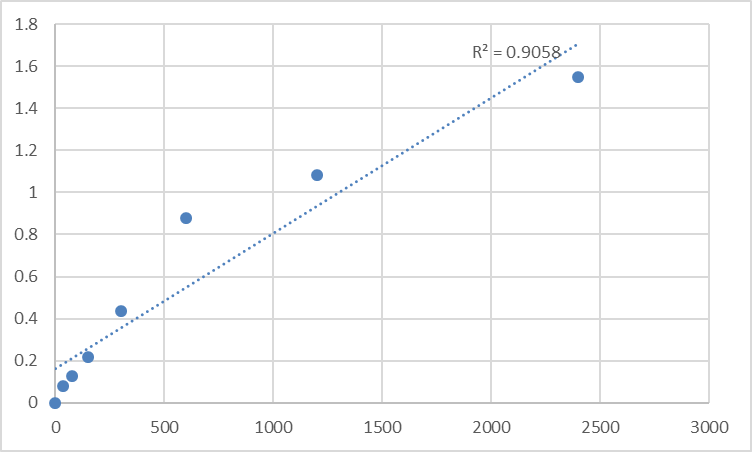
If your cancer, fibrosis, or vascular-remodeling paper still treats "MMP activity" as a single gelatin-cleavage smear and calls it a day, you're measuring the symptom while ignoring the guy holding the blade. Because unlike MMP-2, MMP-9, or any of the secreted gelatinases that float into your culture supernatant and smear across a zymogram, MMP-14 — officially MT1-MMP / Membrane-Type 1 Matrix Metalloproteinase (UniProt: P50281, Gene ID: 4323) — is type I transmembrane-anchored, meaning it does its work at the cell surface, not in the medium. It is the only MT-MMP that efficiently converts pro-MMP-2 → active MMP-2 (gelatinase A) right at the pericellular front, and it does so as part of a TIMPs-balanced, CD44v-src-coupled nanomachining complex that literally drills through collagen I/II fibrils, basement membrane laminin, and adventitial matrix so invasive cells can advance. The Human Matrix Metalloproteinase 14 (MMP-14) ELISA Kit (KTE61598) from Abbkine is the tool that finally pulls this membrane-tethered enzyme out of the "we assume it's there because pro-MMP2 dropped" black hole and puts it on a calibrated, sandwich-ELISA curve (ng/mL) you can defend with CVs — not a guess.
MMP-14 / MT1-MMP in One Paragraph: The Transmembrane Drill That Opens the ECM Door
All classic MMPs share the Zn²⁺-binding HEXXH motif + Met-turn catalytic core, but MMP-14 diverges structurally and functionally in the one way that matters most: after the N-terminal pro-domain (18–20 kDa, cleaved by furin/PACE at the RRKR↓F site to activate) and the catalytic domain + hemopexin-like domain, it carries a C-terminal transmembrane helix + short cytoplasmic tail (20 aa) with a YDY motif that binds AP-2/clathrin and a KRRR motif that couples to CD44v (variant exon v3/v6) and Src signaling. Translation: MMP-14 isn't just hanging around — it's targeted to invadopodia, the leading edge, and fibrillar-collagen contact sites, where it:
Action Consequence
Surface activation of pro-MMP-2 (via ternary MT1-MMP·TIMP-2·pro-MMP-2 complex) Unlocks gelatinase activity right where the cell needs it, not globally
Direct collagen I/II/III cleavage (triple-helical collagenase-type activity unique among MT-MMPs) Carves tunnels through fibrillar matrix for 3D invasion
Shedding of CD44, syndecan-1, integrin αVβ3 ligands Remodels adhesion vs. de-adhesion balance at the invasion front
TIMP-1/TIMP-2 balance TIMP-2 biphasic: low [TIMP-2] allows activation complex; high [TIMP-2] inhibits — a nuance zymography can't resolve
The clinical kicker: MMP-14 is consistently overexpressed in aggressive, desmoplastic, and therapy-resistant tumors (HNSCC, TNBC, PDAC, glioblastoma, OSCC) precisely because those cancers need pericellular collagenolysis more than they need secreted lytic enzymes that diffuse away.
Why a Sandwich ELISA for a Membrane-Anchored MMP — And Why Zymography Alone Leaves You Defenseless
Gelatin zymography is gorgeous for showing active vs. pro MMP-2, but it has three structural flaws when you call it "MMP-14 data":
- Zymography detects activity, not mass — a TIMP-bound, partially degraded, or conformationally masked MT1-MMP won't show, but it still occupies the membrane and tethers the activation complex.
- MMP-14 runs at ~60–66 kDa on reducing gels, right where other MT-MMPs (MT2/MT3) and even non-specifically activated bands can haunt the lane, so "band intensity" is always a gamble without a very specific antibody overlay.
- The biologically meaningful readout is how much total MMP-14 protein is in the membrane/lysate fraction, not just "did the gelatin turn clear under a 55 kDa band."
The KTE61598 kit uses the field-standard two-site sandwich ELISA:
- Microplate pre-coated with capture anti-MMP-14.
- Standards (recombinant human MMP-14) + samples — serum, plasma, tissue homogenates, cell culture supernatants/lysates, other biological fluids — added → MMP-14 (or shed ectodomain fragments accessible to the antibodies) binds.
- Wash → biotinylated anti-MMP-14 detection (different epitope) → Streptavidin–HRP → TMB → color ∝ bound MMP-14.
- Stop → 450 nm → interpolate ng/mL from the standard curve.
Consolidated performance envelope from vendor-matched references:
Parameter Typical KTE61598-class spec
Target Human MMP-14 / MT1-MMP (UniProt P50281, Gene 4323)
Aliases MT1-MMP, MMP-X1, MTMMP1
Format 96-well sandwich ELISA, pre-coated capture
Detection Biotin-Ab → SA-HRP → TMB, 450 nm
Dynamic Range 1.56 – 100 ng/mL (7-point standard)
Sensitivity / LOD ~0.39 – 0.63 ng/mL
Intra-Assay CV < 8%
Inter-Assay CV < 10–12%
Specificity No significant cross-reactivity with MMP-1, -2, -3, -9, -13 or TIMPs at physiological levels
Samples Serum, plasma (EDTA preferred), tissue homogenates, cell lysates, culture supernatants
Assay time ~3–5 hours
(Lock your Methods to the shipped Abbkine datasheet/CoA for KTE61598 — lot-specific range/recovery may vary slightly.)
The Prep Angle Most People Botch: MMP-14 Is Membrane-Tethered, So Your Lysate Must See the Membrane
Because ~90%+ of MMP-14 is TM-anchored at the OMM/plasma membrane (invadopodia, lamellipodia, focal-adhesion rims), a gentle PBS-only lysate misses it:
Quick dual-fraction cheat (worth doing once even if you run the full-lysate ELISA for speed):
• Light lysate: 50 mM Tris pH 7.4, 150 mM NaCl, 0.1% Triton X-100 → spin → supernatant = cytosolic/very-loosely-associated (underestimates).
• Membrane/invadopodia pellet: re-lyse the P10k pellet in 1% Triton + 0.1% SDS or 0.5% deoxycholate → this is where your MT1-MMP signal lives.
• For most routine screening, RIPA or 0.5–1% Triton/NP-40 + 150 mM NaCl + protease inhibitors is fine — just BCA the same final lysate and express as ng MMP-14 / mg total protein.
Where MMP-14 Quantification Actually Carries the Paper
- Cancer Invasion & the "Gelatinase-Activating Front"
This is the flagship. MT1-MMP defines the pericellular collagenolysis compartment: without it, pro-MMP-2 just sits there, and even if MMP-9 is sky-high in the supernatant, the cell can't tunnel through a 3D collagen I gel.
Run KTE61598 on lysates from scratch/wound-closure/3D-collagen-invasion models (± TGF-β, TNF, HIF-1α, Snail/Twist, or MT1-MMP siRNA/CRISPR), normalize to mg protein, and co-plot with:
• Active vs. pro MMP-2 (zymography or MMP-2 ELISA) — the ratio tells you whether the activation complex is intact
• Invadopodia markers (Tks5/Src, cortactin IF) + gel contractility/collagen I fiber dispersion
• Matrigel/collagen I invasion index
That triad — MT1-MMP mass + MMP-2 activation state + invasive distance — is what reviewers remember.
- Atherosclerotic Plaque Vulnerability & Macrophage Foam-Cell Remodeling
Foam-cell-rich shoulders express MT1-MMP to degrade collagen I/III caps and BM laminin; it's also part of the MMP-14 → MT1-MMP·TIMP-2·pro-MMP-2 axis that controls how aggressively the cap thins. Measuring it in plaque homogenates (normalized to α-SMA or collagen I) is the structural-dynamics variable that links macroscopy to the rupture-risk conversation.
- Fibrosis, Liver Cirrhosis & Stellate-Cell Activation
Activated HSCs (myofibroblasts) upregulate MT1-MMP to remodel provisional matrix during wounding — but chronic overload tips into capsular distortion and invasive-stromal patterning. Lysates from CCl₄/NASH-model liver or PDGF/B/BMP7-treated HSC cultures benefit from a total MMP-14 readout as a "matrix-remodeling throttle" alongside α-SMA, TIMP-1, TIMP-2, and hydroxyproline.
- Brain Invasion: Glioblastoma & Pericellular Clearance
GBM cells use MT1-MMP + CD44v to drill through basement membrane and white-matter tracts; the enzyme is also detected in CSF and tumor-adjacent edema fluid in some cohorts, making it an exploratory liquid-biomarker candidate when handled cold/fast. Quantifying protein in tumor-tissue lysates + (cautiously) in concentrated CSF/edema fluid gives you the surface-machinery variable that a pubmed "MMP-9 is high" line can't touch.
- Small-Molecule & Antibody-Drug Screens (MT1-MMP Inhibitors)
Selective MT1-MMP inhibitors (non-zinc-chelating, allosteric, or antibody-based) are an active patent space. If you're testing one, don't just read out "invasion ↓" — show MMP-14 protein unchanged (or degraded if it's an Hsp90/lysosome routing effect), then confirm that pro-MMP-2 accumulates while active MMP-2 drops, and that TIMP-2 rebounds at the surface. That's the mechanism closed.
- CRISPR/AAV Validation
Editing MMP14? Report % MT1-MMP protein remaining ± SEM from the calibrated ELISA (ng/mg), confirm with IF at invadopodia/Tks5, and tie it to collagen I 3D invasion or aortic ring sprouting so the phenotype has its scalpel, not just its stain.
A Minimal Workflow You Can Paste Into a Protocol
- Lyse cold: RIPA or 50 mM Tris pH 7.4, 150 mM NaCl, 0.5–1% Triton X-100/NP-40 + protease inhibitors (leupeptin/aprotinin/PMSF) — keep on ice.
- Clarify 12,000–16,000 ×g, 15 min, 4°C → supernatant = your MMP-14-accessible pool.
- BCA → express ng MMP-14 / mg total protein.
- Warm kit reagents ≥ 30 min RT before opening; protect TMB; stop uniformly; read 450 nm promptly; fit 4-PL; and run the full standard curve on every plate.
The Bottom Line
MMP-14 / MT1-MMP is the only transmembrane member of the MMP family that turns the cancer-cell surface into a directional collagen-drilling platform — activating pro-MMP-2 right at the invasion front, clearing basement membrane, and coupling matrix turnover to CD44v/Src signaling. Measuring it as a plate-readable, interpolated concentration instead of a zymogram shadow changes your entire invasion narrative from "enzymes were active" to "this specific membrane-tethered drill was the bottleneck." The Human Matrix Metalloproteinase 14 (MMP-14) ELISA Kit — KTE61598 from Abbkine gives you that readout: pre-coated capture → biotin detection → HRP–TMB → 450 nm → ng/mL, over a 1.56–100 ng/mL working range with LOD ~0.4–0.6 ng/mL, in a ~3–5 hour workflow that scales from a 6-well time-course to a 50-sample cohort without a gel-stack detour.
Product Reference: KTE61598 – Human Matrix Metalloproteinase 14 (MMP-14) ELISA Kit
Learn more and order: https://www.abbkine.com/product/human-matrix-metalloproteinase-14-mmp-14-elisa-kit-kte61598/
(For Research Use Only; not for diagnostic procedures in humans.)





