




The 32-kDa Sugar Sheriff Inside Your ER: Why Malectin (MLEC) Is the Glycoprotein Quality-Control Sensor You Didn't Know Your Secretome Assay Needed — And How KTE61601 Puts It on the Plate
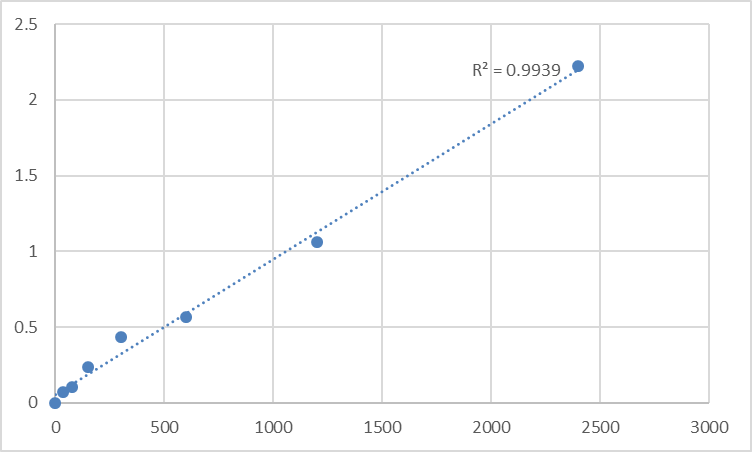
Every secretory and membrane protein you study — receptors, ion channels, antibodies, ECM organizers, complement factors — has to survive a hidden gauntlet inside the endoplasmic reticulum before it ever reaches the cell surface. That gauntlet is the ER protein quality-control (ERQC) system: a tightly choreographed relay of chaperones, folding sensors, glycosylation editors, and retrotranslocation machines that decide, millisecond by millisecond, whether a nascent polypeptide gets folded → processed → exported or retained → ubiquitinated → erased via ER-associated degradation (ERAD). At the center of the least-understood branch of this system sits a Type I transmembrane lectin most people have never heard of: Malectin (MLEC, aliases KIAA0152, UniProt: Q14165, Gene ID: 9761, Chr 12q24.31). Roughly ~32–34 kDa with a luminal carbohydrate-binding domain that specifically recognizes di-glucosylated N-glycans (Glc₂Man₉GlcNAc₂ / G2M9) — the fleeting, mono-glucosylated-isomer signature of incompletely processed or troubled glycoproteins — Malectin acts as a glycan-encoded folding-status sensor that teams up with ribophorin I (OST complex subunit) to clamp misfolded cargo inside the ER and throttle its secretion until the problem is solved or the protein is destroyed. The Human Malectin (MLEC) ELISA Kit (KTE61601) from Abbkine is the reagent that finally drags this ER-resident gatekeeper out of the "we assume the calnexin cycle works" black box and puts it on a calibrated, sandwich-ELISA curve (ng/mL) you can actually plot.
Malectin (MLEC) in One Clean Pass: A Type I ER Lectin That Reads the Sugar-Barcode of Folding
Unlike the famous secretory-pathway lectins — calnexin (Type I TM) and calreticulin (soluble) — which bind the mono-glucosylated (Glc₁) intermediate via their lectin site, Malectin's sweet spot is slightly different and functionally more specialized:
• Ligand preference: Glc₂Man₉GlcNAc₂ (G2M9) — the di-glucosylated N-glycan that appears transiently during initial N-glycosylation (before α-glucosidase II trims the second glucose) and re-appears on glycoproteins that slip out of the calnexin cycle without achieving native structure.
• Topology: Type I membrane protein — N-lumen / C-cytosolic, with a short cytoplasmic tail and the carbohydrate-binding domain facing the ER lumen where nascent chains emerge from the translocon.
• Complex partner: Ribophorin I (RPN1 / OST1 subunit) — the non-catalytic scaffold of the oligosaccharyltransferase (OST) complex. Malectin binds RPN1, positioning it at the OST–translocon nexus, so it can intercept glycoproteins right where they're being glycosylated and decide: pass or hold.
The mechanistic framing from the Schallus et al. (2008, Mol Biol Cell) and Qin/Chen/Yamamoto group is elegant:
Malectin is an ER stress–induced backup sensor. When basal ERQC is overwhelmed, Malectin levels rise and the protein forms a persistent complex with ribophorin I, increasing association time with misfolded glycopolypeptides, interfering with further oligosaccharide processing (by keeping cargo out of the normal trimming/reglucosylation rhythm), and actively suppressing secretion of defective products — essentially a "fail-safe lock" on the secretome gate.
Why a Sandwich ELISA for a Type I ER Membrane Lectin — And Why "It's Just a Chaperone" Is a Lazy Take
MLEC is integral membrane (ER-lumenal domain), ~32 kDa, and moderately abundant — which means three things conspire against gel-only quantification:
- It lives where most cytosolic/Western-normalized housekeepers don't belong — you need a membrane/particulate prep (or at least a detergent-solubilized lysate) to see the real pool, and crude spin-under-lysis undercounts it.
- Its expression is dynamically regulated by ER stress (XBP1s, ATF4/CHOP axis) — so "MLEC is constant" is false; it rises 2–5× under tunicamycin, thapsigargin, DTT, or chronic secretagogue load, and that fold-change is the actual variable.
- The paper-grade readout you want is "how much MLEC protein is the ER deploying as its backup sensor?" — which requires a plate-based, interpolated number, not a diffuse ~32 kDa band normalized to β-actin (a cytosolic protein that doesn't scale with ER membrane load).
The KTE61601 kit uses the field-standard architecture:
- Microplate pre-coated with capture anti-MLEC antibody.
- Standards (recombinant human MLEC) + samples — serum, plasma, tissue homogenates, cell lysates, cell culture supernatants/lysates, other biological fluids — added → MLEC (or its solubilized luminal domain / ectodomain-accessible fragments) binds.
- Wash → biotinylated anti-MLEC detection (different epitope) → Streptavidin–HRP → TMB → color ∝ bound MLEC.
- Stop → 450 nm → interpolate ng/mL from the standard curve.
Consolidated performance envelope from distributor/technical summaries aligned with this kit family:
Parameter Specification
Target Human Malectin / MLEC (UniProt Q14165, ~292 aa, ~32–34 kDa)
Format 96-well sandwich ELISA, pre-coated capture
Detection Biotin-Ab → SA-HRP → TMB, 450 nm
Dynamic Range 0.156 – 10 ng/mL
Sensitivity / LOD ~0.078 ng/mL
Intra-Assay CV < 8%
Inter-Assay CV < 10–12%
Samples Serum, plasma, tissue homogenates, cell lysates, culture supernatants
Assay time ~3–5 hours
(Confirm exact dilutions and lot-specific recovery on the shipped Abbkine datasheet/CoA for KTE61601.)
Where Quantifying Malectin (MLEC) Protein Actually Advances the Story
- ER Stress, UPR, and Secretory Load (The Reason Malectin Exists)
This is the core. Tunicamycin (N-glycosylation block), thapsigargin (SERCA Ca²⁺ pump → BiP/GRP78 release), DTT, and chronic secretory demand all induce MLEC transcription via XBP1s and ATF4/CHOP. Measuring MLEC protein (normalized to mg total protein, BCA, or an ER membrane marker like calnexin/GRP78/BiP) gives you the UPR's structural investment — not just a phosphorylated eIF2α snapshot.
Pairs naturally with: BiP/GRP78 (WB), XBP1 splicing (RT-PCR), CHOP, cleaved ATF6, and (if you probe carbs) G2M9-glycoprotein accumulation via lentil/ConA blot or mass-spec.
- Glycoprotein Folding Diseases: CF, α₁-AT Deficiency (ZZ-type), and Congenital Disorders of Glycosylation (CDG)
• α₁-Antitrypsin (A1AT) null/null (PiZZ): polymerizes in the ER → retained → hepatotoxic inclusion. Malectin preferentially associates with the misfolded α₁AT glycoform and suppresses its secretion — which is protective for the secretome but toxic for the hepatocyte if the degrading capacity is swamped. Quantifying MLEC here tells you whether the ER deployed its backup bite.
• Cystic fibrosis (ΔF508-CFTR): partially folded ΔF508 is recognized by the calnexin cycle and related lectin sensors; MLEC levels can shift as the ER stress mounts, making it a useful "load indicator" in corrected vs. uncorrected lines.
• CDG (Congenital Disorders of Glycosylation): where N-glycan processing itself is mutated — MLEC's ligand (G2M9) may accumulate abnormally, altering the malectin–RPN1 occupancy that governs flux.
- Secreted Protein Factories: mAb-Producing CHO, Recombinant Biologics, Plasma Cells
In high-output secretory cells, the ER is permanently near capacity. MLEC level is a readout of how hard the ERQC backup gate is working — and (exploratorily) its shed/extracellular-vesicle-associated ectodomain can sometimes be tracked in concentrated supernatants or conditioned media as a proxy for ER stress spillover. For bioprocess optimization (fed-batch titers, temperature-shift, osmolality stress), this is a smarter QC marker than "total IgG went up."
- Immune Polarization & the MLEC Polymorphism–Cerebral Palsy Link
This is the most provocative clinical-angle paper currently attached to MLEC: specific SNPs in/near the MLEC gene are associated with cerebral palsy risk, with mechanistic work suggesting the variant reduces MLEC expression → impairs the M2-like (anti-inflammatory) macrophage polarization program, shifting the microenvironment toward unresolved pro-inflammatory damage during perinatal hypoxia–reperfusion injury.
Quantifying MLEC protein in macrophage lysates (M0 → M1 vs. M2 polarization), paired with IL-6, TNF, IL-10, Arg1, CD206, and iNOS, makes the genetic association concrete at the cellular level.
- Viral Entry & Glycoprotein Client Hijack (Influenza HA, RSV F, coronavirus S-precursor Contexts)
Viruses that depend on the calnexin/calreticulin cycle for folding their envelope glycoproteins (HA, F, S) are natural consumers of the ERQC machinery. Malectin's selective association with misfolded HA conformers (documented in the PMC3027649 paper) means its level modulates the fidelity of the folding pipeline that produces infectious particles — tracking MLEC in infected cells gives you a host-sensor axis for how "stressed vs. coping" the secretory line is under viral load.
- CRISPR / AAV & Chemical ER Stress Screens
Editing MLEC or RPN1? Don't just show "secreted reporter leaked." Report % MLEC protein remaining ± SEM from the calibrated ELISA (ng/mg), and tie it to:
• Secreted vs. retained A1AT or HA (acid phosphatase/HA-trigger pulse-chase)
• ERAD reporter (CD3δ-GFP, NHK-GFP)
• XBP1 splicing + BiP
That's the triad that proves you touched the backup latch, not just "knocked something out."
A Minimal Prep Blueprint (MLEC Is ER-Membrane — Treat It Like a Luminal-Domain Protein)
• Lysate: cold 50 mM Tris pH 7.4, 150 mM NaCl, 0.5–1% Triton X-100/NP-40 + protease inhibitors + 1–2 mM PMSF, keep on ice, brief sonication optional (low-power, on ice, 2–3 × 3-sec pulses) to release membrane-embedded MLEC without denaturing the luminal domain.
• Clarify 12,000–16,000 ×g, 15 min, 4°C → supernatant = your MLEC-accessible pool.
• BCA the same final lysate → express as ng MLEC / mg total protein (or normalize to calnexin or GRP78 if you want ER-membrane-loading correction).
• Warm kit reagents ≥ 30 min RT before opening; protect TMB from light; stop uniformly; read 450 nm promptly; run the full standard curve on every plate.
The Bottom Line
Malectin (MLEC) is the ~32 kDa, Type I ER-resident lectin that reads the di-glucosylated sugar barcode (Glc₂-Man₉-GlcNAc₂) on nascent glycoproteins and, when the folding pipeline is stressed, teams up with ribophorin I to lock misfolded cargo inside the ER and choke off secretion — a backup quality-control gate that protects the secretome at the cost of ER load. It's the hidden variable in UPR depth, α₁-AT liver toxicity, macrophage polarization genetics, and every experiment where "secreted protein went down" needs to be explained as ER retention, not just transcriptional repression. The Human Malectin (MLEC) ELISA Kit — KTE61601 from Abbkine gives you that variable as a number: pre-coated capture → biotin detection → HRP–TMB → 450 nm → ng/mL, over a 0.156–10 ng/mL range with LOD ~0.078 ng/mL, in a ~3–5 hour workflow that scales across treatments, genotypes, and tissue lysates without chaining you to a gel rig.
Product Reference: KTE61601 – Human Malectin (MLEC) ELISA Kit
Learn more and order: https://www.abbkine.com/product/human-malectin-mlec-elisa-kit-kte61601/
(For Research Use Only; not for diagnostic procedures in humans.)





