




The c-Myc "Growth Switch" You Almost Never Measure: Why MINA Is the Nuclear Ribosome-Biogenesis Node That Disappears When You Need It Most — And How KTE61613 Puts It Back on Your Plate
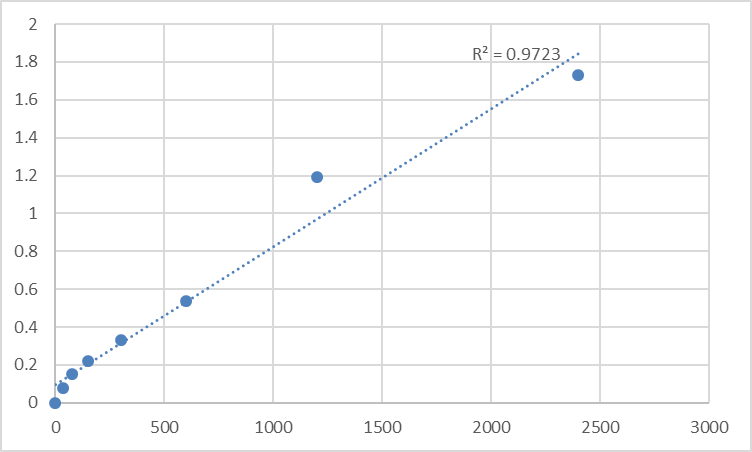
c-Myc is the most famous oncogene in human biology — and also the most frustrating — because everybody assays the downstream fireworks (proliferation markers, glycolysis shifts, ribosome-content proxies) while ignoring one of the proteins Myc itself summons to actually build the ribosome factory: MINA, the MYC-Induced Nuclear Antigen (aliases MINA18, RpL27a-like nucleolar protein, UniProt: Q8IUZ8, Gene ID: 84864, Xp22.3/Xq28 pseudoautosomal region). Computed ~28 kDa but running as a famously diffuse ~18–37 kDa doublet/singlet depending on isoform and post-translational modification, MINA is a JmjC domain-containing nucleolar protein that doesn't sit quietly in a "Myc target" list — it helps execute the growth program by anchoring ribosome biogenesis, nucleolar integrity, and metabolic translation capacity at the very moment Myc says "grow." The Human MYC-induced nuclear antigen (MINA) ELISA Kit (KTE61613) from Abbkine exists to stop treating MINA as a "diffuse nucleolar band" and start treating it as a calibrated, two-site sandwich ELISA variable (ng/mL) you can plot across Myc-ON/OFF, drug panel, and tumor-biopsy lysate — so the "growth phenotype" has a mechanistic denominator.
MINA in One Paragraph: A JmjC-Domain Nucleolar Protein That's Really About Ribosome Output
Despite carrying a JmjC (Jumonji C) domain — the same structural scaffold that houses Fe(II)- and α-ketoglutarate-dependent dioxygenases like the KDM histone demethylases — MINA's day job is not histone demethylation. Phylogenetically it clusters closer to ribosomal protein L27a (RpL27a) surrogates and nucleolar cofactors; functionally, it lives in the nucleolus where it promotes 60S ribosomal subunit biogenesis and rRNA processing, and experimentally it behaves as a pro-growth, transformation-associated nuclear antigen whose expression tracks with Myc status, mTOR/S6K signaling, and nutrient sufficiency.
The chain of command you can actually test:
Growth signals (serum, IGF, amino acids) → Akt/mTOR → c-Myc transcriptionally induces MINA → MINA enters nucleolus → 60S biogenesis ↑, nucleolar cap integrity maintained → translational capacity ↑ → cell mass ↑
When Myc is removed or translation is poisoned (rapamycin, cycloheximide, nucleolar stress), MINA levels and nucleolar localization shift — and that shift is exactly what your proliferation assay is summarizing without explaining.
Why a Sandwich ELISA for MINA — And Why the "~18–37 kDa Ghost Band" Isn't Good Enough
MINA is a classic "annoying Western target" for three reasons that directly hurt reproducibility:
- Its apparent MW wanders (isoforms, species differences, and possibly cleavage/modification make it run 18–37 kDa) — so a single band-density comparison across conditions can drift with gel % and transfer efficiency.
- It's nucleolar / chromatin-adjacent, meaning crude whole-cell prep can undercount it unless you actually solubilize the nucleolar compartment (gentle detergent is fine; completely ignoring the nuclear pellet isn't).
- Your experiment usually needs CVs, not a photo: dose–responses to Myc-inhibitors (10074-G5, Omomyc), BETi (JQ1), mTORC1 blockers, or amino-acid starvation generate 30+ data points that belong on a curve, not a gel-stack.
The KTE61613 sandwich ELISA solves this with the architecture you've seen across the Abbkine family:
- Microplate pre-coated with capture anti-MINA antibody.
- Standards (recombinant human MINA) + samples — tissue homogenates, cell lysates, cell culture supernatants/lysates, other biological fluids — added → MINA binds.
- Wash → biotinylated anti-MINA detection (different epitope) → Streptavidin–HRP → TMB → color ∝ bound MINA.
- Stop → 450 nm → interpolate ng/mL from the standard curve.
Typical performance envelope you'll cite for this kit family:
Parameter KTE61613-class (representative)
Target Human MINA / MYC-induced nuclear antigen (UniProt Q8IUZ8, Gene 84864)
Format 96-well sandwich ELISA, pre-coated capture
Detection Biotin-Ab → SA-HRP → TMB, 450 nm
Dynamic Range 0.156 – 10 ng/mL
Sensitivity / LOD ~0.046–0.094 ng/mL
Intra-Assay CV < 7–8%
Inter-Assay CV < 10%
Samples Tissue homogenates, cell lysates, culture supernatants, other biological fluids
Assay time ~3–5 hours
(As always, lock Methods to the shipped Abbkine datasheet/CoA for your lot of KTE61613.)
Where MINA Quantification Actually Carries the Paper
- c-Myc Addiction & BET/mTOR Therapeutics
This is the most natural home for MINA. The canonical Myc-addicted lines (HLMs, neuroblastoma, medulloblastoma, triple-negative bursts) respond to BET bromodomain inhibition (JQ1 → Myc transcription ↓) or mTORC1 blockade with a rapid fall in MINA protein — often faster than total protein synthesis markers settle. Using KTE61613, you can run a time course (0, 2, 6, 12, 24 h post-JQ1/Rapa) and plot MINA (ng/mg, BCA) vs. polysome profiles / puromycin incorporation / Myc-ChIP or RT-qPCR, proving the drug didn't just "slow things down" but severed the Myc→ribosome pipeline at a named node.
- Cancer Proliferation Panels & "Prognostic Antigen" Validation
MINA has been reported as overexpressed in several solid tumors (NSCLC, HCC, colorectal, esophageal) where nucleolar hypertrophy is a known poor-prognosis morphologic sign (AgNOR scoring, nucleolin up, etc.). Quantifying MINA in TMA lysates or frozen-bank tissue homogenates (normalized to histone H3, nucleophosmin/B23, or mg protein) lets you test whether it adds independent signal to Ki-67, PCNA, Myc, and p-S6 (Ser235/236) — a mini "ribosome-budget" axis for pathology.
- Nutrient Stress, Amino Acid Starvation & Nucleolar Stress
The nucleolus is a metabolic sensor: leucine/glutamine withdrawal → mTORC1 disengages → nucleolar caps dissolve (nucleophosmin/B23 re-localizes) → MINA nucleolar intensity drops and sometimes the total protein pool contracts. Measuring both total MINA (ELISA, ng/mg) and IF/nIF pattern (nucleolar vs. cap vs. dispersed) is the cleanest way to show "the ribosome factory shut down because the nutrients left," not just "cells looked smaller."
- Innate Immunity & Pathogen-Host Nucleolar Hijack
Several viruses and intracellular bacteria target the nucleolus to reprogram rRNA biogenesis and suppress host defense ribosomes; conversely, interferon signaling can drive nucleolar stress that limits tumor growth. MINA makes a tidy readout in macrophage/DC lysates or infected epithelial monolayers when your question is: did the insult collapse translation by starving the nucleolus or by poisoning the JmjC/Fe–S wiring?
- Ribosomopathies & Nucleolar Stress Screens (Diamond–Blackfan, 5q-, Shwachman-Diamond)
These disorders sit at the intersection of RPL/RPS mutations, impaired 60S biogenesis, and p53-mediated checkpoints. MINA, as a nucleolar biogenesis cofactor, shifts in compensatory vs. collapsing states; having an ELISA lets you screen iPSC-derived lineages or primary hematopoietic precursors for how the nucleolar machinery rebalances (or doesn't) without chaining the experiment to a single IF-preparation day.
- CRISPR / AAV Validation
Editing MYC or upstream activators (MAX, E2F1)? Report % MINA protein remaining ± SEM from the calibrated curve (ng/mg), confirm nucleolar localization (B23/ fibrillarin IF), and tie it to the payout your reviewer cares about — EdU incorporation, polysome profile, or colony-forming ability. That's what converts "we hit the pathway" into "we proved the node."
A Minimal Prep Note (MINA Is Nucleolar — Respect the Nucleus)
For cultured cells:
• Lyse in RIPA or 50 mM Tris pH 7.4, 150 mM NaCl, 0.5–1% Triton X-100/NP-40 + protease inhibitors; keep cold.
• To specifically enrich: do a low-salt CSK pre-extract (0.5% Triton, 10 mM PIPES pH 6.8, 50 mM NaCl + 0.1% BSA) → spin → pellet = nuclear/nucleolar-enriched → re-extract that pellet with 0.5% SDS or 1% Sarkosyl if you want the "strict nucleolar" pool; for routine screening, total-cell lysate + BCA is acceptable as long as you state it.
• BCA the same final lysate → express as ng MINA / mg total protein.
• Warm kit reagents ≥ 30 min RT before opening; protect TMB; stop uniformly; read 450 nm promptly; run the full standard curve on every plate.
The Bottom Line
MINA is the ~28 kDa JmjC-domain nucleolar antigen c-Myc calls up when it decides the cell needs more ribosome output now — and because it lives at the hinge of Myc transcription → nucleolar biogenesis → translational capacity, it's the one "Myc-induced" node that actually looks like a growth engine rather than a downstream echo. Measuring it as a calibrated ELISA variable instead of a wandering 18–37 kDa ghost band changes your Myc/translation paper from decorative to quantitative. The Human MYC-induced nuclear antigen (MINA) ELISA Kit — KTE61613 from Abbkine gives you that variable: pre-coated capture → biotin detection → HRP–TMB → 450 nm → ng/mL, over a 0.156–10 ng/mL working range with LOD ~0.05–0.09 ng/mL, in a ~3–5 hour workflow that scales across clones, doses, and cohorts without a gel-stack detour.
Product Reference: KTE61613 – Human MYC-induced nuclear antigen (MINA) ELISA Kit
Learn more and order: https://www.abbkine.com/product/human-myc-induced-nuclear-antigen-mina-elisa-kit-kte61613/
(For Research Use Only; not for diagnostic procedures in humans.)





