




The Micromolar Barcode Your Knee Leaves in the Toilet: Why CTX-II — Not Just an MRI — Is the Real-Time Scoreboard of Cartilage Collapse, and How KTE62194 Puts It on a Plate
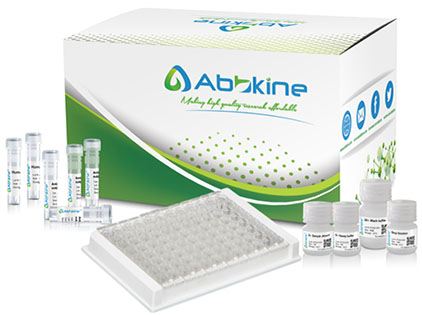
Articular cartilage has exactly one job: be a near-frictionless, load-distributing, ~2–4 mm thick hydrogel-like composite that stops bone from grinding against bone. The tragedy of osteoarthritis (OA) is that cartilage can't scream. It has no nerves in the avascular mid-zone, so by the time your X-ray shows "joint-space narrowing" or your MRI flags a full-thickness fissure, years of matrix erosion have already happened — and the collagen II scaffold that holds the tissue together has been quietly chewed into fragments that end up in the synovial fluid, the circulation, and eventually your urine. The molecule that tracks this erosion in real time is CTX-II — the C‑telopeptide of type II collagen, a neo‑epitope peptide fragment generated the instant MMP‑13 (and allied collagenases) cleave the non‑helical C‑terminal telopeptide of the α‑chains of collagen II. The Human C‑telopeptide of type II collagen (CTX‑II) ELISA Kit (KTE62194) from Abbkine is the tool that catches this degradation barcode as a quantitative, neo‑epitope‑specific readout (pg–ng/mL) — so your OA model, sports‑injury panel, or DMOAD‑trial biomarker suite finally has a number that says "cartilage is breaking," not just "joint looks bad on a scan."
CTX‑II in One Paragraph: A 1–4 kDa Fragment That Only Exists Because the Scaffold Broke
Type II collagen forms ~150–300 nm diameter fibrils cross‑linked via N‑telopeptide / C‑telopeptide lysyl‑derived pyridinoline (PYD) and deoxypyridinoline (DPD) bridges. In healthy cartilage, this network is in quasi‑steady state: COL2A1 synthesis (chondrocytes) ≈ removal (catabolism).
The moment pro‑inflammatory cytokines (IL‑1β, TNF‑α) or excessive mechanical overload turn on collagenases, the critical cut happens at the triple‑helical fringe → non‑helical C‑telopeptide, releasing short peptides (often ~1.5–4 kDa) into the pericellular matrix. Those peptides contain a unique cleavage‑generated sequence that native intact collagen II does not expose — and that sequence is exactly what a neo‑epitope immunoassay recognizes.
The clinical punchline is simple:
• High CTX‑II = active fibrillar collagen II degradation (not just "total collagen fragments" or "hydroxyproline sludge").
• Low/stable CTX‑II = cartilage catabolism under control (or already burned out in end‑stage).
Because these fragments are small, they leak into synovial fluid → lymph → blood → cleared renally, which is why the most convenient matrix is actually urine (first‑morning void) — but serum/plasma and SF give you complementary snapshots.
Why a Neo‑Epitope Sandwich ELISA — And Why Hydroxyproline and "total collagen peptides" Can't Tell the Same Story
Older cartilage‑turnover assays measured urinary hydroxyproline or total吡啶oline/DPD — which come from all collagen types (I, II, III…) and reflect total body collagen turnover, not specifically the articular surface you're trying to protect. Even modern CPII / PIIINP / COMP measure formation or structural companions, but CTX‑II is the canonical degradation marker: it exists only after cleavage, and the immunoassay's epitope is present only on the cleaved telopeptide, not on intact fibrils.
The KTE62194 kit uses the field‑standard architecture for this class of biomarker:
- A microplate pre‑coated with a capture antibody directed against the CTX‑II neo‑epitope (the precise C‑telopeptide sequence released by collagenase cleavage of the α2(II) chain, usually detected in its isomerized/deamidated forms that improve assay stability/specificity).
- Samples — urine, serum/plasma, synovial fluid, cartilage explant supernatants, tissue homogenates — added → CTX‑II peptide binds.
- Wash → detection antibody (often enzyme‑linked or biotinylated, depending on the kit's exact configuration) → substrate (TMB) → 450 nm read.
- Results are interpolated from a CTX‑II peptide standard curve → reported as ng/mL (or pg/mL) for fluids, or normalized to urine creatinine (Ct/Cr, ng/mmol or µg/mmol) for renal clearance correction.
Because CTX‑II is a small peptide, a true sandwich depends on having two non‑overlapping epitopes on the same fragment — which the neo‑epitope design achieves by exploiting the fixed cleavage terminus vs. an adjacent residue stretch. That's why it's specific for collagen II breakdown, not generic proline‑rich peptides.
Where CTX‑II Quantification Actually Makes the Paper Better
- Osteoarthritis Progression & "Can We See It Before the Joint Space Vanishes?"
OA is fundamentally a collagen‑II‑network failure: aggrecan loss comes first (swelling, softening), but once collagen fibrils get cut, the tissue loses tensile integrity and the surface fissures. CTX‑II rises before macroscopic cartilage loss in many longitudinal datasets, and — crucially — it responds to catabolic flares (IL‑1β/TNF spikes, meniscal tear biomechanics) faster than CPII rises.
In practice, the most persuasive OA biomarker panels pair:
• Formation marker: CPII or PIIANP (N‑propeptide of collagen II)
• Degradation marker: CTX‑II
• Ratio / trajectory: e.g., CTX‑II / CPII as a "catabolic‑anabolic index"
That index is what lets you say why the cartilage is shrinking, not just that it is.
- Post‑Traumatic OA & ACL/Meniscus Injury (The Sports‑Medicine Goldmine)
An ACL tear doesn't just destabilize the knee mechanically — it turns the joint into a cytokine‑rich, overload‑cyclic environment that upregulates MMP‑13 and ADAMTS‑4/5 almost immediately. CTX‑II spikes in synovial fluid and serum within days–weeks, tracks with cartilage T2‑mapping changes, and — if you're testing early PRP, MACI scaffolds, or anti‑MMP/IL‑1Ra strategies — provides the dynamic catabolic readout that an MRI can't yet resolve.
- DMOAD & Arthritis Drug‑Trial Biomarkers
The graveyard of DMOAD (disease‑modifying OA drug) trials is full of agents that looked great in animals but couldn't prove structural slowing in humans because the readout was pain VAS + JSW on X‑ray (slow, noisy). CTX‑II became the go‑to degradation biomarker to show that a drug actually reduced collagen II cleavage over 6–12 months. In trial docs, you'll usually see:
• uCTX‑II / Cr (first‑morning urine)
• sCTX‑II (fasting serum/plasma, EDTA, processed cold)
• Paired with WOMAC/VAS, T2‑mapping, and semis‑quantitative arthroscopy scoring
That's the evidence stack reviewers expect now.
- Rheumatoid Arthritis & Erosive Joint Destruction (Where Collagen II Also Dies)
RA destroys via pannus + citrullinated‑protein/anti‑CCP immunity, but the end‑effect on cartilage is still collagen II fibril cleavage — so CTX‑II rises and tracks with erosion scores and anti‑TNF / JAKi responses. Here, pairing CTX‑II with CRP, anti‑CCP, and ultrasound synovitis scoring makes the systemic vs. local catabolism split explicit.
- Cartilage Explant & Chondrocyte Culture (The Mechanistic Bench Side)
If you're running IL‑1β/TNF + compressive overload on bovine/human explants, CTX‑II in the media supernatant is the simplest way to quantify dynamic fibrillar collagen II loss without digesting tissue to hydroxyproline. Add MMP‑13 inhibitor (or ADAMTS‑4/5 modulators) → show CTX‑II drops → close the loop.
Sample‑Handling Rules That Decide If CTX‑II Is Real or a Pipetting Artifact
Matrix Why It Matters Practical Rule
Urine (preferred for turnover) Renal clearance depends on hydration; absolute ng/mL drifts Collect first‑morning void → measure CTX‑II (ng/mL) AND creatinine (mg/dL) → report CTX‑II / Cr (ng/mmol or µg/mmol)
Serum/plasma Protease clipping can destroy the epitope at RT EDTA tubes, cold chain, spin ≤ 1 hr, 4°C, aliquot, −80°C, avoid >1 freeze–thaw; add PMSF + protease inhibitors if you can
Synovial fluid (SF) Viscous; cells keep degrading in the tube Drain into EDTA on ice, centrifuge immediately to remove cells, freeze aliquots
Cartilage explant sup Low volume but clean catabolic signal Collect into inhibitor cocktail, snap freeze, avoid repeated thaw
A Minimal Workflow You Can Paste Into Methods
- For serum/plasma: collect in EDTA, invert, keep on wet ice, centrifuge 2000 ×g, 10 min, 4°C within 60 min. Aliquot, −80°C, single thaw.
- For urine: collect first‑morning void, mix with a preservative if your protocol specifies (some labs use 0.1% BSA/EDTA carrier, though many just snap‑freeze the native sample), measure creatinine colorimetrically or on chemistry analyzer → compute CTX‑II/Cr.
- Dilute samples into kit assay buffer per the manual's recommended pre‑dilution (CTX‑II is a peptide, so adsorption can matter — use low‑bind tubes for neat dilutions).
- Warm reagents ≥ 30 min RT before opening; protect from light; stop uniformly; read 450 nm; fit a 4‑PL/log‑logit; run full standard curve per plate.
The Bottom Line
CTX‑II is the ~1–4 kDa C‑telopeptide fragment left behind when collagenase (mainly MMP‑13) cuts the type II collagen fibrils that make articular cartilage load‑bearing — which means it's not a "general collagen byproduct," it's the molecular scar tissue of fibrillar collapse, and it exists only after the network breaks. Measuring it as a neo‑epitope‑specific immunoassay lets you distinguish formation from degradation, flare from burnout, and treatment effect from placebo drift. The Human C‑telopeptide of type II collagen (CTX‑II) ELISA Kit — KTE62194 from Abbkine is the reagent that operationalizes this idea: neo‑epitope capture → detection → HRP–TMB → 450 nm → ng/mL (or pg/mL), so your OA, sports‑injury, or DMOAD paper replaces "cartilage looked worse" with a plotted, normalized biomarker trajectory that reviewers can actually defend.
Product Reference: KTE62194 – Human C‑telopeptide of type II collagen (CTX‑II) ELISA Kit
Learn more and order: https://www.abbkine.com/product/human-c-telopeptide-of-type-ii-collagen-ctx-ii-elisa-kit-kte62194/
(For Research Use Only; not for diagnostic procedures in humans.)





