




The Growth Factor That Builds Organs in the Embryo—and Then Returns to Remodel a Tumor Microenvironment
In the spring of 1984, Toshikazu Nakamura and his colleagues at Kyushu University isolated a protein from the plasma of patients with fulminant hepatic failure that, when injected into partially hepatectomized rats, drove hepatocyte proliferation with a potency exceeding any known mitogen. They named it hepatocyte growth factor. Over the following four decades, that single purification column spawned an entire field of metazoan biology. HGF was shown to scatter epithelial colonies, triggering a loss of cell-cell adhesion that looked more like a mesenchymal transition than a mitogenic response, and the molecule was simultaneously christened scatter factor. Its receptor was identified as c-MET, a receptor tyrosine kinase that activates PI3K, Ras, STAT3, and β-catenin pathways. The HGF-MET axis was revealed to control organ development during embryogenesis, tissue regeneration after injury, angiogenesis, and wound healing. And then, in a discovery that reframed the entire field, the same signaling axis was found hijacked by cancer cells, where it drives invasion, metastasis, metabolic reprogramming, and immune evasion.
A 2024 review in Frontiers in Immunology confirmed that cancer-associated fibroblasts and mesenchymal stromal cells produce HGF, activating c-MET signaling in tumor cells and myeloid-derived suppressor cells, depleting essential amino acids from the tumor microenvironment and suppressing effector immune cell function. This axis is now one of the most intensively pursued therapeutic targets in oncology, with c-MET inhibitors, anti-HGF monoclonal antibodies, and bispecific MET-EGFR antibodies all advancing through clinical development. Yet for all this therapeutic investment, the quantitative measurement of the actual ligand—the HGF protein itself—has lagged behind the biological insight. Western blotting can confirm HGF presence in conditioned medium. Generic ELISA kits can generate numbers that look plausible. But HGF is a heterodimeric protein composed of a 69 kDa α-chain and a 34 kDa β-chain linked by a disulfide bond, structurally related to the peptidase S1 family of serine proteases despite lacking proteolytic activity. Its circulating concentration in healthy human serum is approximately 244 ± 65 pg/mL, a range that sits near or below the detection floor of many commercial ELISA kits, where signal-to-noise ratios collapse and biologically meaningful differences become statistically invisible. A 2000 methods study demonstrated that the sensitivity limit of established HGF ELISAs was approximately 0.2 ng/mL—above the mean level in normal serum—meaning roughly half of all healthy controls generated uninterpretable measurements.
Abbkine's EliKine™ Human HGF ELISA Kit (KTE6009) addresses this sensitivity gap at the architecture level, and the specification that matters most is the number: 60 pg/mL.
This is not an incremental improvement over legacy assays. It is a fourfold increase in sensitivity over the 0.2 ng/mL detection floor that has historically excluded normal serum from quantitative HGF analysis, and it is achieved through a two-site sandwich ELISA design in which a capture antibody specific for human HGF has been pre-coated onto a microplate. Standards and samples are pipetted into the wells, and any HGF present is bound by the immobilized antibody. After removing unbound substances, a biotin-conjugated detection antibody specific for a distinct HGF epitope is added, followed by proprietary EliKine™ Streptavidin-HRP conjugate. A substrate solution then develops color in direct proportion to the amount of HGF captured in the initial step. The color development is stopped, and the absorbance intensity provides a quantitative readout of HGF concentration in each well. The entire assay runs 3–5 hours, depending on operator experience, positioning it as a same-day experiment that fits within a standard laboratory workday.
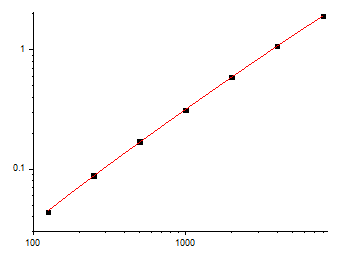
The detection range spans 125 pg/mL to 8,000 pg/mL, a dynamic window that captures both the basal HGF concentrations present in healthy human serum and the dramatically elevated levels—often reaching several thousand picograms per milliliter—associated with acute liver failure, tumor metastasis, and post-surgical tissue regeneration. For researchers who have struggled with kits whose upper detection limit saturates at 1,000–2,000 pg/mL, requiring dilution and re-assay of samples whose HGF concentration was unknown at the time of the first measurement, the 8,000 pg/mL ceiling means a single standard curve serves the full pathophysiological spectrum.
Specificity is the dimension where sandwich ELISA architecture most directly determines data quality. The product documentation states that no significant cross-reactivity or interference between Human HGF and analogues was observed. This matters because HGF is a member of a structurally related family that includes macrophage stimulating protein (MST1), and the plasminogen-related growth factors share kringle domains and serine protease homology regions with HGF. A sandwich ELISA that uses two antibodies targeting distinct HGF epitopes achieves specificity through dual recognition—both antibodies must engage the target for signal to develop. The resulting HGF measurement is an HGF measurement, not a summed growth factor concentration.
Sample compatibility spans the biological matrices in which HGF is biologically and clinically relevant: cell culture supernatants, serum, plasma, and other biological fluids. Cell culture supernatant compatibility extends the kit's utility to the bench researcher studying HGF secretion from mesenchymal stromal cells, cancer-associated fibroblasts, or hepatocyte models. Serum and plasma compatibility serves the translational researcher quantifying systemic HGF as a biomarker of liver regeneration, tumor burden, or therapeutic response. The gene identified as HGF maps to chromosomal location 7q21.11, encodes a preproprotein that is proteolytically processed to generate α and β chains, and is expressed in mesenchymal cells of the liver, spleen, kidney, lung, and dental pulp, with injury and inflammation stimulating HGF mRNA expression and increasing serum HGF levels.
The kit components ship as a complete sandwich ELISA package: Human HGF microplate, Human HGF standard, Human HGF detect antibody, EliKine™ Streptavidin-HRP, standard diluent, assay buffer, HRP substrate, stop solution, wash buffer, and plate covers. The unopened kit stores at 2–8°C, subjecting the pre-coated capture antibody to none of the freeze-thaw cycling that progressively degrades binding affinity. Shipping occurs on gel packs with blue ice.
The protocol notes reflect operational discipline accumulated through the validation of many sandwich ELISAs. All reagents must warm to room temperature for at least 30 minutes before opening. Pipette tips must be pre-rinsed and replaced between samples, standards, and reagents to prevent carryover contamination. Thorough mixing every 10 minutes using a low-frequency oscillator or gentle hand shaking is specified as critical for consistent color development. All standards and samples should be assayed in duplicate or triplicate. Unused wells must be kept desiccated at 4°C in the sealed bag provided. These are the operating procedures that separate a standard curve with an R² above 0.99 from a dataset a reviewer will question.
The broader biomedical context makes reliable HGF quantification increasingly urgent across multiple research domains. In oncology, the HGF-MET axis drives tumor invasion, metastasis, and drug resistance, and quantitative HGF measurement in serum, plasma, and tumor-conditioned medium is essential for establishing the pharmacodynamic relationship between anti-HGF therapy and target engagement. In hepatology, HGF levels correlate with the clinical grade of hepatic coma in fulminant hepatic failure patients, and serial HGF measurements track liver regeneration following partial hepatectomy or living-donor transplantation. In nephrology, HGF promotes tubular repair after acute kidney injury, and urinary HGF levels have been investigated as a biomarker of renal recovery. In cardiovascular research, HGF stimulates angiogenesis and has been evaluated as a therapeutic agent for peripheral arterial disease. In immunology, HGF-MET signaling in myeloid-derived suppressor cells creates an immunosuppressive tumor microenvironment, and HGF quantification complements the immunological profiling that increasingly accompanies immunotherapy clinical trials.
The product page currently shows zero citations for KTE6009. For a recently launched ELISA kit whose analytical specifications—60 pg/mL sensitivity, 125–8,000 pg/mL detection range, two-site sandwich architecture—address documented gaps in HGF measurement, zero citations reflects launch timing rather than any limitation in the kit's design. Every widely adopted ELISA kit began with zero citations. The question that matters is whether the specifications match the biological requirements of the research community, and the requirements are clear: sensitivity below the mean serum HGF concentration of healthy individuals, a dynamic range spanning from basal to pathological HGF levels, specificity that excludes cross-reactivity with structural analogues, and sample compatibility with the biological fluids that actually contain the secreted cytokine. KTE6009 meets every one of those requirements.
For the oncologist quantifying HGF in patient serum during anti-c-MET therapy, the hepatologist tracking HGF as a biomarker of liver regeneration, the immunologist profiling HGF secretion from tumor-associated stromal cells, the developmental biologist measuring HGF in organoid-conditioned medium, or the basic scientist performing any experiment in which HGF-MET signaling is a variable rather than a confound, the availability of a 60 pg/mL sandwich ELISA with a detection ceiling of 8,000 pg/mL converts HGF quantification from a technical challenge into a routine measurement. Nakamura isolated HGF from the plasma of patients with fulminant hepatic failure in 1984 and opened a field. KTE6009 isolates HGF from serum, plasma, and conditioned medium and delivers a number.
Explore specifications, access the protocol, and place your order here: https://www.abbkine.com/product/elikine-human-hgf-elisa-kit-kte6009/





