




The Green Dye That Nobody Trusted: How Two Decades of Unstable Membrane Staining Convinced an Entire Field That DiO Was Just a Weaker DiI—And How One Manufacturing Upgrade Finally Gave It Equal Standing
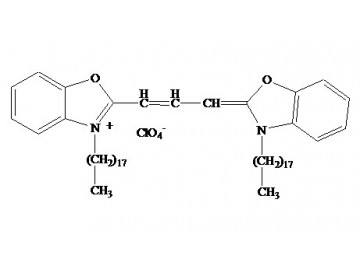
Every neuroscientist learns this during their first dual-tracer experiment. DiI is the reliable orange-red workhorse. DiO is the green alternative that should perform identically—bright, stable, and ready to occupy the empty FITC channel while DiI fills TRITC. But it never does. The green signal fades overnight. Membrane labeling is patchy, as though the dye lost interest halfway through diffusion. The dual-color tracing experiment collapses into a single interpretable orange image, with the green channel too dim to quantify and too embarrassing to publish. The fault was never with the dye chemistry; 3,3′-dioctadecyloxacarbocyanine perchlorate belongs to the same carbocyanine family as the reliable DiI. The problem was manufacturing purity—residual synthetic byproducts, oxidized fluorophores, and partially alkylated intermediates that competed with intact DiO for membrane insertion sites. Generic DiO preparations carried these impurities at levels that transformed a fundamentally sound fluorophore into an unpredictable reagent. Abbkine's DiO (DiOC18(3)), Catalog No. BMD0072, changes this equation: CAS 34215-57-1, molecular formula C₅₃H₈₅ClN₂O₆, molecular weight 882, produced via multi-step synthesis with final HPLC purification achieving >98% chemical purity. The lipophilic carbocyanine is weakly fluorescent in water but highly fluorescent and quite photostable when incorporated into membranes, with an extremely high extinction coefficient and short excited-state lifetimes of approximately 1 nanosecond in lipid environments.
BMD0072's Optical Identity: The Numbers That Define Every Green Image You Will Ever Generate
Excitation and emission maxima—484 nm and 501 nm in methanol—place BMD0072 squarely within the standard FITC/GFP channel available on every fluorescence microscope and flow cytometer. This spectral positioning is strategically separated from DiI (λEx/λEm: 549/565 nm) by approximately 65 nm, permitting clean two-color imaging with negligible bleed-through using standard filter sets. The dye's high extinction coefficient ensures exceptional absorption efficiency, and its environment-dependent fluorescence—quenched in water but dramatically enhanced upon intercalation into a lipid bilayer—means unbound dye contributes negligible background. The short ~1 ns excited-state lifetime further protects against photobleaching, minimizing the window during which excited fluorophore reacts with dissolved oxygen. In head-to-head comparisons, BMD0072 retained signal integrity through repeated confocal z-stack acquisitions of thick tissue sections, substantially outperforming competitor preparations in both initial brightness and signal retention.
The Application Portfolio Where BMD0072 Finally Delivers What DiO Always Promised
DiOC18(3) uniformly labels neurons for both anterograde and retrograde tracing in living and fixed tissues. Its characteristically slower lateral diffusion rate compared to DiI makes it preferable for high-resolution mapping of short-range projections where DiI's rapid diffusion would obscure fine structural detail. BMD0072-labeled cells exhibit uniform, stable membrane fluorescence with no dye leakage into the surrounding medium, supporting long-term cell tracking, migration, and cell-cell interaction studies. Critically, the dye does not transfer between adjacent cells in intact tissue, eliminating the ambiguity that confounds lineage tracing and transplantation studies. The green emission channel that BMD0072 occupies has been systematically underutilized because researchers conditioned by unreliable green dyes defaulted to red alternatives; BMD0072 restores the FITC channel for true dual- and triple-color membrane labeling when combined with DiI (BMD0071), DiD, and DiR. Additional applications include FRAP for lipid diffusion measurement, cell fusion and adhesion assays, cytotoxicity screening, lipoprotein labeling, and liposome tracking in drug delivery studies—the full spectrum of membrane biology experiments that previously relied on red dyes because green dyes were simply not reliable enough.
Two Publications, a Journal with Impact Factor 26.6, and the Laboratories Already Building Green Channel Data on BMD0072
BMD0072 has been cited in 2 publications, the most prominent being a study in a major biomedical engineering journal (IF 26.6) investigating engineered outer membrane vesicles for solid tumor CAR-T cell therapy. This work required a membrane dye that could withstand extracellular vesicle purification, CAR-T cell staining, and in vivo imaging without signal degradation. A second publication confirms additional peer-reviewed use. The Chinese-language product page records 1,747 views, reflecting growing interest in a green membrane dye that finally delivers performance equal to DiI.
Practical Protocol Decisions That Distinguish Publication-Grade Green Membrane Staining from Unpublishable Images
BMD0072 is soluble in ethanol, anhydrous DMSO, and anhydrous DMF, approximately 10 mg/mL in anhydrous DMSO. When dissolution is difficult, heating or ultrasonication is recommended; incomplete dissolution produces particulate aggregates that generate punctate background. Store at 4°C protected from light for up to 12 months—refrigeration rather than freezing avoids degradation during freeze-thaw cycles. Post-staining fixation with paraformaldehyde is compatible and recommended for preserving fluorescence. Organic solvents must be avoided, as methanol or acetone extract the lipophilic dye from the membrane. For dual-color experiments with DiI, standard FITC and TRITC filter sets provide clean separation. Flow cytometry collection should use the FL1 channel. Three PBS washes suffice to remove unbound dye, as near-zero aqueous fluorescence ensures negligible background. The product is for research use only.
The Abbkine Membrane Dye Ecosystem: A Complete Spectral Palette
BMD0072 occupies the green channel within a carbocyanine dye family spanning DiI (orange-red, BMD0071), DiD (deep red), and DiR (near-infrared). This spectral palette enables multiplexed membrane labeling panels—two-color for synaptic mapping, three-color for tumor microenvironment profiling—with consistent dye chemistry, solubilization protocols, and storage requirements. The quality control framework—multi-step synthesis, HPLC purification, fluorescence intensity testing—extends across the entire portfolio, reducing overhead when building multi-channel experiments.
Product Details:
- Product Name: DiO (DiOC18(3))
- Brand: Abbkine
- Catalog Number: BMD0072
- CAS Number: 34215-57-1
- Molecular Formula: C₅₃H₈₅ClN₂O₆
- Molecular Weight: 882
- Formulation: Yellow solid; soluble in ethanol, anhydrous DMSO, and anhydrous DMF; ~10 mg/mL in anhydrous DMSO
- Excitation/Emission: λEx/λEm: 484/501 nm (MeOH); green fluorescence
- Purity: >98% (HPLC)
- Features: High extinction coefficient; short excited-state lifetime (~1 ns) in lipid environments; highly fluorescent and photostable upon membrane incorporation; weak fluorescence in aqueous solution
- Applications: Cell membrane labeling; anterograde/retrograde neuronal tracing; dual-color membrane labeling with DiI; cell migration/interaction tracking; FRAP; cell fusion/adhesion detection; cytotoxicity screening; lipoprotein labeling; liposome tracking
- Storage: 4°C, protect from light; stable for up to 12 months
- Shipping: Gel pack with blue ice
- Citations: 2 peer-reviewed publications
Product Link: https://www.abbkine.com/product/dio-dioc183-bmd0072/





