




The Fibrillar "Scar Code" in Your Blood: Why PIIINP (Procollagen III N-Propeptide) Is the Collagen-Synthesis Biomarker Your Fibrosis Model Can't Ignore
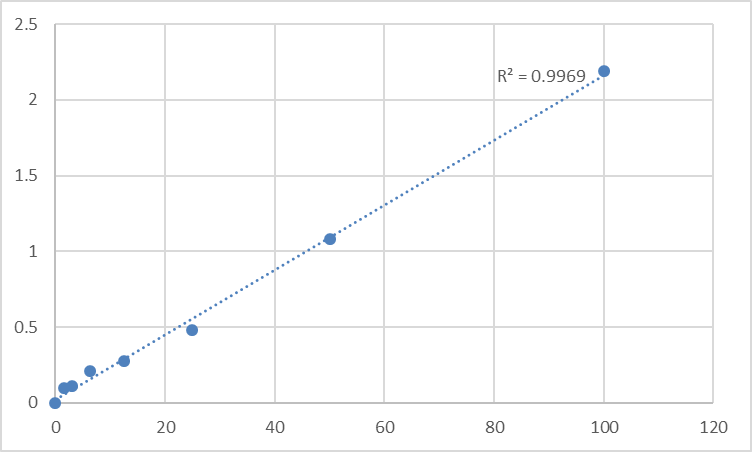
Type III collagen is the soft-tissue scaffold no one notices until it starts remodeling — and when it does, it announces itself with a very specific molecular barcode: the N-terminal propeptide of procollagen III (PIIINP), a ~42 kDa trimeric fragment cleaved off during collagen assembly and dumped into the extracellular space (and ultimately circulation) as a by-product of new collagen deposition. Most labs chasing fibrosis, liver disease, or connective-tissue turnover still obsess over total collagen/hydroxyproline (destructive, low-specificity) or TGF-β/α-SMA immunohistochemistry (gorgeous, but spatial-only), while ignoring the one analyte that directly quantifies how fast type III collagen is being made in real time. The Human N-terminal Procollagen III Propeptide (PIIINP) ELISA Kit (KTE61328) from Abbkine is the tool that plugs that gap: a quantitative sandwich ELISA that catches this secreted propeptide at pg–ng/mL sensitivity in serum, plasma, tissue homogenates, and cell culture supernatants, so your fibrogenesis story moves from "darker trichrome stain" to a calibrated, plate-readable number.
PIIINP in One Clean Pass: A Biosynthetic Leftover That Became a Landmark Biomarker
The fibrillar collagens (I, III, V…) aren't secreted as mature triple helices. They leave the ER as procollagen precursors with bulky N-terminal (N-propeptide) and C-terminal (C-propeptide) extensions that prevent premature intracellular fibril formation. Once outside the cell (in the extracellular space / at the fibroblast surface), two processing steps unlock the mature fibril:
Step Enzyme Product
N-propeptide cleavage ADAMTS-2 (primarily), supported by ADAMTS-14 and related sheddases Releases the N-terminal procollagen III propeptide (PIIINP) into the pericellular milieu
C-propeptide cleavage BMP1 / tolloid-like proteinases (C-propeptide endoproteinase) Releases the C-propeptide (PIICP)
The critical point for biomarker work: PIIINP is stoichiometrically coupled to new type III collagen deposition — every molecule of collagen III that matures → one PIIINP trimer released. It's not a "proxy cytokine"; it's literally the manufacturing off-cut of the fibril itself.
Why PIIINP — And Not Just "Total Collagen"?
Hydroxyproline assays tell you how much collagen ended up in the tissue, but not at what rate it was synthesized (buried in a time-integrated sum). TGF-β and α-SMA tell you the profibrotic drive, but not the actual matrix output. PIIINP bridges that gap: it's a dynamic, secretion-coupled readout of active type III collagen biosynthesis that can be tracked in serial samples (longitudinal serum/plasma) without killing the animal or harvesting the organ.
Tissues where type III predominates (or is the early, "soft" fibril laid down before type I replaces it):
• Liver — early/active fibrogenesis (stellate cell activation → type III-rich provisional matrix)
• Lung — interstitial & pulmonary artery remodeling
• Skin / tendon — wound healing, keloid, athletic loading
• Vascular wall — intimal thickening, aneurysmal degeneration
Why a Sandwich ELISA (And Why KTE61328's Architecture Matters)
PIIINP is a trimeric, disulfide-linked N-propeptide (~42 kDa as the native trimer, composed of three ~15 kDa chains) — globular enough to be soluble, stable enough in circulation to measure, but structurally specific enough that you need two distinct anti-PIIINP epitopes to avoid cross-reactivity with other collagen propeptides or denatured COL3A1 fragments.
The KTE61328 format is the classic, field-standard setup:
- Microplate pre-coated with a capture antibody specific for human PIIINP.
- Standards (recombinant human PIIINP / calibration peptide-protein conjugate) and samples — serum, plasma, tissue homogenates, cell culture supernatants, other biological fluids — added → PIIINP binds.
- Wash → biotinylated anti-PIIINP detection antibody (different epitope) → Streptavidin–HRP.
- TMB → stop → 450 nm → interpolate from the PIIINP standard curve.
Representative performance envelope quoted for this kit family:
Parameter Typical KTE61328-class spec
Target Human PIIINP (N-terminal procollagen III propeptide, COL3A1-derived)
Format 96-well sandwich ELISA, pre-coated capture
Detection Biotin-Ab → SA-HRP → TMB, 450 nm
Dynamic Range 0.312 – 20 ng/mL (7-point standard)
Sensitivity / LOD ~0.11–0.16 ng/mL
Intra-Assay CV < 8%
Inter-Assay CV < 10–12%
Samples Serum, plasma (EDTA preferred), tissue homogenates, cell lysate supernatants, culture supernatants
Assay time ~3–5 hours
(Lock your Methods citations to the lot-specific CoA/datasheet on the Abbkine product page.)
Where PIIINP Quantification Actually Carries the Paper
- Liver Fibrosis — The Crown Jewel Application
This is where PIIINP made its name. Hepatic stellate cell activation → collagen III laid down first (soft, provisional matrix) → PIIINP released → serum PIIINP rises in active fibrogenesis and falls with effective antiviral/anti-inflammatory resolution (NASH trials, post-transplant, bariatric responders). It won't replace elastography (FibroScan) or FIB-4 as a standalone diagnostic, but as a dynamic marker of active synthesis it adds the time-axis that static elastography misses.
Pair it with: hyaluronic acid, TIMP-1, and (if you can) PRO-C3 (the N-propeptide measured via alternate/newer neo-epitope ELISAs) for a composite "active fibrillogenesis" score.
- Pulmonary Fibrosis & Vascular Remodeling
Idiopathic pulmonary fibrosis, scleroderma-lung, and pulmonary artery hypertension all involve a type III–rich early matrix that transitions to type I dominance. BAL fluid and serum PIIINP trend with disease activity and, in some studies, treatment response — whereas hydroxyproline/total collagen only capture end-stage burden.
- Wound Healing, Keloid & Dermatology
Keloid scars massively overproduce type III before the nodule matures; PIIINP in punch-biopsied tissue lysates or even wound-exudate proxies gives you a quantitative handle on whether your anti-TGF-β, anti-PDGF, or intralesional 5-FU/steroid regimen is actually suppressing new collagen synthesis vs. just compacting old fibers.
- Sports Medicine, Tendon Overload & Muscle ECM
Heavy mechanical loading → collagen III transiently spikes as the tendon/perimysium repairs its microtears. Tracking serial serum PIIINP (paired with CK/TnI for acute muscle damage) is a cleaner "connective-tissue turnover" lane than CK, which is really a myocyte-leak marker.
- Cancer Desmoplasia & Tumor-Stroma Crosstalk
The desmoplastic reaction (PDAC, breast, esophageal) is a COL3A1-rich, α-SMA–positive stallate-cell frontier. Tumor-adjacent tissue lysates and (exploratory) serum PIIINP can track how aggressively the stroma is being laid down — useful as a PD biomarker for LOX inhibitors, TGF-β pathway blockers, and anti-fibrotic co-therapies.
Sample-Handling Rules (Because PIIINP Is Stable — But Not Invincible)
• EDTA plasma is the most widely accepted matrix for PIIINP research (citrate acceptable; serum can work but clotting releases platelet/megakaryocyte-derived factors that can skew longitudinal comparability).
• Process cold (4°C), spin promptly, aliquot, store -80°C, and avoid >1 freeze–thaw — PIIINP is fairly robust in plasma, but adsorption to tube walls and protease clipping at room temp are real.
• For tissue: homogenize in cold buffer + protease inhibitors → centrifuge → use supernatant for the ELISA and BCA the same lysate to normalize as ng PIIINP / mg total protein.
• Dilute into kit buffer (not plain water) per the manual's recommended pre-dilution; run the full standard curve on every plate.
The Bottom Line
PIIINP is the biosynthetic receipt for new type III collagen — every fibril matured, one N-propeptide released — and it's one of the few matrix biomarkers you can actually catch in the blood while the process is happening. The Human N-terminal Procollagen III Propeptide (PIIINP) ELISA Kit — KTE61328 from Abbkine gives you the architecture to do it rigorously: pre-coated capture → biotin detection → HRP–TMB → 450 nm → ng/mL, over a 0.312–20 ng/mL working range, so your fibrosis, liver, lung, or connective-tissue paper rests on a number rather than a stain-intensity argument.
Product Reference: KTE61328 – Human N-terminal procollagen III propeptide (PIIINP) ELISA Kit
Learn more and order: https://www.abbkine.com/product/human-n-terminal-procollagen-iii-propeptide-piiinp-elisa-kit-kte61328/
(For Research Use Only; not for diagnostic procedures in humans.)





