




The Collagenase That Signs the Osteoarthritis Death Warrant: Why MMP-13 — Not Just a "Gelatinase Smear" — Is the One Fibrillar-Cleavage Node Your Cartilage Paper Needs to Quantify, and How KTE62620 Puts It on a 450 nm Curve
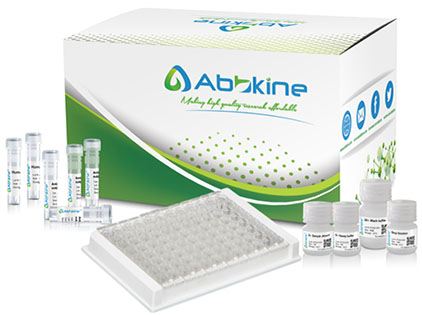
Every osteoarthritis lab can show you the same hematoxylin–eosin or Safranin-O photo: "thinning cartilage, lost tidemark integrity, fissured surface." The problem is that by the time those stains look dramatic, the type II collagen triple helix — the 300 nm–diameter fibrillar cable that is literally the tension-bearing skeleton of articular cartilage — has already been chewed past the point of no return, because the enzyme that cuts it is MMP-13 (Matrix metalloproteinase 13, alias Collagenase 3, UniProt: P45452, Gene ID: 4320, Chr 11q22.3), and type II collagen degradation is irreversible in vivo. MMP-13 is the only collagenase that preferentially and efficiently cleaves the Gly⁷⁷⁵–Leu⁷⁷⁶ / Gly⁷⁷⁸–Gln⁷⁷⁹ triple-helical site of CII, unravelling the fibril from the inside out, and once that network collapses, no cytokine "switch" puts it back together. The Human Matrix metalloproteinase 13 (MMP-13) ELISA Kit (KTE62620) from Abbkine gives you this pivotal collagenase as a calibrated sandwich-ELISA variable (pg–ng/mL), so your OA, post-traumatic arthritis, or cartilage-engineering paper stops saying "MMPs went up" and starts proving which specific collagenase did the structural crime.
MMP-13 in One Paragraph: The 54–60 kDa Secreted Collagenase 3 That Picks the Gly–Leu Bond
Unlike the gelatinases (MMP-2/MMP-9) that mop up denatured collagen after it's been unwound, MMP-13 is one of only three true collagenases (with MMP-1 and MMP-8) capable of cutting native, triple-helical collagen — and it does so with a terrifying substrate priority:
Substrate Relative Cleavage Efficiency Why It Matters Clinically
Type II collagen (CII, cartilage) ~5–6× faster than type I Articular surface collapse; CII loss = permanent
Type I collagen (bone/skin/tendon) Moderate Subchondral bone remodelling, meniscus fringe
Type III collagen (reticulin) Moderate Adventitial/perivascular connective tissue erosion
Aggrecan/core protein (ACAN) Secondary (indirect) GAG loss follows collagen unravelling
TGF-β1 (latent complex, via CCN2 degradation or liberation) Regulatory Couples matrix destruction ↔ TGF-β bioavailability
The protein itself is synthesized as a 478–521 aa preproenzyme (54 kDa computed) with the classic MMP architecture: signal → pro-domain (1–87, cysteine-switch PRCGVPDV at Cys⁷³) → catalytic domain (Zn²⁺, HEXXH) → hemopexin-like C-terminal domain (200 aa) that positions the enzyme on the collagen triple helix. Activation requires pro-domain cleavage at the Phe⁸⁷–Xxx hinge — primarily by MT1-MMP (MMP-14) or plasmin — releasing the ~10 kDa pro-peptide and exposing the active site.
The regulatory chain you should memorise for any OA/PTOA story:
IL-1β / TNF-α (via NF-κB & AP-1) + Runx2 + DDR2 (collagen-receptor tyrosine kinase) → MMP-13 transcription ↑↑ → pro-MMP-13 secreted → MT1-MMP/plasmin cleave pro-domain → active MMP-13 → Gly⁷⁷⁵–Leu⁷⁷⁶ cut on CII triple helix → fibril unravels → aggrecan/GAG spills out → chondrocyte hypertrophy → irreversible cartilage loss.
Why a Sandwich ELISA — And Why "Zymography Saw a Clear Band at 60 kDa" Is Not an MMP-13 Claim
There are three reasons the gel-alone approach fails specifically for MMP-13:
- Pro-MMP-13 (
60 kDa) and active MMP-13 (48–54 kDa catalytic core) run close together, and the gelatin zymogram only shows activity on gelatin, not "did CII get cut by the collagenase." You can have a strong gelatinase signal (MMP-2/MMP-9 doing cleanup) while MMP-13 is the real structural assassin — and the gel won't tell them apart without specific inhibition/antibody overlays. - MMP-13 is lower abundance than MMP-2 in many supernatants, so its band can hide under the tail of the major gelatinase smear.
- Your experiment is a time-course (IL-1β 0–24–72 h, ACLT post-op week 1–2–4–8, TGF-β ± Runx2 modulators) — that needs plate-read pg–ng numbers, not one photo per condition.
The KTE62620 kit uses the field-standard two-site architecture:
- Microplate pre-coated with capture anti-MMP-13 (directed at the catalytic/hemopexin or pro-domain region, built to recognise both pro- and accessible active forms).
- Standards (recombinant human MMP-13) + samples — serum, plasma, synovial fluid, tissue homogenates, cell culture supernatants/lysates — added → MMP-13 binds.
- Wash → biotinylated anti-MMP-13 detection (different epitope) → Streptavidin–HRP → TMB → color ∝ bound MMP-13.
- Stop → 450 nm → interpolate concentration from the standard curve.
Consolidated performance envelope from the Abbkine-distributor/technical references aligned with KTE62620:
Parameter Specification
Target Human MMP-13 / Collagenase 3 (UniProt P45452, Gene 4320)
Format 96-well sandwich ELISA, pre-coated capture
Detection Biotin-Ab → SA-HRP → TMB, 450 nm
Dynamic Range 0.16 – 12.8 ng/mL (equivalently ~160 – 12,800 pg/mL; some formats list the calibration points as 31.25 – 2,000 pg/mL depending on standard concentration units)
Sensitivity / LOD 31.25 pg/mL (0.032 ng/mL)
Intra-Assay CV < 9%
Inter-Assay CV < 11–15%
Specificity No significant cross-reactivity with MMP-1, -2, -3, -9, TIMPs at physiological levels
Samples Serum, plasma (EDTA preferred), synovial fluid, tissue homogenates, cell culture supernatants
Assay time ~3–5 hours
(As always, confirm exact dilution scheme, standard identity, and lot-specific recovery on the shipped Abbkine datasheet/CoA for KTE62620.)
The Prep Angle That Decides Whether You're Measuring Cartilage or a Sludge Pellet
Because MMP-13 is secreted and initially soluble, but rapidly partitions into the pericellular matrix / ECM via hemopexin-domain interactions, your prep choice decides what pool you call "MMP-13":
• For chondrocyte / explant supernatants: collect serum-free conditioned media, spin 12,000 ×g, 10 min, 4°C to remove debris/cell fragments → this is your secreted MMP-13 readout (pg/mL in media, normalised to DNA or cell number).
• For cartilage / joint tissue (femoral condyle, meniscus, synovial intima): homogenise cold in 50 mM Tris pH 7.4, 150 mM NaCl, 0.5–1% Triton X-100 + protease inhibitors, spin, take supernatant → BCA → ng MMP-13 / mg total protein. For the deposited fraction, a brief 0.1% SDS or acetic-acid/pepsin gentle extraction on the high-speed pellet pulls the matrix-associated pool.
• For synovial fluid: drain into EDTA on ice, centrifuge immediately to drop cells, freeze aliquots. MMP-13 here is both soluble and complexed to TIMP-1/TIMP-2 — the ELISA reads the immunoreactive mass regardless of whether it's inhibitor-bound (unlike an activity assay).
Where MMP-13 Quantification Actually Carries the Paper
- Osteoarthritis — The Obvious Flagship, Done Right
This is where MMP-13 earned its reputation. The SpringerLink review (Li/Hu/Ecker, Arthritis Res Ther 2017; Int J Mol Sci 2021) frames it cleanly: MMP-13 is preferentially up-regulated in chondrocytes during OA onset, detected as early as week 1 post-ACLT in rat models, and its CII cleavage is irreversible — which makes it the single best enzymatic marker for the transition from "softened cartilage" to "fibrillated loss."
The rigorous panel is:
• MMP-13 (KTE62620, ng/mg or pg/mL)
• CII cleavage neo-epitope (COL2-3/4C₄, CTX-II, or DIPEN fragment — if you have the antibody)
• Aggrecan GAG release (DMMB assay)
• Safranin-O/Mankin or OARSI score
That linkage — collagenase mass → CII-cleavage neo-epitope → GAG spill → histology — is what reviewers recognise as a mechanistic OA narrative, not a stain collection.
- Post-Traumatic OA (PTOA) & ACL/Meniscus Injury
This is where MMP-13 becomes a preventive therapeutic target: the mechanical destabilisation (ACL tear, meniscal root tear) creates an IL-1β/TNF inflammatory soup that drives chondrocytes into a hypertrophic, Runx2⁺, MMP-13⁺ state — and the collagen network unravelling precedes gross cartilage loss by months. Measuring synovial-fluid or cartilage-lysate MMP-13 in pre-op vs. post-op (± steroid/corticosteroid injection, PRP, IA anti-IL-1Ra, MMP-13 siRNA micelles) gives you the collagenase-load that T2-mapping alone can't quantify.
- Rheumatoid Arthritis & Erosive Pannus (Where the Collagenase Has Help)
RA destroys via pannus + cathepsin K + MMP-1/MMP-13; the difference from OA is the immune driver (anti-CCP/TNF/IL-6 axis) and the fact that bone (CII + type I) and cartilage both erode. Paired MMP-13 (cartilage/tissue) + CTX-II (urine/plasma) + anti-CCP titre is the structural trio that says "this is an erosive flare," not just "joint hurts."
- Bone Development, Fracture Healing & Endochondral Ossification
MMP-13 isn't always the villain — it's required for normal embryonic bone and fracture-callus remodelling: chondrocytes in the hypertrophic zone up-regulate it to clear the CII/ACAN provisional matrix so osteoblasts can lay down mineralised bone. Knock it out in mice and endochondral ossification stalls. Quantifying MMP-13 in callus homogenates (day 7/14/21 post-fx) alongside TRAP, ALP, and μCT BV/TV gives you the matrix-clearance variable that "new bone appeared" alone can't explain.
- Cancer — The "Mesenchymal Invasion" Cousin
Though less dominant than MMP-2/MMP-9/MMP-14 in most carcinomas, MMP-13 overexpression shows up in subsets of breast, CRC, HCC, and melanoma where the tumour touches collagen-rich stroma or cartilaginous barriers — and it can also liberate/activate TGF-β1 from the latent complex by degrading CCN2/CTGF or the hinge region. Tissue-lysate MMP-13 (ng/mg) tied to invasion index and CII/collagen I neo-cleavage places it as a stromal-collagenase accessory, not just a "random MMP up."
- siRNA / CRISPR & DMOAD Screens
Testing a selective MMP-13 inhibitor (or MMP-13 siRNA micelles, or anti-sense/CRISPRi) in cartilage explants? Report % MMP-13 protein remaining ± SEM from the calibrated curve, and close the loop with:
• CII integrity (Sircol/interchain cross-link assay or COL2-3/4C₄ IF)
• GAG retention (% of total)
• Chondrocyte apoptosis (TUNEL/Cleaved Caspase-3)
That's the evidence package that says you protected the fibril, not just "knocked down a gene."
A Minimal Workflow You Can Paste Into Materials & Methods
- Cartilage / joint tissue: homogenise cold in 50 mM Tris pH 7.4, 150 mM NaCl, 0.5–1% Triton X-100 + 0.1% deoxycholate + protease inhibitors, spin 12,000 ×g, 15 min, 4°C, take supernatant → BCA → ng MMP-13 / mg total protein.
- Conditioned media: serum-free, collect, spin, take sup neat → express as pg MMP-13 / mL / 10⁶ cells / 24 h.
- Warm kit reagents ≥ 30 min RT before opening; protect TMB from light; stop uniformly; read 450 nm promptly; fit 4-PL; run full standard curve on every plate.
The Bottom Line
MMP-13 / Collagenase 3 is the ~54–60 kDa secreted metalloproteinase that cuts the Gly–Leu bond inside the native triple helix of type II collagen, making it the single most destructive enzymatic node in articular cartilage collapse — the molecule whose activity is irreversible, whose up-regulation marks the shift from "softening" to "fibrillation," and whose inhibition is the holy grail of DMOAD development. Measuring it as a calibrated sandwich-ELISA variable instead of a gelatinase-smear guess changes your joint-biology paper from descriptive to causative. The Human Matrix metalloproteinase 13 (MMP-13) ELISA Kit — KTE62620 from Abbkine gives you that readout: pre-coated capture → biotin detection → HRP–TMB → 450 nm → pg–ng/mL, over a working range pushing from the sub-ng/mL into the low-ng envelope with LOD ~31 pg/mL, in a ~3–5 hour workflow that scales from an ACLT-timecourse to a synovial-fluid cohort without chaining you to a zymogram.
Product Reference: KTE62620 – Human Matrix metalloproteinase 13 (MMP-13) ELISA Kit
Learn more and order: https://www.abbkine.com/product/human-matrix-metalloproteinase-13-mmp-13-elisa-kit-kte62620/
(For Research Use Only; not for diagnostic procedures in humans.)





