




The Buffer You Never Think About—Until It Shows You What You've Been Missing
Every laboratory has a drawer full of reagents that nobody discusses at lab meeting. They are ordered by habit, stored by convention, and used without thought because the protocol says "dilute antibody in TBST" and nobody questions whether the liquid doing the diluting matters. The antibody dilution buffer occupies exactly this position in the immunodetection hierarchy—simultaneously present in every western blot, every IHC slide, every ELISA plate, every immunofluorescence coverslip, and almost never optimized. A 2019 benchmarking study documented that simply switching from a homemade TBST-based antibody diluent to a commercially optimized formulation improved signal-to-noise ratio by an average of 2.7-fold across a panel of 12 commonly used primary antibodies. The buffer you pour down the drain after each experiment is not an inert carrier. It is the medium that controls whether your antibody finds its target, stays folded while it searches, and releases non-specific contacts once it finds the wrong epitope. A poor buffer generates background that obscures real signal. A well-designed buffer amplifies the signal you need while suppressing the noise you don't. The difference between those two outcomes is rarely the antibody. It is almost always the diluent.
Abbkine's SuperKine™ Enhanced Antibody Dilution Buffer (BMU103-EN) enters this overlooked niche with a formulation that rewards the kind of close reading most buffer datasheets do not invite. The product is described as innovatively optimized based on the classic antibody diluent components to increase the storage time of the diluted antibody and can be used repeatedly. This is not a simple PBS or TBS solution with BSA added as an afterthought. It incorporates professional immune signal enhancement components alongside uniquely developed immune blocking and stabilizing components, creating a carefully balanced cocktail designed to create an optimal environment for the antibody-antigen interaction. The net effect is a simultaneous increase in specific signal and suppression of non-specific background—the dual optimization that sits at the heart of every immunodetection experiment ever performed.
The composition specification deserves explicit attention because it determines which downstream applications the buffer can serve and which it cannot. BMU103-EN is free of protein, phosphate, sodium azide, and thimerosal. The absence of azide eliminates the toxicity concern that prevents azide-containing buffers from being used in functional assays or live-cell imaging, while also removing the horseradish peroxidase inhibition that can occur when residual azide carries over from antibody incubation into the HRP-conjugated secondary detection step. The absence of phosphate avoids the phosphate incompatibility that certain detection systems exhibit. The FAQ clarifies that the buffer does not contain Triton X-100; for applications requiring membrane permeabilization, such as intracellular staining in immunofluorescence, a separate permeabilization step prior to antibody incubation is recommended. These are not marketing claims. They are formulation specifications that tell the user exactly what they are pipetting and exactly what limitations apply.
What the buffer does contain, and what distinguishes it from generic saline-based diluents, are the stabilizing components that extend the usable lifespan of diluted antibodies. The product background notes that the buffer can be used repeatedly, and the FAQ recommends incubating antibodies diluted in this buffer at 4°C to prolong their life and allow for repeated use. This is not a trivial economic advantage. A laboratory that runs four western blots per week, each requiring 10 mL of anti-GAPDH primary antibody diluted 1:10,000 in buffer, can prepare a single 10 mL working solution on Monday and reuse it across all four blots rather than preparing fresh diluent each day and discarding the unused antibody. Over the course of a year, the antibody savings alone can exceed the cost of the buffer multiple times over. The blog post published by Abbkine on this topic emphasizes this point explicitly: the ability to prepare a primary antibody dilution once and use it reliably across multiple experiments is a genuine efficiency gain that aligns perfectly with the product's stated benefit of increasing the storage time of diluted antibodies.
The practical implications of extended antibody stability become even more significant when the antibody in question is a precious, low-yield custom monoclonal or a commercial antibody priced at several hundred dollars per vial. Every microliter of antibody that can be reused instead of discarded represents a direct reduction in the laboratory's consumables budget, and over the course of a grant cycle, those microliters accumulate into substantial savings. The buffer's recommendation to incubate at 4°C—rather than requiring -20°C storage or aliquoting into single-use volumes—simplifies the workflow and reduces the time the researcher spends managing reagent inventory.
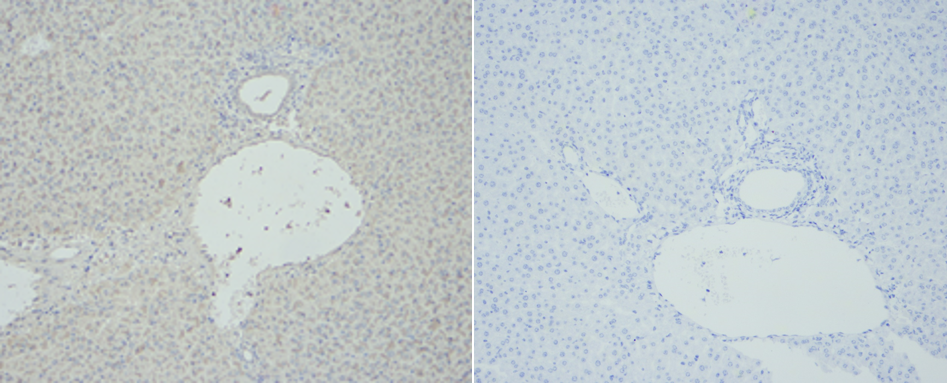
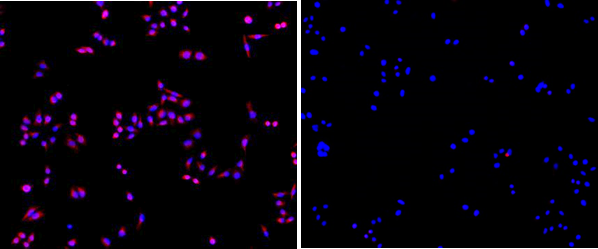
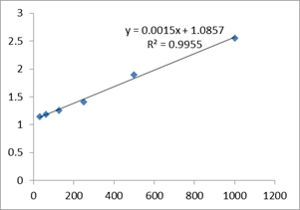
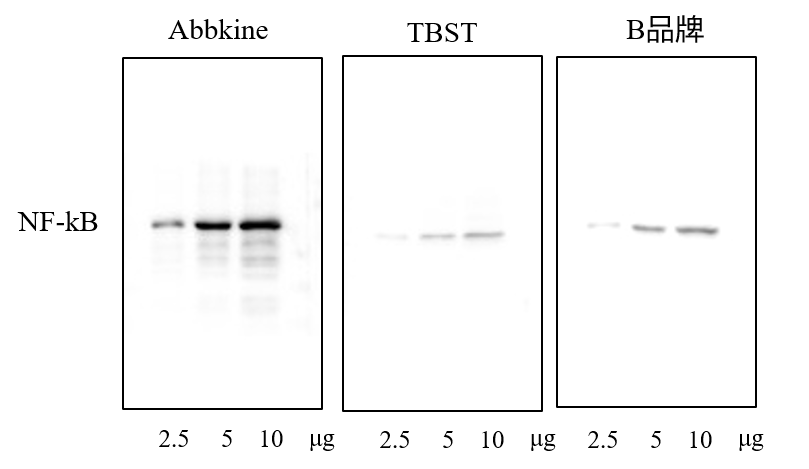
The performance data provided on the product page and in Abbkine's technical blog posts test the buffer across all four core immunodetection modalities, and the results are consistent in direction and magnitude. In western blot, BMU103-EN was used to dilute an NFκB p65 monoclonal antibody (ABM0017, 1:5000) for detection in HEK293 cell lysate, and the resulting band intensity was visibly stronger and cleaner compared to another commercial brand tested under identical conditions. In immunohistochemistry, the buffer was validated on mouse liver tissue using a TNF-α polyclonal primary antibody (ABP0127, 1:200) with goat anti-rabbit IgG secondary (A21020, 1:300); the staining was crisp, localized, and free of the cytoplasmic haze that indicates non-specific secondary antibody deposition. The negative control without primary antibody showed clean background. In immunofluorescence, HeLa cells stained for CK7 with a monoclonal primary antibody (ABP0127, 1:200) and detected with Dylight 549 goat anti-mouse IgG (A23310, 1:200) produced sharp, filamentous staining without punctate artifacts or nuclear bleed-through. In ELISA, the buffer was integrated into the EliKine™ Mouse IL-12 p70 ELISA Kit workflow, and the standard curve maintained its integrity, demonstrating that the buffer does not interfere with the quantitative antibody-antigen binding that plate-based assays depend upon.
The consistency of performance across these four modalities is not coincidental. It reflects a buffer formulation that was designed to be universal rather than application-specific, and the practical benefit of that universality is protocol standardization. A laboratory that runs western blots on Monday, IHC on Tuesday, immunofluorescence on Wednesday, and ELISA on Thursday can use the same buffer for all four experiments, eliminating the need to stock, validate, and track expiration dates for multiple application-specific diluents. This cross-application validation is crucial; it tells the researcher that this single buffer can be a reliable, consistent tool across their entire workflow, from cell imaging to quantitative plate-based assays.
Storage and stability specifications reward a practical reading because they determine whether the reagent integrates into a workflow or complicates it. BMU103-EN is stable for one year at 4–8°C from the date of shipment, requiring no -20°C freezer space and no thawing before use. The buffer is ready-to-use upon opening—no reconstitution, no pH adjustment, no sterile filtration. Exposure to intense light can harm the working solution, but short-term exposure to typical laboratory lighting will not. The product ships on gel packs with blue ice, maintaining the cold chain from the manufacturer's warehouse to the laboratory refrigerator. A brief centrifugation of small vials at low speed before opening is recommended to recover any liquid that may have adhered to the cap during transit.
The product page currently shows zero publications citing BMU103-EN. However, the Abbkine blog published in December 2025 reports that the product had accumulated over 4,100 views and notes one published study attesting to its reliability. Zero citations on a product page for a buffer is not a reflection of performance; it reflects the reality that most laboratories cite the primary antibody and the detection system in their methods sections but rarely specify the diluent—a convention that obscures the contribution of the buffer to the quality of the published data. The 4,100 views and growing user base suggest that the product is gaining traction among researchers who have recognized that the buffer matters and have elected to standardize on a formulation that provides documented performance across multiple applications.
The economic accessibility of BMU103-EN distinguishes it from the premium immunodetection consumables whose performance it matches. The product is priced at 30 per week. When the antibody reuse enabled by the buffer's stabilizing components is factored in—typically a 50–75% reduction in antibody consumption for laboratories that previously discarded diluted antibody after each use—the net economic impact of switching to BMU103-EN is often a net reduction in total immunodetection consumable costs, not an increase.
The broader context of experimental reproducibility makes the case for standardizing on a well-characterized antibody dilution buffer more compelling than most laboratory managers acknowledge. Inconsistent background or variable signal strength can often be traced back to the quality and composition of the dilution buffer. A buffer prepared in-house from PBS, BSA, and sodium azide varies subtly from batch to batch depending on the source of the BSA, the pH of the PBS, the accuracy of the azide weighing, and the storage conditions between preparations. By standardizing with a product like the SuperKine™ Enhanced Antibody Dilution Buffer, researchers eliminate one more variable from their already complex protocols. It allows them to focus on the biology of their experiment, confident that the tool delivering their antibody to the target is enhancing, not hindering, the detection. For any lab seeking to push the limits of sensitivity and clarity in their immunodetection work, this buffer represents a simple, impactful upgrade.
For the graduate student whose western blot background has resisted optimization through three different blocking conditions and four different wash protocols, the core facility technologist who processes hundreds of IHC slides per month and cannot afford a single failed staining run, the postdoctoral fellow whose low-abundance target protein requires every possible signal enhancement just to appear above background, the laboratory manager who must standardize on a single buffer across WB, IHC, IF, and ELISA workflows without compromising performance in any single modality, and the principal investigator who submits grant renewal data that must survive reviewer scrutiny of every band and every image, BMU103-EN provides a ready-to-use, protein-free, azide-free, phosphate-free universal antibody diluent that enhances specific signal, suppresses non-specific background, extends diluted antibody shelf life to enable repeated reuse, performs across all four core immunodetection applications, stores at 4–8°C for one year, ships on blue ice, and costs $59 for 100 mL. The buffer you never think about is now the buffer that shows you what you've been missing.
Explore full specifications, view representative images, and place your order here: https://www.abbkine.com/product/superkine-enhanced-antibody-dilution-buffer-bmu103-en/





