




The 72-kDa Gelatinase That Haunts Every Zymography Lane: Why Measuring Total MMP-2 Protein (Not Just a Clear Band on a Gel) Finally Closes the ECM Argument — And How KTE62230 Gets You Off the Dansyl-Gel Hamster Wheel
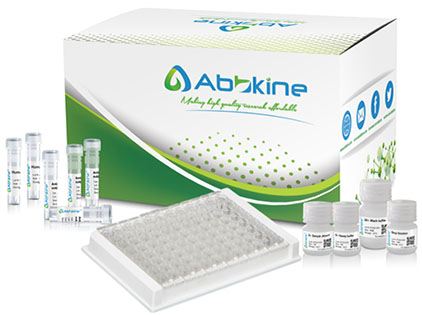
Matrix metalloproteinase-2 — universally known as gelatinase A, MMP-2, or 72-kDa type IV collagenase (MMP2, UniProt: P08253, Gene ID: 4313, Chr 16q12.2) — is the one enzyme every tumor biologist, vascular biologist, and fibrosis researcher claims to have measured, yet most have only ever seen it as a translucent crescent where gelatin used to be on a Coomassie-stained zymogram. That glowing little 64–72 kDa clearing zone is iconic, but it tells you only one thing: active enzyme was present in that supernatant at the moment of electrophoresis. It tells you nothing about how much pro-MMP-2 zymogen (~74 kDa) was sitting there unreported, nothing about TIMP-2 masking, nothing about whether the "↑MMP-2" you think you see is actually ↑ total protein or just better zymogen activation during prep, and — crucially — nothing that survives a Methods-section peer review without the asterisk "gelatinolytic activity ≠ mass". The Human Matrix metalloproteinase-2 (MMP-2) ELISA Kit (KTE62230) from Abbkine is the reagent that pulls MMP-2 out of the semi-quantitative gel阴影 and puts it on a calibrated, two-site sandwich ELISA curve (ng/mL) — so your invasion, AAA, or NASH paper finally has the denominator that separates more enzyme from more activation.
MMP-2 / Gelatinase A in One Paragraph: The Basement-Membrane Drill That Doesn't Need a Membrane Anchor
Unlike its flashier cousin MT1-MMP (MMP-14), which is type I transmembrane and drills at the cell surface, MMP-2 is a secreted multidomain zinc-endopeptidase (~660 aa precursor) whose entire career is destroying the type IV collagen backbone of basement membranes (BM) and a broad menu of denatured collagens / gelatins:
Domain Architecture (N→C) Length Function
Signal peptide (~1–19) — Secretory targeting
Pro-domain (~20–107) ~87 aa Contains the cysteine-switch (PRCGVPDV ∼ Cys⁷³) that keeps the catalytic Zn²⁺ pocket blocked until disrupted
Catalytic domain (~108–465) ~358 aa HEXXGH + Met-turn Zn²⁺ motif — cleaves gelatin, collagen IV/VII/X, fibronectin, elastin
3× Fn-II (fibronectin-type II) inserts ~58 aa each Inserted mid-catalytic domain — these grip gelatin/collagen via aromatic pockets and are why MMP-2 = "gelatinase" par excellence
C-terminal hemopexin-like domain (~466–660) ~195 aa Substrate discrimination; directs BM-type IV collagen targeting, TIMP-1/TIMP-2 binding, and pro-MMP-2→MT1-MMP docking
Computational MW: ~73.7 kDa (pro-form) ~62–66 kDa (active, pro-domain cleaved)
The activation sequence is the detail everyone memorizes but few explain accurately:
Secretion: MMP-2 exits the cell as the pro-enzyme (pro-MMP-2, ~72–74 kDa) already complexed with TIMP-2 in a very specific ternary architecture (MT1-MMP·TIMP-2·pro-MMP-2) at the cell surface.
Activation: MT1-MMP cleaves the TIMP-2–bound pro-MMP-2 at the (Arg⁵⁶–Phe⁵⁷) or (Tyr⁵⁸–Tyr⁵⁹) hinge → releases the pro-domain → yields active MMP-2 (~62–66 kDa) that can now attack collagen IV, laminin, and gelatins without the tether.
This is why "total MMP-2" (pro + active) and "active MMP-2" are two different variables — and why your paper needs the mass readout, not just the activity smear.
Why a Sandwich ELISA for a ~72 kDa Secreted Metalloproteinase
Three practical reasons:
- Zymography is a kinetic activity assay masquerading as a measurement. The intensity of a clear band depends on time of incubation, gelatin substrate thickness, temperature, TIMP contamination, and whether pro-MMP-2 was even in the right conformation to autoactivate during the gel soak — not purely on "how much enzyme you had."
- Pro-MMP-2 (
74 kDa) and active MMP-2 (64 kDa) both appear on the same gel in many conditions, and trying to "cut and weigh" two adjacent bands to get a ratio is where CVs go to die. - Your experiment is a time-course or dose–response (TGF-β, TNF, IL-1β, AngII, PDGF, doxycycline, batimastat, or CRISPR hits) — and that needs plate numbers.
The KTE62230 kit uses the field-standard two-site architecture:
- Microplate pre-coated with capture anti-MMP-2 (directed at the catalytic/Fn-II region, built to recognize both pro- and accessible active conformations).
- Standards (recombinant human pro-MMP-2 or calibrated MMP-2) + samples — serum, plasma, tissue homogenates, cell culture supernatants/lysates — added → MMP-2 binds.
- Wash → biotinylated anti-MMP-2 detection (different epitope) → Streptavidin–HRP → TMB → color ∝ bound MMP-2.
- Stop → 450 nm → interpolate ng/mL from the standard curve.
Consolidated specification envelope from distributor/technical references aligned with KTE62230:
Parameter KTE62230-class Specification
Target Human MMP-2 / Gelatinase A (UniProt P08253, 661 aa, pro-74 kDa / active ~62–66 kDa)
Format 96-well sandwich ELISA, pre-coated capture
Detection Biotin-Ab → SA-HRP → TMB, 450 nm
Dynamic Range 0.156 – 10 ng/mL
Sensitivity / LOD ~0.078 ng/mL
Intra-Assay CV < 7–8%
Inter-Assay CV < 10%
Specificity No significant cross-reactivity with MMP-9/gelatinase B, MMP-1, MMP-3, TIMPs at physiological levels
Samples Serum, plasma (EDTA preferred), tissue homogenates, cell culture supernatants/lysates
Assay time ~3–5 hours
(Confirm exact range/dilution scheme and lot-specific recovery on the shipped Abbkine datasheet/CoA for KTE62230.)
Where MMP-2 Quantification Actually Moves the Needle
- Tumor Invasion & the "Basement Membrane Breach" Narrative
This is the canonical MMP-2 story. High MMP-2 (often co-upregulated with MT1-MMP/MMP-14, CD147/EMMPRIN, and uPA) correlates with depth of invasion, metastasis risk, and poor prognosis in breast, CRC, NSCLC, HCC, glioblastoma, gastric, ovarian, bladder. The rigorous figure triad is:
• Total MMP-2 (KTE62230, ng/mL or ng/mg protein) — the enzyme pool
• Active MMP-2 / pro-MMP-2 ratio (zymography or activity-capture ELISA if you have it)
• Invasion readout (collagen I 3D, Matrigel, or in vivo metastasis assay)
Pair with TIMP-2 (the natural brake that also forms the ternary activation complex) and MT1-MMP, and the sentence changes from "MMPs went up" to "the gelatinase activation axis engaged at the membrane."
- Abdominal Aortic Aneurysm (AAA) — The Vessel Wall's Slow-Motion Collapse
AAA is fundamentally a media/adventitia ECM catastrophe where MMP-2 + MMP-9 + MT1-MMP degrade the elastic lamina + collagen I/III while TIMP-1/TIMP-2 ratios drop, allowing outward bulging under pulse pressure. Wall-tissue harvested at repair → MMP-2 ELISA (ng/mg protein) normalized to elastin (or desmosine) and collagen I/III content is the structural-chemistry variable that "wall stress simulation" alone can't deliver.
- Atherosclerosis & Plaque Vulnerability
Fibrous cap = SMC-rich, collagen-packed. Shoulder region = macrophage-rich, MMP-2/MMP-9 ↑ → cap thinning. Measuring MMP-2 in plaque homogenates (vs. non-atherosclerotic aortic margin) alongside α-SMA, MPO, and TIMP-1 frames the cap-eroding biochemistry numerically, not just histologically.
- Liver Fibrosis / NASH & the Sinusoidal BM Turnover
Early fibrosis is partly a basement-membrane remodeling event (capillarization of sinusoids: LSECs lose fenestrae, BM-type IV/laminin deposits thicken). MMP-2 participates in both normal BM turnover and pathological dissolution/remodeling. Tissue lysates → ng MMP-2 / mg protein (BCA) gives you the gelatinase node next to PIIINP, TIMP-1, and hyaluronic acid — the minimal "ECM-turnover panel" reviewers now expect.
- Wound Healing & Reparative Tissue Modeling
Too little MMP-2 → poor provisional matrix remodeling → stalled healing. Too much → hypertrophic scar/keloid breakdown. The secreted supernatant time-course (± TGF-β1/PDGF-BB/EGF) is the cleanest bench model: collect daily, read MMP-2 by ELISA, plot the secretory curve, and close with collagen I/Iα1, α-SMA, and MTT/proliferation.
- MMP Inhibitor Screens (Doxycycline Low-Dose, Batimastat/Marimastat Legacy, New-Generation Selective)
If you're testing an MMP-modulating drug, don't just report "invasion ↓." Show total MMP-2 protein (ELISA) ± active/total zymography, and — this is the subtlety — note whether the drug downregulates transcription/translation (↓ total) vs. blocks catalytic Zn²⁺ (total unchanged, activity gone). That distinction is what separates mechanism from phenomenology.
A Minimal Prep / Normalization That Survives Peer Review
Cell culture supernatants (the easiest, cleanest matrix):
• Collect serum-free or low-serum conditioned media (add 0.1% BSA if starved, never FBS for MMP quantification — serum is full of TIMP-1/2 and trace gelatinases that wreck baselines).
• Spin 12,000 ×g, 10 min, 4°C, take supernatant → BCA on a parallel aliquot of lysed cells (not the supernatant) to express as ng MMP-2 / µg cellular protein / 24 h (a true secretion rate).
Tissue (tumor, aorta, liver):
• Homogenize cold in 50 mM Tris pH 7.4, 150 mM NaCl, 0.5–1% Triton X-100/NP-40 + protease inhibitors; clarify; BCA; express ng MMP-2 / mg total protein.
Warm kit reagents ≥ 30 min RT before opening; protect TMB from light; stop uniformly; read 450 nm promptly; run full standard curve on every plate.
The Bottom Line
MMP-2 / gelatinase A is the ~72 kDa secreted metalloproteinase whose three Fn-II inserts make it the most efficient gelatin/type-IV-collagen chewer the ECM has, and whose activation depends on the MT1-MMP·TIMP-2·pro-MMP-2 ternary complex at the cell surface — meaning "more clearing on a zymogram" can mean more enzyme, more activation, or less TIMP, and you can't tell which without measuring the protein mass directly. The Human Matrix metalloproteinase-2 (MMP-2) ELISA Kit — KTE62230 from Abbkine gives you that mass: pre-coated capture → biotin detection → HRP–TMB → 450 nm → ng/mL, over a 0.156–10 ng/mL working range with LOD ~0.078 ng/mL, in a ~3–5 hour workflow that replaces "the band looks darker" with an interpolated number you can plot, normalize, and defend across any cohort size.
Product Reference: KTE62230 – Human Matrix metalloproteinase-2 (MMP-2) ELISA Kit
Learn more and order: https://www.abbkine.com/product/human-matrix-metalloproteinase-2-mmp2-elisa-kit-kte62230/
(For Research Use Only; not for diagnostic procedures in humans.)





