




The 1007-Da Social Glue Hiding in Your Plasma: Why "Trust Hormone" Headlines Betray the Real Assay Problem — And How KTE62212 Puts Oxytocin on a Defensible Competitive Curve
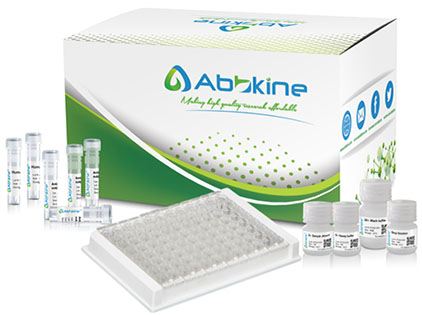
Oxytocin has the worst PR of any hormone in human biology. It gets flattened into "the cuddle chemical" in pop-science Twitter feeds, while the people who actually run the assays know the uncomfortable truth: OT (CYIQNCPLG‑NH₂, cyclo¹⁶ disulfide, 9 aa, MW 1007 Da) is one of the hardest legitimate biomarkers to measure correctly, because it's a nanogram-per-liter nonapeptide that degrades in room-temperature blood, adsorbs to glass, cross-reacts with vasopressin-family cousins if your antibody is sloppy, and — worst of all — exists in circulation at basal concentrations of roughly 5–20 pg/mL in humans, spiking maybe to 50–150 pg/mL after parturition, suckling, or acute stress. That's not a protein ELISA world. That's a hapten immunoassay world, and it demands a competitive format where sample OT and a limited number of antibody sites fight for occupancy, giving you an inverse standard curve — not the rising-signal "sandwich" people imagine when they hear "ELISA." The Human Oxytocin (OT) ELISA Kit (KTE62212) from Abbkine is engineered exactly for this constraint: a competitive immunoassay built around high-affinity anti-OT antibodies and a calibrated 15.63–1000 pg/mL working range with LOD pushing into the single-digit picogram window, so your maternal-health, psychiatric-biomarker, or behavioral-neuroscience cohort actually rests on interpolated numbers — not a "peak area we hope is OT" LC-MS vanity project or a cringe-inducing "OT is up because the band moved" claim.
OT in One Paragraph: A 1007-Da Cyclic Nonapeptide That Runs the Birth–Bonding Axis
Synthesized as a prepropeptide (OXT / neurophysin I preproprotein) in the paraventricular (PVN) and supraoptic (SON) nuclei of the hypothalamus, OT's bioactive core is cleaved to the mature nonapeptide amide:
Cyclo(Cys¹–Tyr–Ile–Gln–Asn–Cys⁶–Pro–Leu–Gly‑NH₂)
Systematic: CYIQNCPLG-NH₂ MW 1007.19 Da
Disulfide bridge Cys¹–Cys⁶
Axonal transport carries it to the posterior pituitary (neurohypophysis), where distension of the cervix/vagina (labor) and nipple stimulation (suckling) trigger exocytosis into the systemic circulation → acts on OXTR (oxytocin receptor, Gq/11 → PLC → IP₃/DAG → Ca²⁺ mobilization) in:
Target Tissue OXTR-Mediated Effect
Uterine myometrium (late pregnancy, ↑OXTR density) Contraction (the "labor" function; synergy with estrogen/E₂ ↑OXTR transcription)
Myoepithelial cells of mammary alveoli Milk ejection (contraction squeezes milk into ductal tree)
CNS (amygdala, BNST, ventral pallidum, PFC, striatum) Social affiliation, pair-bonding, maternal care, stress-buffering, fear extinction, in-group trust bias
Adipose / pancreas (peripheral OXTR) Appetite/metabolic modulation (emerging, not as canonically established as uterine)
The number that matters for your assay: circulating OT is pg/mL, not ng/mL. A 1-liter blood pool might contain ~10–50 ng total — which is why everything about collection, adsorption, and antibody specificity decides your dataset.
Why "Sandwich ELISA" Is a Category Error for a 9-mer — And Why KTE62212 Uses Competitive Hapten Immunoassay
You cannot run a true two-site sandwich on a 9-amino-acid cyclic peptide — there's no room for two spatially independent, non-overlapping epitopes on a molecule this small. What actually happens in OT immunoassays is competition:
The Competitive Architecture Inside KTE62212
The kit's principle (mirroring the field-standard OT competitive ELISA design) works one of two equivalent ways, depending on the exact coating strategy Abbkine selected:
Route A (antigen-coated, most common for OT kits):
- Microplate is coated with OT–protein conjugate (OT–BSA) or with capture anti-OT antibody (immobilized).
- Sample OT + a fixed amount of labeled detection reagent (e.g., biotinylated anti-OT antibody or enzyme-labeled OT tracer) are added together → they compete for a limited number of binding sites.
- Wash → HRP/TMB → read 450 nm.
- Signal is INVERSELY proportional to [OT]: more OT in your sample outcompetes the tracer → lower OD → interpolate from a descending standard curve.
Route B (antibody-coated):
- Anti-OT antibody pre-coated → add sample OT + HRP- or AP-labeled OT tracer → competition → same inverse readout.
Either way, the governing equation is the same: Bound Tracer ∝ 1 / [Free OT], and your fitted curve (usually 4-PL or log-logit B/B₀) converts OD₄₅₀ into OT concentration.
From the distributor specifications aligned with KTE62212:
Parameter KTE62212-class Specification
Target Human Oxytocin / OT (OXT, CYZIQNCPLG-NH₂, MW 1007.19 Da)
Assay Type Competitive immunoassay (hapten ELISA — not a true protein sandwich despite the "ELISA Kit" naming convention)
Detection Tracer/HRP → TMB, read 450 nm (inverse curve)
Dynamic Range 15.63 – 1000 pg/mL
Sensitivity / LOD ~9.38 pg/mL
Intra-Assay CV < 8–10%
Inter-Assay CV < 10–12%
Specificity No significant cross-reactivity with AVP/arginine vasopressin or other neurohypophyseal peptides at physiological levels (depends on antibody selectivity)
Samples Serum, plasma (EDTA preferred), CSF, saliva, urine, tissue homogenates, cell culture supernatants
Assay time ~2.5–4 hours
(Confirm exact range, tracer type, and dilution scheme on the shipped Abbkine datasheet/CoA for KTE62212.)
The Sampling Rules That Make or Break Every OT Dataset (Non-Negotiable)
Because OT is 1 kDa, peptide, and present at ~5–20 pg/mL, the collection is the experiment:
- Tubes: EDTA tubes (chelate Ca²⁺, minimize protease activation) — avoid heparin if possible (heparin can interfere with some antibody-tracer builds).
- Keep on ice immediately, process within 30–60 min, centrifuge ≥ 1,500 ×g, 4°C, 10–15 min, aliquot immediately, snap to -80°C, and never freeze–thaw > once.
- Low-binding tubes for neat dilutions (pg/mL loves glass/plastic adsorption).
- Draw conditions matter ethically and biologically: OT spikes with venipuncture stress, so standardize your draw (same time of day, same posture, same collector presence/absence) across subjects, or your "group difference" is just "Group A had a scarier nurse."
Where OT Quantification Actually Carries the Paper
- Maternal–Fetal Medicine: Labor, Delivery & the Postpartum Window
This is the canonical medical OT story — the same hormone we give as synthetic Pitocin (Syntocinon®) to induce/augment labor. Endogenous OT surges at parturition (cervical distension → +feedback loop) and suckling (neuroendocrine reflex → milk let-down). Measuring it in maternal EDTA plasma/ umbilical-cord blood alongside cortisol, estradiol/progesterone ratio, and tocodynamometer tracings turns the "hormone of birth" from a narrative into a time-locked curve.
- Social Neuroscience & Psychiatry: The "Trust"/Bonding Axis (Where the Assay Fails Most Often)
The high-profile stuff: intranasal OT administration trials (ASD, social anxiety, PTSD, couples conflict, economic-game trust), early-life adversity & attachment, and CSF vs. plasma OT discrepancies (CSF OT is real; plasma OT is what you can sample longitudinally). The field's replicability crisis taught one lesson hard: if your plasma OT assay isn't competitive, isn't run cold, and isn't on a calibrated curve per plate, your "social hormone" effect is probably noise. KTE62212's competitive architecture + proper EDTA cold-chain is the floor the field now expects.
- Neonatology & Breastfeeding Medicine
Suckling-induced OT spikes within 30–60 seconds of latch → milk ejection. Comparing pre-feed vs. post-feed maternal plasma OT (pg/mL ELISA) with infant transfer volume and ultrasound ductal dilation is the clean translational link between endocrine reflex and feeding outcome.
- Stress, HPA Crosstalk & the OT–Cortisol Dance
OT is famously stress-buffering: higher basal OT (or higher-release capacity) predicts lower cortisol reactivity, faster recovery, and more prosocial threat-appraisal. Behavioral labs pair serial blood draws with this kit's range (15.6–1000 pg/mL covers most awake-baseline-to-stress states) so the endocrine arm of the study has the same temporal resolution as the behavioral readout.
- PCOS, Endometriosis & Reproductive Endocrinology (The Under-Appreciated Lane)
Altered OXTR density and circulating OT dynamics show up in several ovarian/uterine-axis disorders, often in dialogue with estrogen receptor signaling and inflammatory cytokines. Tracking plasma OT alongside LH/FSH, E₂, P₄, AMH, and androgens makes the reproductive-endocrine panel complete, not just "hormone sex steroids + androstenedione."
- CSF & Central Questions (Exploratory, Low Volume)
Some groups run OT on ventricular/ lumbar CSF (nl typically ~10–30 pg/mL as well) when investigating hypothalamic release, Prader–Willi-associated hypo-OT states, or ASD neurochemistry. The pg/mL sensitivity here is why the competitive format exists — CSF doesn't give you micrograms to waste on a bad antibody.
Quick "Before You Read 450 nm" Checklist
• Balance all reagents to RT (20–25°C) for ≥ 30 min before opening — but protect from light (the tracer/label hates photolysis).
• Never skip the max-binding (B₀) well — competitive curves need that top anchor.
• Fit a 4-parameter logistic (4-PL) or log-logit (B/B₀) rather than forcing linear — the OT competitive curve is inevitably curvilinear at both knees.
• Run every standard curve fresh on every plate — at pg/mL, plate drift isn't a theory, it's the first thing that eats your CVs.
The Bottom Line
Oxytocin is the 1007-Da, Cys¹–Cys⁶ disulfide-cyclized nonapeptide amide that drives uterine contraction, milk ejection, and — via OXTR in the brain — the social-affiliation circuitry that lets mammals form bonds instead of just scattering. But at 5–20 pg/mL in plasma, it refuses to be measured like a cytokine: you can't sandwich it, you can't boil it, and you certainly can't let the tube sit warm on a phlebotomy tray and still call the number "endocrine." What you can do is measure it rigorously with a competitive hapten immunoassay whose inverse OD₄₅₀ → descending 4-PL curve gives you pg/mL you can plot, standardize, and defend. The Human Oxytocin (OT) ELISA Kit — KTE62212 from Abbkine is built for that job: antigen/antibody capture → competitive tracer → HRP–TMB → 450 nm → pg/mL, over a 15.63–1000 pg/mL calibrated range with LOD ~9.4 pg/mL, in a ~2.5–4 hour workflow that respects the cold chain and the pg-scale reality of the molecule.
Product Reference: KTE62212 – Human Oxytocin (OT) ELISA Kit
Learn more and order: https://www.abbkine.com/product/human-oxytocin-ot-elisa-kit-kte62212/
(For Research Use Only; not for diagnostic procedures in humans.)





