




The 56-kDa Switch That Decides Whether Your Immune Cell Fires or Self-Destructs: Why Total LYN Quantification — Not Just Phospho-Western Bandwatching — Is the Missing Variable in Your Signaling Panel
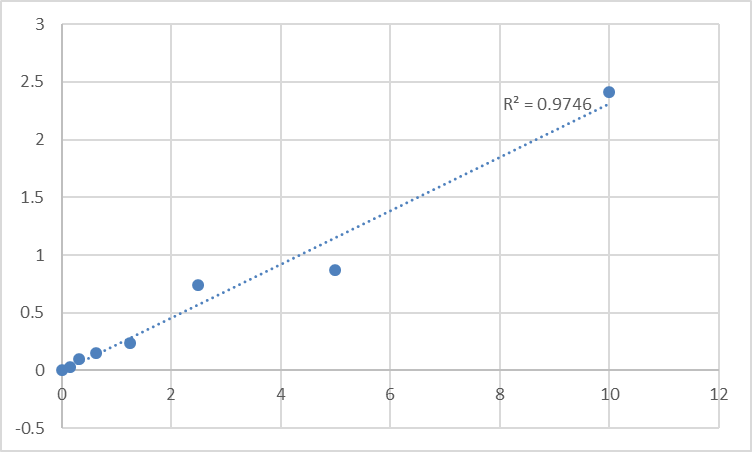
If your lab works on BCR signaling, mast-cell degranulation, or FcγR-mediated phagocytosis, you already know LYN by sight: that stubbornly consistent ~53–56 kDa band (p56^Lyn / p53Lyn) that appears in every lysate, never quite leaves the membrane fraction, and somehow manages to be the kinase that both starts the party and calls the police on it. Officially Tyrosine-protein kinase Lyn (LYN, proto-oncogene LYN, UniProt: P07948, Gene ID: 4067, Chr 8q12.1), this is the founding Src-family non-receptor tyrosine kinase (SFK) named after Lck/Yes-related novel protein — and it is the biochemical hinge where "an immune receptor saw its ligand" becomes either a productive activation wave or a rapid shutdown via ITIM/SHP-1 recruitment. The Human Tyrosine-protein kinase Lyn (LYN) ELISA Kit (KTE61764) from Abbkine exists to pull that hinge out of the "p-Tyr⁵⁰⁷ WB vs. actin" black hole and give you a calibrated, two-site sandwich ELISA readout (pg/mL → ng/mL) you can defend with real CVs — so your FcεRI, BCR, FcγR, or TLR-signaling story finally has the kinase denominator it desperately needs.
LYN in One Paragraph: The SFK That Wears Two Hats — Initiator AND Terminator
LYN is a 514-aa (isoform A, with the 23-aa SH3 insert) / 480-aa (isoform B, without it) non-receptor TPK, organized in the canonical SFK layout: N-terminal SH4 myristoylation/palmitoylation membrane anchor → SH3 → SH2 → catalytic kinase domain → C-terminal negative-regulatory tail (Tyr⁵³⁸/Tyr⁵⁰⁷ autoinhibitory loop). Its entire career happens at the inner leaflet of the plasma membrane, where it's pre-localized by SH4 lipid modifications and recruited via SH2/SH3 to the cytosolic ITAM/ITIM tails of immune receptors.
The duality is what makes LYN famous — and dangerous to oversimplify:
Mode What LYN Does Outcome
Early ACTIVATOR Phosphorylates ITAM tyrosines on FcεRIβ/γ, CD79A/CD79B (Igα/Igβ), and FcγR γ-chain → creates docking sites for SYK/ZAP-70 → full-blown calcium flux, MAPK/PI3K, degranulation Mast-cell exocytosis, BCR propagation, phagocytosis
Late TERMINATOR Phosphorylates ITIMs on FcγRIIB (CD32B), CD22, PIR-B, and KIR-associated polypeptides → Tyr(P) ITIM recruits PTPN6/SHP-1, PTPN11/SHP-2, INPP5D/SHIP-1 → active dephosphorylation of the very cascade LYN helped start Receptor desensitization, B-cell anergy, self-tolerance maintenance
The takeaway is simple: LYN levels and membrane availability set the gain knob on the entire receptor-proximal tier. Too little LYN → poor initiation (BCR unresponsive, FcεRI weak, Wiskott-Aldrich–like signaling fatigue). Too much (unbalanced) → runaway phosphorylation of inhibitory motifs or excessive SYK-ZAP activation → autoimmunity spectrum vs. anergy, depending on the cell.
Why a Sandwich ELISA for a ~56 kDa Membrane Kinase — And Why p-LYN/actin Is an Incomplete Claim
LYN is N-myristoylated + palmitoylated (dual acyl anchor), meaning it lives in the detergent-resistant membrane microdomain (raft) fraction. Three practical headaches follow:
- Under-extraction = under-quantification: a gentle PBS-only scrape leaves LYN stuck in the insoluble pellet. You need 0.5–1% Triton X-100 / NP-40 + salt to bring it into the soluble readout pool.
- p-Tyr⁵⁰⁷ (inhibitory) vs. p-Tyr³⁹⁷ (activating) vs. total LYN mass are three different variables. Your "p-LYN band went up" could mean (a) the kinase is active, or (b) you simply have more LYN protein now because the cell upregulated it — and without total LYN, you can't tell.
- Cohort/time-course panels (dose–response to FcεRI crosslink, BCR stim, TLR4+LPS, KIT ligand, imatinib/ bosutinib analogs) demand plate-read numbers, not a 10% gel stack.
The KTE61764 sandwich ELISA uses the standard architecture you've seen across the Abbkine line:
- Microplate pre-coated with capture anti-LYN antibody (directed at the kinase domain / conserved C-terminal region epitopes to catch both A/B isoforms).
- Standards (recombinant human LYN) + samples — serum, plasma, tissue homogenates, cell lysates, cell culture supernatants/lysates, other biological fluids — added → LYN binds.
- Wash → biotinylated anti-LYN detection (different epitope) → Streptavidin–HRP → TMB → color ∝ bound LYN.
- Stop → 450 nm → interpolate LYN concentration from the standard curve.
Consolidated performance envelope (drawn from distributor-matched references for this kit family):
Parameter Specification
Target Human LYN / p56^Lyn (UniProt P07948, Gene 4067)
Aliases JTK8, p53Lyn, V-yes-1 Yamaguchi sarcoma viral related oncogene homolog
Format 96-well sandwich ELISA, pre-coated capture
Detection Biotin-Ab → SA-HRP → TMB, 450 nm
Dynamic Range 31.25 – 2,000 pg/mL (equivalently 0.03125 – 2.0 ng/mL)
Sensitivity / LOD ~7.81 pg/mL
Intra-Assay CV < 8–10%
Inter-Assay CV < 10–12%
Specificity No significant cross-reactivity with other SFKs (SRC, FYN, YES1, HCK, BLK, FRK) at physiological levels
Samples Serum, plasma, tissue homogenates, cell lysates, culture supernatants
Assay time ~3–5 hours
(Lock your Methods section to the shipped Abbkine datasheet/CoA for KTE61764 — lot-specific range and recovery may vary slightly.)
The Prep Rule Every LYN Project Trips On
Because LYN is myristoylated/palmitoylated and raft-dwelling, your lysate either sees it or it doesn't:
Quick "raft-inclusive" extraction:
Cold 50 mM Tris pH 7.4, 150 mM NaCl, 0.5–1% Triton X-100 or 1% Brij-96/NP-40 + protease + phosphatase inhibitors (Na₃VO₄ + NaF) → keep on ice, homogenize/scape → clarify 12,000–16,000 ×g, 15 min, 4°C → supernatant = your LYN-accessible pool.
BCA the same final lysate → express as pg LYN / mg total protein (or /mg membrane protein).
Alternative — if you want the cleanest membrane-vs-cytosol split: CSK pre-extract (0.1% Triton, 10 mM PIPES pH 6.8) → spin → pellet = DRM/microdomain + LYN → re-extract pellet in 1% Triton+150 mM NaCl → that fraction is your "raft-proximal LYN" read.
Where LYN Quantification Actually Carries the Paper
- Mast-Cell & Basophil Effector Biology (FcεRI Signaling)
This is LYN's most photogenic job. Crosslink FcεRI → LYN is the first kinase to phosphorylate the β/γ ITAMs → SYK docks → calcium oscillation → degranulation (β-hexosaminidase/β-hex release). The canonical descriptors:
• Lyn⁻/⁻ mice → blunted FcεRI calcium but paradoxically enhanced anaphylaxis in some models (because the negative-feedback ITIM arm is also lost)
• Lyn over-expression in B cells → hyper-responsive BCR + excess ITIM phosphorylation → anergy / autoantibody-prone tuning
Quantifying total LYN (pg/mg, ELISA) alongside p-LYN Y397/Y507, p-SYK, β-hex release, and Ca²⁺ flux is the triad that proves you measured the kinase pool, not just a phosphate snapshot.
- B-Cell Tolerance, CD22, and the LYN→SHP-1 "Off-Switch"
The CD22–LYN axis is the textbook example of how a SFK can enforce self-tolerance: CD22's ITIMs recruit LYN, LYN phosphorylates them, and phosphorylated ITIMs recruit SHP-1 to dephosphorylate proximal BCR effectors. When this axis slips — LYN haploinsufficiency, CD22 dysfunction, or SHP-1 loss (PTPN6) — the B cell drifts toward autoreactivity. Measuring LYN in splenic B-cell lysates or peripheral B-panel lysates (normalized to CD19+ gates or B-cell marker protein) gives you the gain-control readout that "BCR p-SYK went up" alone can't explain.
- FcγRIIB / FcγR Signaling & Autoimmunity Threshold
The inhibitory FcγRIIB (CD32B) ITIM is a LYN substrate — and its failure is implicated in SLE-like hyper-responsiveness when immune complexes aren't properly silenced. In macrophage/DC lysates, total LYN vs. p-ITIM density is the mechanistic frame for "why did the complex trigger instead of dampen?"
- Myeloid Leukemia & BCR-ABL–Driven Transformation
LYN phosphorylates and cooperates with the BCR-ABL fusion and sits in the same membrane microdomain tier as HCK, SYK, and BTK. In CML models (K562 ± imatinib/asciminib), LYN levels often track the SFK compensation/resistance arc — quantifying it (ng/mg) across treatment windows is a faster PD readout than chasing individual p-tyrosine spots.
- TLR4 + FcεRI / FcγR Crosstalk (Sepsis, Anaphylaxis, Neuroinflammation)
LYN mediates TLR4–TLR6 heterodimerization initiation and plays into the LPS-primed mast-cell hypersensitivity that makes a second allergen exposure catastrophic. A plate-based LYN readout in bone-marrow-derived MC/BMDM lysates gives you the SFK-level input that links innate (TLR) and adaptive (FcR) priming.
- CRISPR/siRNA & Pharmacologic SFK Inhibitor Screens
Editing LYN or treating with bosutinib/dasatinib (multi-SFK)? Report % LYN protein remaining ± SEM from the calibrated curve (pg/mg), confirm membrane localization (LYN IF at the rim), and tie it to the functional hinge: calcium flux, degranulation, BCR Ca²⁺, or SYK-pY⁵²⁹/⁵⁴⁸. That's the "we edited the switch, not just a band" standard.
A Minimal Workflow You Can Paste Into Materials & Methods
- Lyse cold: 50 mM Tris pH 7.4, 150 mM NaCl, 0.5–1% Triton X-100, + 1 mM Na₃VO₄ + 10 mM NaF + protease inhibitors (keep phosphatases in check if you're running parallel p-Tyr Westerns).
- Clarify 12,000–16,000 ×g, 15 min, 4°C → supernatant = LYN pool.
- BCA → express pg LYN or ng LYN / mg total protein.
- Warm kit reagents ≥ 30 min RT before opening; protect TMB; stop uniformly; read 450 nm promptly; fit 4-PL; run full standard curve on every plate.
The Bottom Line
LYN is the ~56 kDa, myristoylated/palmitoylated Src-family kinase that literally stands at the membrane gateway where every Fc receptor, BCR, and TLR-proximal decision is made — capable of lighting the fuse (ITAM→SYK cascade) and lighting the extinguisher (ITIM→SHP-1/SHIP) in the same molecular breath. Measuring it as a calibrated ELISA variable instead of a "p-Tyr band vs. actin" approximation changes your immune-signaling paper from suggestive to quantitative. The Human Tyrosine-protein kinase Lyn (LYN) ELISA Kit — KTE61764 from Abbkine gives you that variable: pre-coated capture → biotin detection → HRP–TMB → 450 nm → pg/mL, over a 31.25–2,000 pg/mL working envelope with LOD ~7.8 pg/mL, in a ~3–5 hour workflow that scales across FcR-dose curves, B-cell panels, and myeloid-drug screens without chaining you to a gel rig.
Product Reference: KTE61764 – Human Tyrosine-protein kinase Lyn (LYN) ELISA Kit
Learn more and order: https://www.abbkine.com/product/human-tyrosine-protein-kinase-lyn-lyn-elisa-kit-kte61764/
(For Research Use Only; not for diagnostic procedures in humans.)





