




Beyond the Pink Tube: Why Your TBARS Assay Is Lying About Lipid Peroxidation — And How a Proper MDA Immunoassay Finally Gives You Numbers You Can Defend
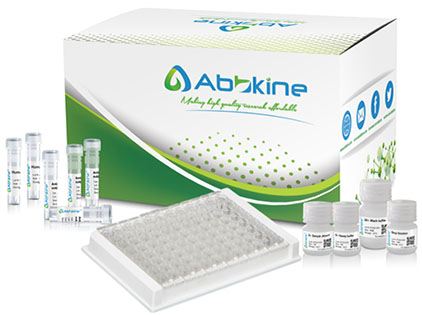
If your oxidative-stress paper still lists "MDA measured by TBARS assay at 532 nm" as a methods line item, you are one reviewer comment away from a very expensive redo. Malondialdehyde (MDA) — propanedial, CH₂(CHO)₂, MW 72.06 Da — is undisputedly the most abundant and widely measured aldehyde produced during polyunsaturated fatty acid (PUFA) peroxidation (linoleate/arachidonate → alkoxyl/peroxyl radicals → chain propagation → β-scission → ~70–100 µM peak levels in severe ischemia/reperfusion, typically 0.1–1 nmol/mg protein basal in healthy tissue). But the classic TBA/TBARS method — heating samples with thiobarbituric acid at low pH to form the pink MDA-TBA₂ trimethine adduct (λₘₐₓ 532–535 nm) — is simultaneously the most popular and most hated assay in oxidative-stress biology, because it's non-selective by spectroscopy alone (sugars, bilirubin, haem pigments, sialic acid, and any enolizable aldehyde interfere), prone to artifactual peroxidation during the acidic boil step, and blind to which PUFA chain the MDA came from. The Human Malondialdehyde (MDA) ELISA Kit (KTE61683) from Abbkine exists to bypass that entire mess: it is an antibody-based hapten-capture immunoassay (functionally a sandwich-format immunoassay built on anti-MDA antibodies raised against MDA–protein conjugates) that reads MDA (free + adducted forms the antibody recognizes) as an interpolated, plate-readable concentration, so your ferroptosis/IR/NASH/aging paper reports an oxidant load with specificity and CVs — not a pink optical density that might be half sugar.
MDA in One Paragraph: The 72-Da Smoke Alarm of the Lipid Bilayer
Polyunsaturated membranes don't burn — they autocatalyze. The sequence is:
•OH / transition-metal (Fe²⁺) + LOOH → LO• / LOO• → β-scission of the alkoxyl radical → MDA + 4-hydroxy-2(E)-nonenal (4-HNE) + other reactive aldehydes
MDA is the smallest stable carbonyl in that cascade (a dialdehyde — both the C1 and C3 carbons carry aldehyde groups), and it's dangerous in two intersecting ways:
- Protein adduction: MDA's aldehyde groups form Michael adducts and Schiff bases with Lys ε-amino groups, Cys thiols, and even Arg guanidino groups → cross-links (MDA + protein-Lys → Nε-(2-propenal)lysine / MDA-LDL), which aggregate and inactivate enzymes, pore proteins, and receptors.
- DNA adducts: most mutagenically → M₁G (pyrimido[1,2-α]purin-10(3H)-one) from MDA reacting with dG — a known endogenous mutagen also found in human urine and leukocyte DNA.
Because MDA exists in equilibrium between free MDA ↔ protein-bound (Schiff base / Michael adduct) ↔ TBA-reactive adducts, the only rigorous question is: what fraction of the total MDA pool does my assay actually see, and is it specific to MDA or just "pink at 532 nm"?
Why an Immunoassay — And Why the Old TBA Boil Needs to Retire
Problem with TBARS What the MDA ELISA Fixes
Heat/acid during boil generates new MDA from labile PUFAs in your own sample → over-estimation No boiling step: ambient or 37°C incubations preserve the native MDA pool
532 nm reads any pink chromogen (bilirubin, carotenoids, sugars) → false elevation Antibody specificity for the MDA-hapten determinant suppresses cross-reactive interferents
End-point is "nmol MDA equivalents" — not true mass Plate standard curve (recombinant/conjugate-derived) → interpolated concentration with CVs you can propagate
Inter-lab reproducibility is notorious (pH, boil time, bleach in glassware) Kit-controlled reagents, coated wells, calibrated range → plate-to-plate normalization
Technically, MDA is a 72 Da hapten — it can't support a true two-antibody sandwich on the free molecule. What KTE61683 actually deploys is the rigorously described architecture used by all reputable MDA immunoassays:
- Microplate pre-coated with an anti-MDA antibody raised against MDA–carrier-protein conjugates — this captures MDA as it exists in your sample: free MDA and, critically, MDA that has formed covalent adducts with sample proteins/lipid-fragment peptides (these adducts present multiple accessible MDA-hapten epitopes to the immobilized antibody).
- Biotinylated anti-MDA detection antibody (same hapten-recognition framework, different binding context) completes the signal.
- Streptavidin–HRP → TMB → 450 nm → interpolate from the MDA standard curve.
Key performance envelope from the Abbkine/KTE61683 distributor documentation:
Parameter KTE61683 Specification
Target Human Malondialdehyde / MDA (C₃H₄O₂, MW 72.06)
Assay type Hapten-capture immunoassay (described as sandwich-format ELISA)
Detection Biotin-Ab → SA-HRP → TMB, 450 nm
Calibration range 0.5 – 8 nmol/mL (≈ 36 – 576 ng/mL if you prefer mass units)
Sensitivity / LOD ~0.05 nmol/mL (≈ 3.6 ng/mL)
Samples Serum, plasma (EDTA preferred), cell culture supernatants, tissue homogenates, other biological fluids
Assay time ~2.5–3.5 hours
Status For Research Use Only; not for diagnostic procedures
(Confirm exact dilutions, preparation notes, and lot-specific recovery on the shipped Abbkine datasheet.)
The Prep Rule That Decides Everything: Stop Creating MDA in the Tube
The single biggest source of "my MDA looks huge" is ex vivo peroxidation during collection:
- Use EDTA tubes (chelates pro-oxidant Fe²⁺/Cu⁺) + optionally add BHT (butylated hydroxytoluene, ~0.01–0.05% v/v final) as an antioxidant during homogenization if you're processing tissue — this blocks the sample from making new MDA while you're still grinding it.
- Process cold (4°C), spin promptly, aliquot, flash –80°C — never let tissue sit at RT in air.
- Avoid acid or high heat — the ELISA doesn't require it; that's the whole point.
- For tissue: homogenize in cold PBS or 50 mM Tris pH 7.4 + 0.5% Triton X-100 + BHT + 1 mM EDTA, BCA the same lysate → express as nmol MDA / mg total protein (the most defensible normalization).
Where an MDA Immunoassay Actually Improves the Paper
- Ischemia–Reperfusion Injury (Heart, Brain, Kidney, Liver)
This is the canonical MDA story: aortic cross-clamp → reperfusion → burst of ROS at the endothelial–neutrophil interface → membrane PUFAs crack → MDA spikes in tissue homogenates (nmol/mg protein) and perfusate/plasma. The ELISA lets you run sham vs. I/R vs. drug (ischemic post-conditioning, NAC, MitoQ, ferroptosis modulators, DFX) as a clean bar graph with error bars, not a "TBARS absorbance" that reviewers will ask you to re-run.
- NASH / Metabolic Oxidative Stress & Hepatic Steatosis
Hepatic steatosis → CYP2E1/COX/NADPH oxidase overload → PUFA oxidation → MDA-LDL and 4-HNE-protein adducts accumulate in zone 3, driving stellate-cell activation and fibrotic transition. Running KTE61683 on liver homogenates or (exploratorily) on mouse/rat serum alongside ALT/AST, F4/80, α-SMA, and Oil Red O gives you the oxidant-load variable that ties lipid overflow to stellate activation — not just "fatty liver got worse."
- Ferroptosis Screens (The Hottest Oxidative-Death Field Right Now)
Ferroptosis is defined by iron-dependent lipid-ROS accumulation → catastrophic membrane PUFA peroxidation → rupture, and MDA is one of the two readouts (with C11-BODIPY/ Liperfluo for direct lipid-ROS) that says "peroxidation happened." If you're testing GPX4 inhibitors (RSL3), cystine transporter blockade (erastin), or ferroptosis-suppressors (ferrostatin-1, liproxstatin-1, DFO), report MDA as nmol/mg protein (ELISA) with a BHT-protected prep so the number reflects the cell, not the grind.
- Aging, Neurodegeneration & the "Oxidative Damage Archive"
Brain and heart are the longest-lived, highest-oxygen-demand tissues; their membrane PUFAs (AA/DHA) accumulate MDA-protein/DNA adducts over decades. Quantifying MDA in cortical or hippocampal lysates (normalized to protein or to a neuronal marker) alongside 4-HNE, GSH/GSSG, 8-OHdG, and Iba1 CD68 makes the oxidative-stress claim quantitative, not just a "we saw GFAP go up."
- Food/Nutraceutical Oxidation Controls (The Weird-but-Real Use Case)
Because MDA is the dominant aldehyde in PUFA oxidation, the same immunoassay logic is used in oil/food-science quality control (rancid vegetable oils, fish oils, lipid emulsions) as a research-grade proxy — but for in vivo papers, keep the context biomedical.
- Antioxidant Drug/Tocopherol/Polyphenol Studies
If your compound is "antioxidant," the gold standard is no longer "total antioxidant capacity (TEAC/FRAP) — those are dye assays, not biology." Measure MDA (ELISA) + GSH/GSSG + 4-HNE as the mechanistic triad that proves your compound lowered real peroxidation products, not just quenched a test-tube dye.
MDA ELISA vs. TBARS: The Honest Comparison
TBARS (532 nm boil) MDA ELISA (KTE61683)
Specificity Low (cross: sugars, sialic acid, heme) High (antibody-hapten recognition)
Artifact creation High (boil generates new MDA) None (ambient/37°C only)
Units "TBARS equivalents" (ambiguous) nmol/mL or ng/mL (calibrated)
Reproducibility Infamous (lab-to-lab drift) Kit-controlled reagents, CVs < 10%
Throughput 1–2 samples per cuvette 96-well plate, 40+ samples/session
What it measures Anything pink at 532 nm that might involve TBA-reactive aldehydes Antibody-defined MDA-hapten pool
The Bottom Line
MDA is the 72-Da dialdehyde that marks where your PUFA membranes actually broke — not a vague "there was some oxidation." Measuring it by a 50-year-old pink-boil that creates artifactual MDA in the tube and can't tell MDA from a sugar is not a badge of tradition; it's a preventable weakness in an otherwise good paper. The Human Malondialdehyde (MDA) ELISA Kit — KTE61683 from Abbkine gives you the right architecture to modernize: anti-MDA coated capture → biotinylated anti-MDA detection → HRP–TMB → 450 nm, over a calibrated 0.5–8 nmol/mL range (LOD ~0.05 nmol/mL), in a ~2.5–3.5 hour workflow that reads the oxidant load as a number you can normalize, replicate, and defend — without ever touching a boiling water bath.
Product Reference: KTE61683 – Human Malondialdehyde (MDA) ELISA Kit
Learn more and order: https://www.abbkine.com/product/human-malondialdehyde-mda-elisa-kit-kte61683/
(For Research Use Only; not for diagnostic procedures in humans.)





