




The 5.8-kDa Metabolic Dial That Decides Whether Your Glucose Clamp Works: Why Fasting Insulin (< 5 μIU/mL) Deserves a Sandwich ELISA, Not a "Sent-Out Chemiluminescence" Black Box — And How KTE62671 Puts It on Your Own 450 nm Reader
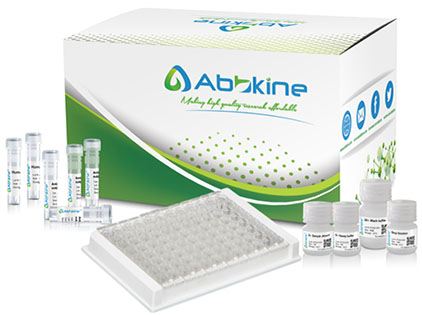
Insulin is the only hormone in your body whose absence kills you in days (Type 1 ketoacidosis), whose excess slowly strangles you over decades (Type 2 hyperinsulinemic insulin resistance, NASH, PCOS, cardiovascular remodeling), and whose measurement is somehow still treated like a clinical chemistry department magic trick rather than a bench-level quantitative variable. Synthesized as preproinsulin → proinsulin (86 aa, connecting C-peptide still tethering the B-chain to the A-chain via the classic Cys⁷–Cys⁷ / Cys²⁰–Cys¹⁹ disulfide skeleton), mature Human Insulin (INS, UniProt: P01308, Gene ID: 3630, Chr 11p15.5) is a 51-amino-acid, two-chain (A-chain 21 aa + B-chain 30 aa), ~5,808-Da peptide hormone held together by two inter-chain disulfides — and its entire physiological career boils down to a single binary: β-cell senses ↑glucose (or ↑AA/↑incretin/GIP-GLP1) → voltage-gated Ca²⁺ influx → exocytosis of insulin granules → insulin binds the insulin receptor (IR, a receptor tyrosine kinase tetramer) → IRS→PI3K/AKT & Ras/MAPK → GLUT4 translocation, glycogen synthesis, protein synthesis, and transcriptional programs (FOXO, SREBP, mTORC1). The Human Insulin (INS) ELISA Kit (KTE62671) from Abbkine exists to take this 5.8-kDa secretory hormone out of the "core lab only" closet and put it on your plate reader as a calibrated sandwich-ELISA (pg–ng/mL, interpolated from a recombinant INS standard curve), so your glucose-clamp, islet-function, insulin-resistance, or β-cell-toxicity study actually has the hormone number you're supposedly manipulating — not just a glucose or an HOMA-IR proxy.
INS in One Paragraph: 51 Amino Acids, Two Chains, Two Disulfides — And a Concentration Range That Starts Below 50 pg/mL
Mature insulin's architecture is famously compact:
Feature Detail Why It Matters for Assay Design
A-chain (21 aa) S–S linked to B-chain at CysA7–CysB7 and CysA20–CysB19 These disulfide faces are rigid; they survive mild extraction and provide structurally separable surfaces
B-chain (30 aa, N-terminal Phe–Val–Asn–Gln–His–Leu–Cys…) Contains the receptor-binding surface (B24–B26: Phe-Phe-Tyr is the "signature" contact patch) Good antibodies exploit either the B-chain face or the A-chain loop to build a two-site sandwich
Post-translational source Proinsulin (86 aa) → PC1/3 & PC2 (convertases) in β-granules cleave C-peptide → mature insulin + free C-peptide Proinsulin cross-reactivity is the #1 specificity question — a good INS ELISA must not count proinsulin 1:1 as insulin
The numbers every researcher memorizes — and the reason your assay sensitivity has to be real:
State Serum / Plasma Insulin What It Means
True fasting (12–14 h, healthy) ~2–10 μIU/mL (≈ ~15–70 pg/mL / ~0.1–0.5 ng/mL) Low secretion, liver still making glucose; HOMA-IR ≈ 1–1.5
Impaired fasting glucose / early IR 10–20 μIU/mL fasting (often with ↑C-peptide) Compensatory hypersecretion; liver insulin signalling dulling
Post-OGTT peak (30–60 min) 30–120 μIU/mL (≈ ~1–8 ng/mL) Normal first-phase kinetics
Severe IR (obesity/NASH/PCOS) Fasting 15–50+ μIU/mL Hyperinsulinemic compensation; β-cell under chronic load
Post–glucose clamp (hyperglycemic clamp) Can exceed 100–200 μIU/mL Experimental upper bound your standard curve must span
(Conversion cheat: 1 μIU/mL insulin ≈ 6 pg/mL ≈ 0.006 ng/mL ≈ 0.1667 mIU/L by the 1 IU = 6 mg, 1 mg = 1,000,000 μIU convention; or simply: ~1 ng/mL ≈ 24 μIU/mL.)
Why a Sandwich ELISA for a 5.8-kDa Peptide — And Why "It's Too Small" Is a Myth
The perennial skeptic asks: "Isn't 51 aa too small for two non-overlapping epitopes?"
The answer is no — because insulin isn't a featureless string. It's a folded, disulfide-locked two-chain miniprotein with distinct surface patches:
• The A-chain loop (Gly–Ile–Val–Glu–Gln–Cys…) and
• The B-chain N-terminus / B-chain C-terminus
— which are spatially non-overlapping and allow a capturing anti-INS mAb (typically against one face) + a biotinylated detecting anti-INS mAb (against the opposite face) to form a genuine two-site sandwich. All the major vendor/reference pages for KTE62671 explicitly describe it as a two-site sandwich ELISA (double-antibody, pre-coated capture → biotin detection → SA-HRP → TMB), not a competitive hapten assay .
Consolidated performance envelope from the distributor records aligned with KTE62671:
Parameter KTE62671-class Specification
Target Human Insulin / INS (UniProt P01308, mature 51 aa, ~5.8 kDa)
Format 96-well sandwich ELISA, pre-coated capture
Detection Biotin-Ab → SA-HRP → TMB, 450 nm
Dynamic Range Various distributor listings converge on roughly 7.8–500 pg/mL standard curve (some formats extend to 0.78–50 μIU/mL or ~3–200 pg/mL depending on dilution scheme and whether the standard is expressed as mass or mIU)
Sensitivity / LOD 3.9 pg/mL (0.5–1 μIU/mL)
Intra-Assay CV < 6–8%
Inter-Assay CV < 10–12%
Specificity No significant cross-reactivity with C-peptide, glucagon, somatostatin, IGF-1, or other islet peptides at physiological levels (verify lot CoA for proinsulin cross-reactivity %, typically < 0.1–1%)
Samples Serum, plasma (EDTA/heparin), cell culture supernatants, tissue homogenates, other biological fluids
Assay time ~3–4 hours
(Confirm exact range, dilution factor, and standard identity — recombinant vs. WHO 66/304 insulin standard equivalence — on the shipped Abbkine datasheet/CoA for KTE62671.)
The Collection Rule That Makes or Breaks an Insulin Dataset
Insulin is stable at 4°C for a reasonable window, but it's a peptide — and hemolysis, delayed centrifugation, and freeze–thaw cycles degrade it or introduce protease activity that nibbles the B-chain termini:
- Tubes: EDTA or heparin — plain serum is usable, but EDTA is preferred for research because chelation reduces ex vivo protease/plasmin cross-talk. Avoid citrate for insulin-focused panels if you can (it's fine medically but EDTA is the cleaner choice).
- Process cold: draw → upright on ice → centrifuge ≥ 2,000 ×g, 4°C, 10–15 min within 30–60 min → aliquot supernatant → -80°C snap → never >1 freeze–thaw.
- Document fasting status — "insulin was 8 μIU/mL" means nothing without "12 h fasted, no coffee, blood draw at 08:00." That single metadata line is what saves a paper from Reviewer 3's favorite complaint: "Was this fasted or not?"
Where Insulin ELISA Quantification Actually Carries the Paper (Beyond "Diabetes Exists")
- Insulin Resistance & the HOMA2 / QUICKI Workhorses
Every metabolic paper loves to calculate HOMA-IR = (fasting ins μIU/mL × fasting glu mg/dL) / 405 (or HOMA2 via calculator), but the insulin measurement itself is doing the heavy lifting — and if your insulin readout is noisy, your HOMA is noisy. Running KTE62671 on fasted EDTA plasma from a cohort (lean vs. obese vs. NAFLD) gives you the true fasting ins in pg–ng/mL, not a chemistry-autoanalyzer value you can't reproduce in your own lab, and lets you pair it with:
• C-peptide (same granule, molar ratio tells β-cell secretion vs. renal clearance)
• Adiponectin / leptin / resistin
• ALT, TG, hs-CRP
That's the metabolic portrait reviewers recognise as a dataset, not a slogan.
- Islet / β-Cell Biology: GSIS Curves (Glucose-Stimulated Insulin Secretion)
The bread-and-butter bench model — isolated murine/human islets or INS-1 832/3 lines → perifusion or static incubation at 2.8 mM vs. 16.7 mM glucose (+/- Ex-4/GLP-1/IBMX/KCl) — lives or dies on media insulin. The ELISA lets you:
• Build the first-phase (5–10 min) vs. second-phase (30–60 min) secretion curve if you collect frequent fractions
• Compare total insulin content (acid-ethanol extracted islet pellet → BCA-normalised ng insulin / islet or μg protein)
• Test β-cell toxins (streptozotocin, cytokines IL-1β+IFNγ, palmitate) with secretion dynamics, not just "cells died"
- PCOS, Hyperandrogenism & the "Inappropriate Insulin" Axis
PCOS pathogenesis runs on a vicious circle: hyperinsulinemia → ovarian theca over-stimulation (↑ androgen synthesis) + ↓ SHBG hepatic production → ↑ free testosterone → anovulation → adiposity → worse IR. The endocrine lynchpin is fasting insulin and AUC-insulin post-OGTT, and a plate-based INS readout lets you run insulin-sensitizer trials (metformin, pioglitazone, lifestyle, inositol) with your own numbers rather than relying on a clinic autoanalyzer you can't troubleshoot.
- NASH / MAFLD & the Liver–Pancreas Feedback Loop
The fatty liver ↔ hyperinsulinemic IR loop is bidirectional: hepatic steatosis → TNF/FFA spill → JNK/IKKβ → serine-phosphorylate IRS-1 → hepatic insulin resistance → pancreas compensates with hypersecretion → hyperinsulinemia → lipogenesis (SREBP-1c) worsens. Liver-biopsy-stratified cohorts benefit from fasting ins + C-peptide + HOMA as the systemic metabolic denominator next to ALT, FIB-4, CK-18 M30/M65, and hepatic TG.
- Hypoglycemia Research & Glucagon–Insulin Counter-Regulation
Whether it's insulinoma workups, post-bariatric hypoglycemia, or exercise-induced glucoregulation, the diagnostic anchor is the inappropriately detectable insulin (and C-peptide) during hypoglycemia (< 55 mg/dL). A sensitive sandwich ELISA lets you re-analyse stored fasted EDTA plasma from post-prandial symptomatic episodes and prove the mismatch — low glucose + high insulin = exogenous vs. endogenous.
- Drug / Nutrient Screening (Berberine, Resveratrol, Novel GLP-1 Mimetics, SGLT2i)
If you're testing a compound's effect on insulin dynamics (in vitro islets or in vivo gavage models), report % insulin secretion/biosynthesis remaining ± SEM from the calibrated curve (pg or μIU normalized to DNA/protein/islet number), tie it to glucose disposal / clamp data, and close with IRS-1 Tyr⁶¹² / Akt Ser⁴⁷³ if you want the intracellular receipt stamp. That's the mechanism arc, not just "glucose went down."
A Minimal Workflow You Can Paste Into Materials & Methods
- Collect: EDTA tube, invert, keep on wet ice, spin ≥ 2,000 ×g, 4°C, 10–15 min within 30–60 min. Aliquot immediately, snap -80°C, label clearly, avoid >1 freeze–thaw.
- Dilute into kit assay buffer per the manual (most protocols land around 1:2–1:10 plasma to fit inside the calibration window — follow your lot's advised dilution).
- Warm reagents ≥ 30 min RT before opening; protect TMB from light; stop uniformly; read 450 nm promptly; fit 4-PL; run full standard curve on every plate.
The Bottom Line
Insulin is the 51-amino-acid, two-chain, 5.8-kDa disulfide-locked hormone whose 12-h fasting level (2–10 μIU/mL, 15–70 pg/mL) quietly predicts whether a person's liver, adipose, and vasculature are winning or losing the insulin-resistance war — and whose beta-cell secretion dynamics (first-phase dip, second-phase ramp) are the gold-standard readout of islet health. Measuring it as a calibrated sandwich-ELISA variable rather than a black-box chemiluminescence value you can only get from a core lab gives you ownership of the number. The Human Insulin (INS) ELISA Kit — KTE62671 from Abbkine gives you that number: pre-coated anti-INS capture → biotin detection → HRP–TMB → 450 nm → pg–ng/mL (convertible to μIU/mL via the 1 μIU ≈ 6 pg rule), over roughly a low-pg sensitivity (4 pg/mL LOD) working envelope that comfortably spans fasting through post-glucose-stimulated peaks, in a ~3–4 hour workflow that fits on your own bench plate reader.
Product Reference: KTE62671 – Human Insulin (INS) ELISA Kit
Learn more and order: https://www.abbkine.com/product/human-insulin-ins-elisa-kit-kte62671/
(For Research Use Only; not for diagnostic procedures in humans.)





