




The 33-kDa Inner-Membrane Proton Leak That Burns Calories Like a Furnace on Standby: Why Your "Beige Fat Is Activated" Claim Needs UCP1 Protein Mass — Not a 37-kDa Band on a Gel — And How KTE70038 Delivers the Cold-Hard pg/mL
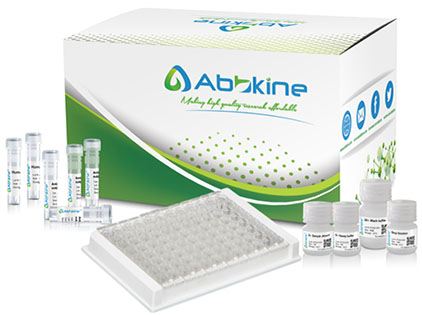
Brown adipose tissue has pulled off the greatest rebrand in modern metabolism. For half a century it was "the baby-fat heater organ you lose by age six and who cares," until PET-CT scans accidentally found active supraclavicular BAT in adult humans — and suddenly everyone from Big Pharma to the endurance-epidemiology crowd wanted in on the idea that adults can burn extra calories on purpose by turning on the one mitochondrial protein that explicitly wastes proton motive force as heat. That protein is UCP1 (Uncoupling Protein 1, alias thermogenin, UniProt: P12242, Gene ID: 22227, Ucp1) — a ~306-aa, ~33-kDa member of the SLC25 (mitochondrial solute carrier) family, anchored in the inner mitochondrial membrane (IMM) as a six-transmembrane-helix monomer that transports protons out of the IMS — and when it opens, the electrochemical gradient is dissipated as heat instead of ATP. The Mouse Mitochondrial brown fat uncoupling protein 1 (UCP1) ELISA Kit (KTE70038) from Abbkine exists because "we saw a ~33-kDa band vs. COX-IV" is a localization argument, not a thermogenic budget — and if your paper claims cold acclimation / β₃-agonist / browning / CR-master-regulator-reprogramming changed BAT activity, you need ng UCP1 / mg mitochondrial protein as a number, not a "darker smear on the membrane."
UCP1 in One Paragraph: The FFA-Activated Proton Short-Circuit That Is the ONLY True Non-Shivering Thermostat
Despite the "uncoupling protein" name, UCP1 isn't a hole — it's a highly regulated SLC25 carrier whose open state lets protons slip back across the IMM outside the F₀F₁-ATP synthase channel, so the respiratory chain keeps running hard (O₂ consumption ↑, RER ~0.7–0.8) while ATP yield per NADH drops and the energy gap is dumped as heat (non-shivering thermogenesis). The control logic is beautiful and worth memorizing because it's the exact lever every obesity/thermo-drug tries to pull:
Step Signal Molecular Effect
Cold / β₃-adrenergic (NE → β₃-AR) ↑cAMP → PKA → perilipin/HSL phosphorylation → triacylglycerol → free FA release FFAs displace inhibitory purine nucleotides (GDP/ATP) from the nucleotide-binding pocket and act as co-activators → UCP1 open
At thermoneutrality / no stimulus Cytosolic [ATP] ~3–5 mM, [GDP] accessible Nucleotide binds central cavity (c-state closed) → proton conductance OFF → ATP synthesis conserved
Off-switch Residual FFAs oxidized away, GTP/ATP rebinding UCP1 recloses; cell returns to coupling mode
The structural context (now locked by cryo-EM at 2.51–2.57 Å, Chen Lei/PKU Nature 2023) is:
Structural Feature Detail
Length 306 aa (mouse), computed ~32.9 kDa (runs ~30–33 kDa on reducing SDS-PAGE)
Topology 6 TM α-helices (H1–H6), tripartite repeat (3 × 2-TM units), L-shaped fold, cytoplasmic-open (c-state) vs. matrix-closed
Oligomeric state Historically argued dimeric; modern native-purification + SEC + calorimetry → monomer, 1 nucleotide / 1 protein, 3 cardiolipin molecules per monomer (cardiolipin stabilizes the fold)
Localization Exclusively IMM of brown/beige adipocyte mitochondria (not expressed in WAT at meaningful levels without browning stimulus; UCP2/UCP3 are separate genes, widely expressed, but cannot compensate for UCP1 KO on thermogenesis)
Why a Sandwich ELISA for a ~33-kDa Multi-Pass IM Membrane Protein — And Why "Band vs. COX-IV" Is Not the Number
UCP1 is integral membrane (6TM), stabilized by cardiolipin, and runs right in the crowded 30–37 kDa zone next to mitochondrial carriers (ADP/ATP translocase, phosphate carrier, UCP2). Three practical problems with gel-only quantification:
- The 33-kDa region is dense — without two distinct anti-UCP1 epitopes you're competing with optical-density bleed from neighbors.
- UCP1 is only in the IMM — whole-BAT-lysate "total protein" lanes mix mitochondrial, cytosolic, lipid-droplet, and stromal fractions, so "band intensity / actin" conflates UCP1 density with mitochondrial biogenesis (totally different variables).
- Your experiment is a timecourse or diet/agonist panel (4°C vs. 30°C thermoneutrality, CL316243 vs. vehicle, HFD ± PRDM16/PPARγ modulators) → needs plate numbers.
The KTE70038 kit uses the field-standard two-site architecture:
- Microplate pre-coated with capture anti-UCP1 (specific for mouse UCP1, epitope accessible on extracted/partially solubilized IMM protein — detergents in the lysis buffer transiently expose the loop regions between TM helices).
- Standards (recombinant mouse UCP1 or calibrated UCP1 protein) + samples — tissue homogenates (BAT, cervical/axillary/perirenal fat pads, interscapular BAT), mitochondrial fractions, cell lysates, cell culture supernatants/lysates — added → UCP1 (solubilized accessible pool) binds.
- Wash → biotinylated anti-UCP1 detection (different epitope) → Streptavidin–HRP → TMB → color ∝ bound UCP1.
- Stop → 450 nm → interpolate concentration from the standard curve.
Consolidated specification envelope from the multiple vendor/reagent-database records aligned with KTE70038:
Parameter KTE70038-class Specification
Target Mouse UCP1 / Thermogenin (UniProt P12242, Gene 22227)
Format 96-well sandwich ELISA, pre-coated capture (双抗夹心)
Detection Biotin-Ab → SA–HRP → TMB, 450 nm
Dynamic Range Consensus specs converge on 62.5 – 2,000 pg/mL (some distributors quote 78 – 5,000 pg/mL or 5 – 80 pg/mL depending on standard concentration units; confirm on your CoA)
Sensitivity / LOD ~10 pg/mL (some formats quote ~0.5 pg/mL for the lowest-calibration extreme)
Intra-Assay CV < 8–10%
Inter-Assay CV < 10–12%
Specificity No significant cross-reactivity with UCP2, UCP3, ADP/ATP translocase, or other mitochondrial carriers at physiological levels
Samples Tissue homogenates, mitochondrial fractions, cell lysates, culture supernatants, serum/plasma (exploratory)
Assay time ~3–4.5 hours
(Confirm exact range, dilution factors, and lot-specific recovery on the shipped Abbkine datasheet/CoA for KTE70038.)
The Prep Rule That Decides Whether You're Measuring BAT or a Lipid Blob
This is the single most important paragraph for anyone actually running KTE70038 on mouse tissue:
UCP1 lives in the IMM of brown/beige adipocyte mitochondria — so the quality of your number depends on how cleanly you isolate the organelle fraction before the ELISA. Two paths, pick one and declare it:
Path A — Purified Mitochondria (Best Practice)
- Dissect interscapular BAT (iBAT) or cervical/perirenal pads → rinse in ice-cold PBS + 1 mM EDTA → mince finely → homogenize cold in 10–15 volumes isolation buffer (250 mM sucrose, 10 mM Tris pH 7.4, 1 mM EDTA, protease inhibitors) with a glass–Teflon Potter (5–8 slow strokes, keep on ice).
- Low-speed spin (600–800 ×g, 10 min, 4°C) → keep supernatant (nuclear/cell-debris pellet discarded).
- Medium spin (8,000–10,000 ×g, 10–15 min, 4°C) → mitochondrial pellet (crude MITO) → resuspend gently in lysis buffer (50 mM Tris pH 7.4, 150 mM NaCl, 0.5–1% digitonin or 0.1% deoxycholate + 0.5% Triton X-100, protease inhibitors) → incubate 10 min on ice → clarify 12,000–16,000 ×g, 15 min → supernatant = UCP1-accessible pool.
- BCA → express as ng UCP1 / mg mitochondrial protein, or normalize to COX-IV / VDAC as a mitochondrial-loading anchor.
Path B — Whole-BAT Homogenate (Fast, Acceptable if Controlled)
Same homogenization buffer, 0.5–1% Triton X-100 + 0.1% deoxycholate, spin → supernatant → BCA → ng UCP1 / mg total protein, with the caveat that this reads UCP1 per gram of BAT, not per mitochondrion — useful for comparing vehicle vs. CL316243 where total mitochondrial mass also changes (then you want both denominators).
Where UCP1 Quantification Actually Carries the Paper
- Cold Acclimation & the 18°C vs. 30°C Thermoneutrality Debate
This is the canonical BAT variable. A C57BL/6 mouse at 30°C (thermoneutrality) has BAT that looks "brown" but UCP1 is low — it's mostly unloaded. Move it to 4–18°C for 7–14 days → sympathetic firing → NE → β₃-AR → cAMP/PKA → Ucp1 transcription (via PPARγ/PRDM16/PGC-1α) + lipolysis → FFA → UCP1 activated → BAT iBAT mass ↑, multilocular lipid ↓, O₂ consumption ↑, core Tstab ↑. The rigorous readout is:
• UCP1 (KTE70038, ng/mg MITO or ng/mg BAT) — the effector protein itself
• Mitochondrial biogenesis markers (COX-IV, mtDNA/nDNA ratio, TFAM)
• Core Tb (telemetry probe), VO₂/VCO₂ (indirect calorimetry), BAT TG:protein ratio
• Optional: H&E (multilocularity), UCP1 IF/EM (mitochondrial membrane localization)
That's the chain that proves the tissue didn't just "look browner" — it built the proton-leak engine.
- Pharmacological Browning: β₃-Agonists (CL316243/Mirabegron), PPARγ Ligands, FGF21
The translational payoff everyone wants: can we mimetize cold without putting patients in a fridge? CL316243 (β₃-AR selective agonist) is the gold-standard mouse tool — 1 mg/kg/day mini-osmotic pump or IP, 7–14 d → BAT UCP1 ↑ 5–20× vs. vehicle; mirabegron is the human-translatable cousin. Quantifying UCP1 by ELISA across dose–response (0.1 / 0.3 / 1 mg/kg/d) gives you the protein-mass curve reviewers expect next to the obligatory "energy expenditure went up" indirect-calorimetry graph.
- Obesity (HFD) & the "BAT Goes Quiet" Phenotype
High-fat diet → BAT inflammation (crowding by F4/80⁺ ATM), ceramide accumulation, local insulin/leptin resistance → UCP1 expression suppressed, multilocular → unilocular shift, thermogenic capacity drops → animal conserves less heat at 18°C → weight divergence accelerates. Measuring UCP1 in HFD vs. chow BAT (ng/mg) alongside MitoTracker/COX-IV IF, Tnf/Eif2ak3/Atf4 markers, and Tb at 18°C frames the weight gain as a thermogenic-collapse story, not just "ate more fat."
- Beige/ Brite (Beige-Intermuscular/Subcutaneous) vs. "True" iBAT Mapping
The field pivot after 2012 was the discovery that subcutaneous WAT in humans and mice can undergo "browning/beiging" (cold, exercise, irisin/β₃, PPARγ agonists) to form UCP1⁺ multilocular adipocytes — but they're less dense, fewer mitochondria per cell, and UCP1 levels are ~10–30% of true iBAT. ELISA on inguinal WAT (inguinal depots, not just iBAT) lets you quantify the UCP1⁺ fraction that a TH⁺-innervation stain can't weigh — and you report it properly as ng UCP1 / g sWAT (often 10–100× lower than iBAT, so your dilution matters).
- Genetic Models: Ucp1⁺/⁻, Prdm16, Pgc1a, and the "Mitochondria ≠ Thermogenesis" Triangulation
Mice can have high mitochondrial mass (COX-IV ↑) but UCP1 still low if the coupling machinery is intact — which is why the knockout is so definitive: Ucp1⁻/⁻ mice look fine at thermoneutrality but go hypothermic at 4–10°C and gain weight on HFD despite normal mitochondrial numbers. Reporting UCP1 protein remaining (ELISA) + coupling efficiency (ΔΨm/JC-1) + VO₂ cold is the three-node proof that the gene you edited was the uncoupler, not just "mitochondria changed."
- Ex Vivo BAT Slice / Primary Brown Pre-Adipocyte Differentiation
Differentiating brown pre-adipocytes (from iBAT stromal-vascular fraction) → day 6–8 multilocular, NE-responsive → harvest cell lysate → UCP1 ELISA (ng/mg protein) is the cleanest way to screen PRDM16/PPARγ/IRX3/IRX5 modulators or CRISPR hits in a defined monoculture before burning a mouse.
A Minimal Workflow You Can Paste Into Methods
- Dissect interscapular BAT (iBAT) on ice, rinse in cold PBS + 1 mM EDTA, mince, homogenize in 250 mM sucrose / 10 mM Tris pH 7.4 / 1 mM EDTA + PI with glass–Teflon (5–8 strokes, 4°C).
- Spin 600 ×g, 10 min, 4°C → keep sup → spin 10,000 ×g, 10 min, 4°C → resuspend pellet in 50 mM Tris pH 7.4, 150 mM NaCl, 0.5% digitonin + 0.5% Triton X-100 + PI, incubate 10 min on ice, spin 16,000 ×g, 15 min → supernatant = MITO-solubilized UCP1 pool.
- BCA → express ng UCP1 / mg mitochondrial protein (anchor with COX-IV/VDAC if you want strict IMM density).
- Warm kit reagents ≥ 30 min RT before opening; protect TMB from light; stop uniformly; read 450 nm promptly; fit 4-PL; run full standard curve on every plate.
The Bottom Line
UCP1/thermogenin is the ~33-kDa (306-aa), six-transmembrane-helix SLC25 mitochondrial carrier that is the sole effector of true non-shivering thermogenesis in mammalian BAT — activated by liberated fatty acids that displace inhibitory purine nucleotides (GDP/ATP) from its central cavity, letting protons short-circuit back across the IMM as pure heat. Because it lives in the inner membrane, runs in the crowded 30–37 kDa gel zone, and is meaningless without an organelle-fraction or at least a detergent-solubilized preparation, it demands a two-epitope sandwich ELISA that turns "band darker" into pg–ng/mL interpolated from a recombinant standard. The Mouse Mitochondrial brown fat uncoupling protein 1 (UCP1) ELISA Kit — KTE70038 from Abbkine gives you that readout: pre-coated anti-UCP1 capture → biotin detection → SA–HRP → TMB → 450 nm → ng/mL, over roughly a 62.5–2,000 pg/mL working envelope with LOD ~10 pg/mL, in a ~3–4.5 hour workflow that scales across cold-acclimation cohorts, β₃-agonist dose panels, and browning screens without chaining you to a densitometer.
Product Reference: KTE70038 – Mouse Mitochondrial brown fat uncoupling protein 1 (UCP1) ELISA Kit
Learn more and order: https://www.abbkine.com/product/mouse-mitochondrial-brown-fat-uncoupling-protein-1-ucp1-elisa-kit-kte70038/
(For Research Use Only; not for diagnostic procedures in humans.)





