




The 25-Amino-Acid Iron Master That Fits on a Single Line: Why Hepcidin-25 Can't Be a "Secondary Baseline" Anymore — And How KTE61933 Puts It on a Defensible Plate Curve
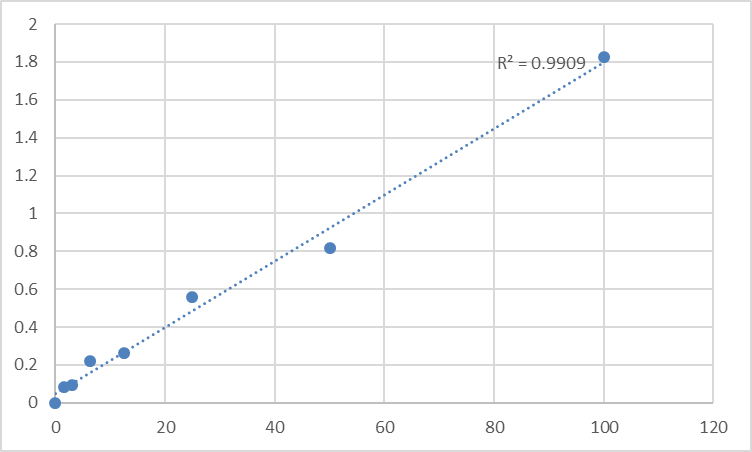
There are very few hormones in human biology synthesized as a mere 25-mer peptide (2,784 Da) that nonetheless manage to dictate systemic iron traffic for the entire organism — and even fewer that do it by telling macrophages "lock the door" and enterocytes "don't bother exporting." That 25-mer is Hepcidin-25 / Hepc25 (gene: HAMP, LEAP-1, UniProt: P81172), the cysteine-rich, 4-disulfide-bridged (Cys⁷–Cys²³, Cys¹¹–Cys¹⁹, Cys¹⁴–Cys²⁸, Cys²⁰–Cys²⁴) amphipathic peptide whose only real effector target is Ferroportin (FPN1 / SLC40A1): when hepcidin binds, it triggers FPN1 internalization → lysosomal degradation, slamming the iron-export gate shut. The result is fast, decisive, and clinically visible: iron sequestered in macrophages and duodenum → serum iron ↓ → functional iron-restriction anemia — the defining mechanism of anemia of inflammation/chronic disease (ACD) and the iron-logic checkpoint that decides whether IV iron, ESA, or hepcidin antagonists (e.g., anti-hepcidin mAbs, oral FPN agonists) will work. The Human Hepcidin 25 (HEPC25) ELISA Kit (KTE61933) from Abbkine exists to give you this master switch as a quantitative plate-readout (ng/mL) with a recombinant hepcidin-25 standard curve, so your CKD, IBD, hematology, or inflammation paper stops treating hepcidin like a footnote and starts treating it like the hormone that determines whether your iron indices mean anything.
Hepcidin-25 in One Paragraph: Four Disulfide Bridges, One Ferroportin Hit, Total Systemic Consequences
The HAMP gene is expressed almost exclusively in hepatocytes (perivenular zone 1) under three master inputs:
Driver Signal Effect on hepcidin-25
Iron load (↑ serum Fe / ↑ hepatic Fe) BMP6 → SMAD1/5/8–SMAD4 binds HAMP promoter (HRE) ↑↑ (shuts export → prevents further loading)
Inflammation (IL-6, STAT3) STAT3 binds HAMP promoter (acute-phase STAT site) ↑↑↑ (iron sequestration → ACD pathophysiology)
Erythropoietic demand (hypoxia, EPO, soluble GDF15 from stress erythropoiesis) Suppresses HAMP via unknown erythro-factor ↓↓ (opens FPN → releases iron for Hb)
The peptide itself is chemically bulletproof: those four intramolecular disulfide bridges lock it into a rigid, compact fold that survives freeze–thaw, brief ambient exposure, and even modest pH shifts far better than most unstructured peptides — which is exactly why it accumulates in chronic kidney disease (impaired renal clearance) and why its serum/plasma levels span a wide, biologically loaded range (healthy fasting ~10–50 ng/mL; iron deficiency can drop below detection; inflammation/CKD can push > 500–1,000+ ng/mL).
Why a "Sandwich" ELISA for a 2.8-kDa Peptide — And Why This Actually Works
The perennial skepticism: "It's 25 amino acids — how do you sandwich it?"
The honest answer is: you don't sandwich it with random polyclonal sludge — you do it with carefully selected antibodies raised against properly presented, disulfide-intact synthetic hepcidin-25 (KLH-conjugated for immunogen), screened for pairs that recognize non-overlapping surface faces of the folded peptide. The literature (Kroot et al., Clinical Chemistry 2010; Vogt et al., Blood 2013; Mamalaki et al., PLoS ONE 2009) is unanimous: dual-antibody sandwich ELISAs for hepcidin-25 are not only possible — they're the specific, LC-MS-correlated gold standard, because they reject the hepcidin-20 and hepcidin-22 N-terminal truncation fragments that plague older competitive assays and that disproportionately accumulate in CKD.
The KTE61933 kit uses exactly this field-sanctioned architecture:
- A microplate pre-coated with a capture antibody raised against human hepcidin-25 (specific to the folded, 4-disulfide-presented peptide surface).
- Standards (synthetic/recombinant hepcidin-25) and samples — serum, plasma (EDTA preferred), cell culture supernatants, other biological fluids — added → hepcidin-25 binds.
- Wash → a biotinylated detection antibody (different epitope/face) → Streptavidin–HRP.
- TMB → stop → 450 nm → interpolate ng/mL from the plate's own hepcidin-25 standard curve.
Consolidated specification envelope from the Abbkine-distributor matrix (chem17/yiqi listings aligned with KTE61933):
Parameter KTE61933-Class Specification
Target Human Hepcidin-25 / Hepc25 / HAMP / LEAP-1 (UniProt P81172, 25 aa, ~2.78 kDa)
Format Sandwich ELISA, pre-coated capture (double-antibody)
Detection Biotin-Ab → SA-HRP → TMB, 450 nm
Range 0.156 – 10 ng/mL (7-point standard)
Sensitivity / LOD ~0.094–0.10 ng/mL
Intra-Assay CV < 8%
Inter-Assay CV < 10%
Specificity No significant cross-reactivity with prohepcidin / hepcidin-20/22 fragments (depends on antibody pair; sandwich design inherently rejects truncations lacking both epitopes)
Samples Serum, plasma (EDTA preferred), tissue homogenates, culture supernatants
Assay time ~3.5–4.5 hours
(As always, confirm lot-specific range/recovery/dilution instructions on the shipped Abbkine datasheet/CoA.)
The Collection Rule That Decides Everything: EDTA Plasma > Serum for "True Basal" Hepc25
Because hepcidin-25 is peptide, not proteolytically labile once folded, the bigger issue isn't degradation — it's what clotting and platelets add to the matrix:
- Preferred: EDTA plasma — chelates Ca²⁺, minimizes ex vivo clotting protease cascades, and gives the most reproducible, physiologically interpretable baseline.
- Serum is usable and widely published, but acknowledge that the clotting process itself and platelet α-granules can shift the micro-environment — many labs report serum values ~10–20% higher than matched EDTA plasma, and the correction is empirical, not theoretical.
- Process cold (4°C) → spin within 30–60 min → aliquot → -80°C → single thaw (hepcidin is stable, but adsorption to naked plastic at low ng/mL is real — low-binding tubes help for neat dilution series).
Where Hepcidin-25 Quantification Actually Carries the Paper
- Anemia of Inflammation / CKD (The Diagnostic Iron Triangle)
This is where hepcidin-25 became a clinical-grade parameter. CKD patients can't filter/ clear it → hepcidin-25 ↑↑ → FPN degraded → macrophage iron locked → serum iron low despite iron-replete stores.
The diagnostic pivot: Ferritin looks "normal/high" (it's an APR), TSAT is low, and hepcidin is sky-high — that triad is your justification for IV iron over oral (oral won't export anyway) and for considering hepcidin-neutralizing strategies. Running KTE61933 on coded EDTA plasma banks (ng/mL) alongside Hb, TSAT, ferritin, CRP, eGFR lets you test whether hepcidin adds independent predictive weight — which is exactly the question insurers and trial designers now ask.
- IBD, Rheumatology & Chronic Infection (Who Really Needs IV Iron?)
Crohn's/UC, RA, and chronic infection drive IL-6→STAT3→HAMP relentlessly. Hepcidin-25 here is the mechanistic bridge between "CRP is up" and "the patient is transfusion-dependent despite oral iron supplements." Quantifying it in baseline and post-therapy plasma gives the anemia workup a hormone readout instead of a guessing game with ferritin.
- Hepcidin-Antibody / FPN-Agonist Trials (The New Drug Space)
Fully human anti-hepcidin mAbs (e.g., ABT-719 / 19D12-derived candidates) and small-molecule FPN agonists are in active clinical development. The pharmacodynamic readout that matters is simple: did hepcidin bioactivity drop (or FPN stabilization rise) enough to mobilize iron? — but you still need the total hepcidin-25 mass as the antigenic denominator. KTE61933 gives you that denominator on a standard curve.
- Iron Metabolism in Pregnancy, Prematurity & Growth
Maternal hepcidin-25 rises across gestation (inflammatory + iron-storage signal), and fetal/maternal iron partitioning tracks with it. Cord-blood/maternal paired EDTA plasma analyzed by sandwich ELISA is the clean way to build the iron-allocation narrative without leaning on LC-MS for every sample.
- Cell Culture / Hepatocyte Systems (BMP/SMAD & IL-6/STAT3 Models)
Primary hepatocytes, HepG2/Huh7 ± BMP6, IL-6, dorsomorphin (BMP inhibitor), TMPRSS6/silent, or hemojuvelin modulators — conditioned media + cell lysate → hepcidin-25 ELISA (pg–ng/mL) is the direct secretory readout of the HAMP gene, faster and more scalable than qPCR when you're doing dose–responses.
- Hereditary Hemochromatosis & Iron-Loading Controls
HFE-mutant / HAMP regulatory escape → hepcidin inappropriately low for iron load → unrestricted export → organ iron overload. The assay's job here is to confirm "the gate is broken" with a number: hepcidin-25 < 5 ng/mL when ferritin is 800+ is the signature pattern every hematologist recognizes.
A Minimal Workflow You Can Paste Into Methods
- Collect in EDTA, invert, keep on wet ice, spin ≥ 1,500 ×g, 4°C, 10–15 min within 30–60 min.
- Aliquot immediately, snap -80°C, label, avoid >1 freeze–thaw.
- Dilute into kit buffer per manual (many protocols land around 1:2–1:10 plasma to sit inside the 0.156–10 ng/mL calibration window — follow your lot's advised dilution).
- Warm reagents ≥ 30 min RT before opening; protect from light; stop uniformly; read 450 nm promptly; fit 4-PL; run full standard curve per plate.
The Bottom Line
Hepcidin-25 is the 25-amino-acid, 4-disulfide master switch that tells the macrophage "keep the iron" and the enterocyte "stop exporting" — and it does it at 2.78 kDa, which is exactly why its measurement demands a folded-peptide sandwich ELISA, not a generic "competitive peptide immunoassay" that can't tell hepcidin-25 from its inactive N-terminal truncations. The Human Hepcidin 25 (HEPC25) ELISA Kit — KTE61933 from Abbkine gives you the right architecture: pre-coated anti-hepcidin capture → biotin detection → HRP–TMB → 450 nm → ng/mL, over a 0.156–10 ng/mL working range with LOD ~0.094–0.10 ng/mL, in a ~3.5–4.5 h workflow that scales from a CKD plasma bank to a BMP6/IL-6 hepatocyte dose–response without chaining you to an LC-MS booking.
Product Reference: KTE61933 – Human Hepcidin 25 (HEPC25) ELISA Kit
Learn more and order: https://www.abbkine.com/product/human-hepcidin-25-hepc25-elisa-kit-kte61933/
(For Research Use Only; not for diagnostic procedures in humans.)





