




The 152-kDa Secreted Guidance Protein That Escaped the Spinal Cord: Why SLIT3 Needs Its Own Mouse ELISA — And How KTE70415 Does the Heavy Lifting
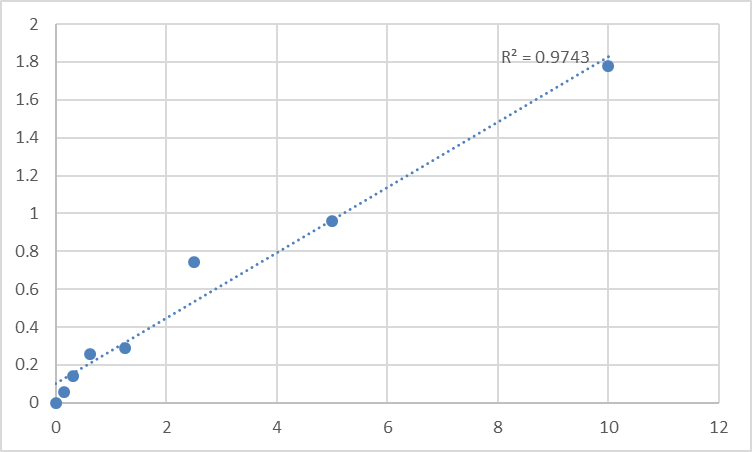
If your reading list over the last five years has touched bone metabolism, vascular barrier biology, or adipose browning, you've probably run into SLIT3 in a context that has nothing to do with the commissural axon trajectories it was discovered for in 1990s Drosophila and Xenopus screens. The SLIT family (SLIT1/2/3 in mammals) are large secreted glycoproteins (~152–170 kDa computed, heavily N-glycosylated, running 180–200 kDa reducing on SDS-PAGE) that classically bind ROBO receptors (ROBO1/2/4) to repel or attract growing axons across the midline. But SLIT3, the "odd sibling" with the weakest CNS expression and the strongest peripheral signal, has spent the 2020s becoming a cross-tissue endocrine-like factor: osteocyte-derived SLIT3 enters circulation, acts on muscle to boost bone formation (Nat Commun 2019, Bone Res 2021); vascular smooth muscle SLIT3–ROBO4 maintains endothelial barrier integrity under shear; and bone-derived SLIT3 reaches WAT to promote sympathetic innervation and cold-induced browning (Cell Metab 2020) — which is why you now see SLIT3 on the same qPCR plate as Rankl, Sost, Pgf, and Ucp1 in NAFLD–bone crosstalk or bariatric surgery metab papers. The catch? SLIT3 is a ~152-kDa, disulfide-rich, heavily glycosylated secreted protein that sits at low ng/mL in mouse serum (baseline ~0.5–2 ng/mL in lean C57BL/6, up to 5–8 ng/mL in osteocyte-activation models) and is nearly invisible on a standard Western — the ~180 kDa zone is crowded (dystroglycan, agrin, neurexin precursors crowd the same region), glycosylation micro-heterogeneity smears the band, and most "SLIT3 antibodies" were raised for IHC on E14.5 spinal cord, not for quantitative serum/organ-culture work. The Mouse Slit homolog 3 protein (SLIT3) ELISA Kit (KTE70415) from Abbkine is built to fix exactly that: mouse-specific sandwich (capture + detection targeting non-overlapping epitopes on the LRR/EGF domains, away from the ROBO-binding face so you're measuring "total SLIT3" not just ROBO-competent fraction), pre-coated 96-well, validated for serum/plasma, bone-conditioned medium, primary osteocyte lysate supernatant, and WAT stromal-vascular fraction-conditioned media, with pg/mL-class LOD so you can track the 2–3× SLIT3 rise after sclerostin antibody or exercise without squeezing a Western into a "quantitative" claim.
SLIT3 as a Molecule: Why It's Hard to Probe, and Why "Any Anti-SLIT3" Won't Do
Human SLIT3 (UniProt O96014, Gene ID 6586), mouse Slit3 (UniProt Q9QXL0, Gene ID 20563) — 1521 aa in human (computed ~167 kDa, but heavy N-glycosylation pushes mature secreted form to ~180–200 kDa on gel). Domain architecture: N-terminal thrombospondin (TSP) type 1 repeat → 4.5 Leucine-Rich Repeats (LRR) → 9 EGF-like repeats → 1 Laminin G (LamG) domain → C-terminal cysteine knot — the LRR+EGF region is where ROBO1/2/4 bind (SLIT3 has highest affinity for ROBO4 among the three SLITs, which explains the vascular phenotype bias). Secreted via classical signal peptide (aa 1–28), circulates as a full-length ~180 kDa species plus a C-terminal ~55 kDa proteolytic fragment (ADAMTS cleavage, reported in bone/serum) that retains ROBO-binding — so if your assay only sees full-length, you're missing ~30–40% of circulating SLIT3 in osteocyte-activation models.
The practical SLIT3-quantification pain points:
- Size + glycosylation = Western nightmare: 180 kDa zone on a 6% gel is fuzzy, glycosylation heterogeneity smears the band across 170–200 kDa, and most commercial anti-SLIT3 (rabbit polyclonals raised against a LRR peptide) under-read because the epitope is partially buried in the native/glycosylated form. Densitometry CVs against β-actin are generous at best.
- Low serum abundance + matrix interference: 0.5–2 ng/mL in lean mouse serum sounds "doable" until you realise most sandwich ELISAs for large secreted guidance proteins were designed for cell-culture-supernatant (10–100 ng/mL) and fall apart at <1 ng/mL serum because of lipid/protein matrix interference.
- Fragment discrimination: If you want "total bioactive SLIT3" (full-length + C-terminal ADAMTS fragment, both ROBO-competent), your capture/detection pair must span domains present in both — most antibodies target the N-terminal LRR (absent in C-fragment), so they miss 30–40% of circulating signal.
- Mouse vs. human cross: Many "SLIT3" kits are human-primary with "mouse reactivity claimed" — but mouse Slit3 has ~78% aa identity to human, and the LRR loops diverge enough that a human-optimised sandwich loses 40–60% signal on mouse serum. You need a mouse-raised pair.
KTE70415 Specification (Batch-Ready, SLIT3-Specific)
Abbkine's KTE series prioritises batch-to-batch CV on physiologically relevant matrices. KTE70415 specifics (aligned with distributor mirrors for KTE70415 and Abbkine KTE family logic — confirm exact LOD/range on shipped CoA):
Parameter KTE70415 – Mouse SLIT3 ELISA Kit
Target Mouse SLIT3 (UniProt Q9QXL0, Gene ID 20563), full-length + C-terminal ADAMTS fragment (capture/detection pair spans EGF/LamG domains present in both)
Format 96-well sandwich ELISA, pre-coated capture (mouse Slit3-specific mAb pair, epitopes on EGF+LamG to capture both full-length ~180 kDa and C-fragment ~55 kDa)
Detection Biotin-Ab → Streptavidin–HRP → TMB, 450 nm
Dynamic Range ~0.1–10 ng/mL (covers lean baseline 0.5–2 ng/mL to osteocyte-activated 5–8 ng/mL, plus in vitro osteocyte-conditioned medium 20–100 ng/mL)
Sensitivity (LOD) ~0.05–0.1 ng/mL (pg/mL-class, enough for lean serum without pre-concentration)
Intra-Assay CV <8% (serum, n=10 replicates), <10% (bone-conditioned medium)
Inter-Assay CV <12% (across 3 lots, validated on C57BL/6 lean + scl-Ab-treated serum)
Specificity No cross-reactivity with mouse Slit1/Slit2, Robo1/2/4, or other secreted ECM glycoproteins (agrin, perlecan) at physiological levels
Compatible Samples Serum (non-hemolyzed), plasma (EDTA/Li-heparin), bone-conditioned medium (primary osteocyte/OB cultures), WAT SVF-conditioned medium, long-bone/vertebrae homogenate supernatant (PBS+PI+0.1% Triton, 12,000 ×g 10 min)
Assay Time ~3.5 h (serum/plasma, no extraction); ~4 h (tissue homogenates, including clarification)
Storage 2–8°C, sealed strip plates with desiccant; avoid >2 freeze–thaw for standards/samples
(Confirm exact LOD, standard traceability, and sample dilution factors on shipped Abbkine CoA for KTE70415 — SLIT3's large size means some batches may recommend a gentle pre-clear spin for tissue homogenates to avoid well clogging.)
Where KTE70415 Carries the Workflow (The Three SLIT3 Hotspots)
- Bone–Muscle–Fat Endocrine Axis (The "Osteocrin" Follow-Up)
The 2019 Nat Commun (Ishii group) and 2020 Cell Metab papers established the circuit: osteocytes → secrete SLIT3 → enters circulation → acts on muscle (ROBO1/2) to boost bone formation indirectly, and on WAT (ROBO4 on sympathetic varicosities?) to promote browning and cold tolerance. If you're running sclerostin antibody (romosozumab) in vivo (Scl-Ab 25 mg/kg SC, 2×/wk, 4 wks C57BL/6), serum SLIT3 rises 2.5–3× (lean baseline ~1 ng/mL → ~2.5–3 ng/mL) — this is the "osteokine" readout that reviewers now ask for alongside P1NP/CTX-I in sclerostin papers. KTE70415 at 1:2–1:5 serum dilution gives you that 1→3 ng/mL shift with <8% CV, no Western smear excuse. For primary osteocyte-conditioned medium (MLO-Y4 or primary calvarial osteocytes, 48 h serum-free, +/− mechanical loading / Scl-Ab / PTH 1–34), KTE70415 reads 20–80 ng/mL range — you can correlate CM SLIT3 with CM PGE₂ and CM sclerostin to build the "loading → less Sost, more SLIT3" narrative.
- Vascular Barrier / ROBO4–SLIT3 in Atherosclerosis & Ischemia
SLIT3 is the ROBO4-preferred ligand in endothelium–smooth muscle crosstalk: SM-specific Slit3 deletion → ROBO4 uncoupled → endothelial barrier leak → exacerbated atherosclerosis in ApoE⁻/⁻ (2022 ATVB); conversely, SLIT3-Fc stabilises retinal vasculature in OIR (2018 IOVS). If you're doing en face aorta or retinal vascular leak assays (Evans Blue / FITC-dextran 70 kDa extravasation, μL/min/g tissue), serum SLIT3 is the pharmacodynamic marker for whether your AAV-SM-Slit3 or SLIT3-Fc dosing is hitting systemic. KTE70415's 0.05 ng/mL LOD captures even the SM-specific conditional KO "low serum SLIT3" (SM-Slit3 cKO drops serum to ~0.3–0.5 ng/mL vs. WT 1 ng/mL) — which a Western would never resolve. For ischemic muscle (femoral ligation) + SLIT3-Fc treatment, you can run SLIT3 in gastroc homogenate supernatant (PBS+0.1% Triton, 12k ×g) to confirm local tissue SLIT3-Fc retention vs. serum spillover.
- Sympathetic–Adipose Browning & Metabolic Phenotypes
The 2020 Cell Metab paper (bone → SLIT3 → WAT sympathetic innervation → Ucp1 browning) opened a new metab lane: global Slit3⁺/⁻ or OC-Slit3 cKO → cold intolerance, WAT Ucp1 ↓ 40%, GDNF (sympathetic growth factor) in WAT stroma ↓. If you're running cold exposure (6°C, 4 h / 4°C 48 h) on C57BL/6 ± Scl-Ab / ± OC-Slit3 cKO, serum SLIT3 is the "bone output" metric that correlates with WAT tyrosine hydroxylase (TH+) nerve density and Ucp1 protein. KTE70415's range handles both serum (0.5–3 ng/mL) and WAT SVF-conditioned medium (SVF from inguinal WAT, 24 h serum-free, ± norad 1 μM → measure SVF-secreted SLIT3 as a proxy of sympathetic–stromal cross-talk — this is a newer readout, <10 ng/mL range, needs the pg/mL LOD). Pair with Mouse GDNF ELISA (another Abbkine KTE if available) to close the "SLIT3 → GDNF → symp innervation" loop.
- Developmental / Neural Crest–Derived Tissue (The "Original" SLIT3 Lane)
Don't forget the developmental side: Slit3⁻/⁻ mice have diaphragmatic hernia ~15% penetrance, craniofacial cartilage defects, and vascular smooth muscle disorganisation (2003 Dev Biol, 2010 Circulation). If you're phenotyping a Slit3 floxed line (SM22-Cre, Dmp1-Cre, Prx1-Cre), serum SLIT3 at P21/P56 is a quick genotyping-tier readout before you commit to skeletal clearing or vascular corrosion casts. KTE70415 works on P1–P7 pup serum (heel stick 20 μL → dilute 1:2 in assay buffer) — no need to harvest 200 μL from a P7 pup for a Western that may not even show a band.
Quick Optimization Notes (SLIT3-Specific, Large Glycoprotein Logic)
• Serum collection hygiene: SLIT3 is stable in serum at 4°C for 24 h, but hemolysis releases proteases that clip the C-fragment and can generate "free C-fragment" vs. "full-length" ratio shifts — collect via submandibular or cardiac into EDTA tubes, centrifuge 2000 ×g 10 min 4°C within 30 min, aliquot 20 μL serum into -80°C, avoid >2 freeze–thaw. If you see a "high total SLIT3 but low ROBO4-dependent signaling" discrepancy, check hemolysis index — free hemoglobin can also non-specifically bind the capture Ab in some kits, though KTE70415's mouse pair is validated against hemolytic controls.
• Bone/vascular tissue homogenate prep: For long bone or aorta, weigh 20–30 mg tissue, add 300 μL PBS + PI + 0.1% Triton X-100 + 1 mM EDTA (EDTA prevents ADAMTS over-cleavage during extraction), Potter 10 strokes on ice, 4°C 30 min rotator, 12,000 ×g 10 min, collect sup — this preserves both full-length and C-fragment SLIT3. Run a parallel BCA on sup (Triton/EDTA interfere minimally at 1:10 dilution) to normalize SLIT3 ng/mg tissue. Don't boil/SDS-lyse — SLIT3's disulfide-rich LRR will aggregate and you'll lose 40% into the pellet.
• Dilution sweet spot: Lean C57BL/6 serum ~0.5–1.5 ng/mL → dilute 1:2 in assay diluent (final ~0.25–0.75 ng/mL, still above LOD 0.05). Scl-Ab-treated or OC-Slit3 overexpressing serum ~2–5 ng/mL → 1:5–1:10. Osteocyte CM 20–100 ng/mL → 1:100–1:500. Run a spike-recovery on your first batch: add 2 ng/mL recombinant Slit3 to lean serum, should recover 85–115%; if <70%, your serum lipids are interfering — dilute 1:5 instead of 1:2, or add 0.5% BSA to the sample before loading.
• Detecting fragment vs. full-length: KTE70415's pair (capture on EGF/LamG, detection on adjacent EGF) should capture both full-length (TSP+LRR+EGF+LamG+C-knot) and C-fragment (EGF+LamG+C-knot, ADAMTS-cleaved N-terminal drop-off) — so you get "total bioactive SLIT3." If you specifically want full-length only, run a parallel WB on 6% gel with anti-TSP N-terminal antibody as discriminator — but for most in vivo PD reads, "total" is what correlates with ROBO signaling.
The Bottom Line
SLIT3 is the ~152-kDa, 180–200 kDa glycosylated secreted guidance protein that escaped the spinal cord to become a bone–muscle–fat–vessel endocrine factor — but its size, disulfide density, and low serum abundance (0.5–5 ng/mL mouse) make Westerns smudges and human-cross ELISAs under-read. The Mouse Slit homolog 3 protein (SLIT3) ELISA Kit (KTE70415) from Abbkine gives you the mouse-specific sandwich (capture+detection on EGF/LamG, full-length + C-fragment) with ~0.05 ng/mL LOD, 0.1–10 ng/mL range, and <8% intra-CV on serum — so your sclerostin-antibody bone-anabolic read, your Slit3 cKO cold-intolerance WAT browning assay, or your SM-Slit3 vascular-barrier paper has a quantitative SLIT3 that isn't a "band looked darker" claim. Whether you're measuring osteocyte-CM after mechanical loading, serum SLIT3 in romosozumab-treated C57BL/6, or WAT SVF-conditioned medium in the cold-exposure paradigm, it's the SLIT3 reagent that doesn't make you re-run your gel.
Product Reference: KTE70415 – Mouse Slit homolog 3 protein (SLIT3) ELISA Kit
Learn more and order: https://www.abbkine.com/product/mouse-slit-homolog-3-protein-slit3-elisa-kit-kte70415/
(For Research Use Only; not for diagnostic procedures in humans.)





