




The 120-kDa RNA Acetyltransferase That Quietly Runs the Cytosol's Ribosome Factory: Why NAT10 Quantification Is the Missing Variable in Cancer Growth, mRNA Stability, and ac4C Epitranscriptomics
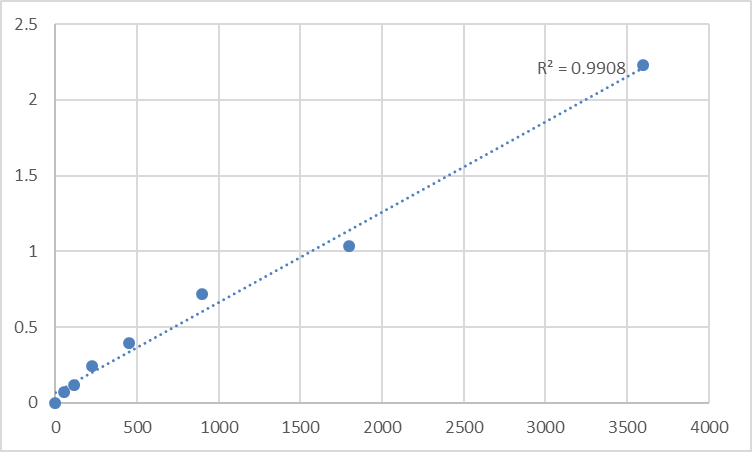
If you've been following the epitranscriptomics boom, you've heard the mantra: "RNA modifications are the new epigenetics." But while the field obsesses over m⁶A (METTL3/WTAP/FTO), almost everyone ignores the only known enzyme that installs N⁴-acetylcytidine (ac4C) on RNA inside human cells — NAT10 (N-acetyltransferase 10, UniProt: Q9H6E5, Gene ID: 91163), a ~1027-aa, ~120 kDa nucleolar/ nucleoplasmic protein that is simultaneously a GCN5-related N-acetyltransferase (GNAT domain), an RNA-binding enzyme, a ribosome-biogenesis cofactor, and — crucially — a druggable oncogenic driver that cancer cells cannot easily do without. NAT10 doesn't just decorate tRNA (its classical ac4C target); it selectively acetylates the coding sequences of key oncogenic mRNAs (e.g., TERT, MYC, BCL2, HIF-1α, NRF2, MAPK/PI3K pathway components) at ac4C sites, which stabilizes those transcripts, promotes polysome loading, and extends their half-life — handing the tumor a stealth proliferation advantage that survives DNA-damage checks. The Human N-acetyltransferase 10 (NAT10) ELISA Kit (KTE61371) from Abbkine is the tool that finally lets you measure this multidimensional enzyme as a calibrated, plate-readable concentration, not a "diffuse nucleolar ~120 kDa band" you squint at through a gel: a two-site sandwich ELISA delivering ng/mL (or pg/mL) from tissue lysates, cell lysates, and other biological fluids, so your ac4C/epitranscriptomics story has an enzymatic anchor that survives peer review.
NAT10 in One Clean Paragraph: A Lysine Acetyltransferase That Works on RNA — Not Histones
The GNAT superfamily (named for Gcn5) is best known for acetylating histone lysine residues to open chromatin. NAT10 carries that fold — but it evolved to point outward: its substrate is polynucleotide, not nucleosome. Specifically:
• Catalytic core: GNAT domain + C-terminal NatA/B/H linked region + a C2 domain / HEAT-repeat scaffold that mediates RNA binding and subnuclear localization
• Localization: predominantly nucleolus and nucleoplasm (nucleolar caps during stress), where it collides with pre-rRNA transcripts (18S region → 47S/45S) and nascent mRNAs
• Reaction: transfers the acetyl group from Acetyl-CoA → N⁴ position of cytidine → N⁴-acetylcytidine (ac4C)
• Functional outputs:
- Ribosome biogenesis: ac4C on 18S rRNA (positions 1842/1843 in mature 18S) is required for efficient 40S subunit maturation and translation fidelity — NAT10 KO cells stall at 40S assembly and drop global translation despite normal mTOR signaling
- mRNA stabilization (the cancer bit): ac4C deposited in mRNA coding regions blocks Y-box/YTHDF-mediated decay and promotes polysome association → transcript half-life ↑ 2–5× for the modified message
- Cell cycle & DNA damage: NAT10 interacts with the BRCA1-associated genome surveillance complex and is required for efficient G₂/M progression and double-strand break repair (NHEJ bias)
The pharmacological punchline: small-molecule NAT10 inhibitors (remodelin = N-[4-[4-(4-ethoxyphenyl)-6-oxo-5,6-dihydro-4H-pyran-2-yl]phenyl]-acetamide = CAY10603 analog, and newer derivatives) extend lifespan in Hutchinson–Gilford progeria (HGPS) fibroblasts, blunt progerin-induced nuclear defects, and — in cancer models — suppress proliferation, radiosensitize, and reduce ac4C-marked oncogene mRNA levels. That makes NAT10 one of the few epitranscriptomic enzymes already in the druggable column.
Why a Sandwich ELISA for NAT10 — And Why "Just Western the 120 kDa Nucleolar Band" Fails You
NAT10 is large, nuclear/perinucleolar, and expressed at moderate (not GAPDH-level) abundance, which means:
- Subcellular fraction purity affects the readout — a crude whole-cell lysate can dilute the nucleolar pool signal into background, and over-compressed gels at 120 kDa near the stacking transition can cut transfer efficiency.
- Its "nucleolar vs. nucleoplasmic" distribution shifts with stress (actinomycin D low-dose → nucleolar segregation; DNA damage → partial relocalization) — so the biological question is often "how much NAT10 protein is present AND where," and you need a quantitative handle on total before your IF/IF-quant does the spatial work.
- Cohorts and drug screens (remodelin dose–response, BRCA1-deficiency panels, HCC vs. adjacent) demand CVs you can plot, not "lane 2 looks brighter."
The KTE61371 kit gives you the two-epitope safety net:
Parameter Typical KTE61371-class specification
Target Human NAT10 (UniProt Q9H6E5, Gene ID 91163)
Format 96-well sandwich ELISA, pre-coated capture
Detection Biotin-Ab → SA-HRP → TMB, 450 nm
Dynamic Range 0.156 – 10 ng/mL (7-point standard)
Sensitivity / LOD ~0.05–0.10 ng/mL
Intra-Assay CV < 7–8%
Inter-Assay CV < 10–12%
Samples Tissue homogenates, cell lysates, cell culture supernatants/lysates, other biological fluids
Assay time ~3–5 hours
(Confirm exact range, dilution, and lot-specific recovery on the shipped Abbkine CoA/datasheet.)
Assay Principle: KTE61371 — Pre-Coated Capture → Biotin Detection → HRP–TMB
- Microplate pre-coated with anti-NAT10 capture antibody.
- Standards (recombinant human NAT10) + samples added → NAT10 binds.
- Wash → biotinylated anti-NAT10 detection antibody (different epitope) → Streptavidin–HRP.
- TMB → stop → 450 nm → interpolate from NAT10 standard curve → ng/mL.
Where Quantifying NAT10 Protein Actually Carries the Paper
- Cancer Proliferation & the ac4C Oncogene Stabilization Loop
The mechanism is now textbook: NAT10 installs ac4C → TERT, MYC, HIF-1α, BCL2, CCND1, MET (and many more) mRNAs become ac4C+ → stabilized → translated more efficiently → proliferation signal amplified. In HCC, CRC, NSCLC, and TNBC, NAT10 is up-regulated at the protein level, and its knockdown or pharmacologic inhibition (remodelin/NAC485) drops both ac4C-marked mRNA and tumor cell fitness. Reporting NAT10 protein (ng/mg total protein, BCA) alongside:
• ac4C-RIP/ac4C-CLIP-seq peak intensity (if you have it)
• Candidate mRNA half-lives (Actinomycin D chase qPCR)
• Ki-67 / EdU / colony-forming capacity
is the triad that makes the story airtight.
- Hutchinson–Gilford Progeria & Laminopathies (The "Discovery" Entry Point)
This is why NAT10 hit the high-impact radar: progerin (LMNA Δ50) nuclei exhibit disrupted nucleolar architecture and DNA-damage hypersensitivity; remodelin (NAT10 inhibitor) rescues nuclear morphology, improves heterochromatin marks (H3K9me3), and extends replicative lifespan in HGPS fibroblasts. Quantifying NAT10 in patient-derived fibroblasts or iPSC-differentiated vascular smooth muscle (normalized to lamin A/C or nucleophosmin/B23 for nucleolar loading) is a direct PD readout for this entire therapeutic class.
- DNA Damage Response, Radio-Sensitization & G₂/M Checkpoint
NAT10 is required for efficient DSB repair (NHEJ-preferred) and G₂/M transit; NAT10↓ → radiosensitizes several tumor lines without the catastrophic normal-tissue toxicity of ATM/DNA-PKcs direct inhibitors. Measuring NAT10 protein before/after IR or cisplatin (paired with γH2AX foci, 53BP1, and colony-forming survival) gives you the repair-enzyme baseline that explains why one clone shrugs off 4 Gy and another doesn't.
- Ribosome Biogenesis & Ribosomopathies (Diamond–Blackfan, 5q-, nucleolar stress)
Because NAT10 is essential for 18S rRNA ac4C and 40S maturation, its level matters in any model of nucleolar stress. iPSC-derived erythroid models, 5q- syndrome contexts, and MYC-driven nucleolar expansion all benefit from a calibrated NAT10 readout as part of the rRNA-processing panel (pre-rRNA/promaturation intermediates, NPM1/B23, fibrillarin).
- Drug Screens: NAT10 Inhibitors & Epitranscriptomic Drug Discovery
If you're testing remodelin analogs, NAC485 derivatives, or virtual-screen hits for selectivity vs. GNAT-family off-targets (KAT2A/Gcn5, HAT1), NAT10 ELISA is your primary pharmacodynamic marker — cheaper, faster, and more plate-friendly than a dozen Western-northern hybrids.
- CRISPR/AAV Validation
Editing NAT10? Report % NAT10 protein remaining ± SEM from a calibrated curve, normalized to mg total protein (BCA) and a nucleolar marker (NPM1/fibrillarin if you want the organelle-loading correction). Pair with ac4C dot-blot or ac4C-ELISA on total RNA to close the enzyme→product chain.
A Minimal Prep Note (NAT10 Is Nuclear/Perinucleolar — Your Lysate Needs to See the Nucleus)
• For cultured cells: lyse in RIPA or 0.5–1% NP-40 / 50 mM Tris pH 7.4 / 150 mM NaCl + protease inhibitors + 1 mM TSA + 5 mM nicotinamide (optional HDAC/Acetyl-CoA sink blockers if your adjacent assays demand it, but for total-NAT10 ELISA they're not strictly required).
• For tissue (HCC, colon, lung, skin fibroblast punch): homogenize cold in Tris-sucrose or RIPA + inhibitors, clarify 12,000–16,000 ×g, 15 min, 4°C → supernatant is your readout (includes nucleoplasmic + soluble nucleolar overflow).
• BCA the same lysate → express as ng NAT10 / mg total protein.
• Warm kit reagents ≥ 30 min RT before opening; protect TMB; stop uniformly; read 450 nm promptly; run full standard curve on every plate.
The Bottom Line
NAT10 is the 120 kDa nucleolar acetyltransferase that bridges ribosome biogenesis, mRNA ac4C epitranscriptomic stabilization of oncogenes, and DNA-repair-associated cell-cycle progression — and it's already yielded a lead-series small molecule (remodelin/derivatives) that rescues a lethal laminopathy and radiosensitizes tumors. Measuring it as a calibrated variable instead of a "diffuse 120 kDa nucleolar blob" changes your paper's resolution. The Human N-acetyltransferase 10 (NAT10) ELISA Kit — KTE61371 from Abbkine gives you the right format to do it: pre-coated capture → biotin detection → HRP–TMB → 450 nm → ng/mL, over a 0.156–10 ng/mL working range, in a ~3–5 hour workflow that scales across clones, treatments, and cohorts without a gel-stack detour.
Product Reference: KTE61371 – Human N-acetyltransferase 10 (NAT10) ELISA Kit
Learn more and order: https://www.abbkine.com/product/human-n-acetyltransferase-10-nat10-elisa-kit-kte61371/
(For Research Use Only; not for diagnostic procedures in humans.)





