




The 12-kDa "Defender" That's Actually an OST Scaffold: Why Quantifying DAD1 Changes How You Read N-Glycosylation Failure, ER Stress Collapse, and Secretory Cell Survival
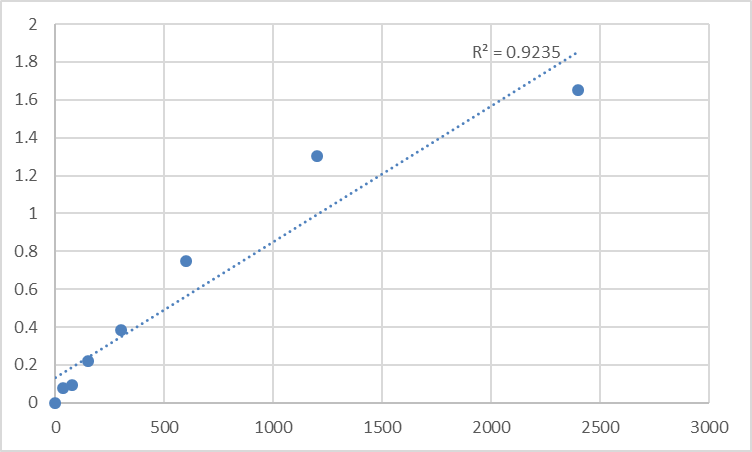
Every lab that works on ER stress owns a box of tunicamycin and a pristine-looking Western for BiP/GRP78, but almost nobody measures the smallest essential subunit of the machine that makes N-glycosylation happen in the first place. That machine is the Oligosaccharyltransferase (OST) complex — the multi-subunit, membrane-embedded enzyme sitting right at the Sec61 translocon that performs the defining co-translational modification of the secretory pathway: transferring the pre-assembled Glc₃Man₉GlcNAc₂ oligosaccharide from its dolichol-pyrophosphate lipid carrier onto asparagine residues in the Asn-X-Ser/Thr sequon of nascent chains. The subunit that holds a piece of that complex together — and whose disappearance was the original genetic trigger used to prove the essential nature of N-linked glycosylation — is DAD1 (Defender Against Cell Death 1, aliases OST2, Oligosaccharyltransferase subunit 2), a ~113-aa, ~12.5 kDa (runs ~12–14 kDa) multi-pass ER membrane protein (UniProt: P61803, Gene ID: 1603, Chr 14q11.2). The Human Dolichyl-diphosphooligosaccharide–protein glycosyltransferase subunit DAD1 (DAD1) ELISA Kit (KTE62148) from Abbkine gives you this deceptively tiny, absolutely essential node as a calibrated sandwich-ELISA variable (ng/mL) — so your ER-stress, secretory-load, or BiP-upregulation story finally has the glycosylation-machinery denominator it needs.
DAD1 in One Paragraph: The "Defender" That's Really a Scaffold Bolt of the OST Complex
The dramatic name dates back to the tsBN7 temperature-sensitive hamster cell line: shift to the nonpermissive temperature → a single allele fails → DAD1 protein vanishes → N-glycosylation collapses → misfolded secretory proteins accumulate in the ER → UPR hyperactivated → apoptosis → hence "Defender Against Cell Death 1." But stripped of the apoptosis narrative framing, the modern view is clean biochemistry:
DAD1 is a permanent, stoichiometric subunit of the mammalian OST complex. The catalytically active site sits on STT3A or STT3B, but the complex requires OST48 (RPN1, the large scaffold), DAD1, OSTC, and (in some assemblies) MAGT1/TUSC3 or other accessories to achieve maximal transfer efficiency and to properly dock/align the growing chain at the Sec61 channel. DAD1's role is structural/stabilizing — it helps hold the assembly together so the catalytic step doesn't fall apart under the flux of a translating ribosome.
The chain of causation is therefore:
Event Consequence
DAD1 ↓ (knockout, proteolysis, assembly defect) OST complex destabilized → co-translational N-glycosylation efficiency drops → high-mannose and complex N-glycans underrepresented, secretory cargo mis-folded → ERAD overloaded → BiP/GRP78 ↑, XBP1s ↑, CHOP/ATF4 ↑ → apoptosis
DAD1 normal / stabilized (wild-type) OST runs at full capacity → secretory clients get their glycans → ER export proceeds → cell survives
It's also worth noting the DAD1–MCL1 interaction reported in the literature (Makishima et al., 2000): DAD1, sitting in the same ER membrane neighborhood as the anti-apoptotic BCL2-family member Mcl-1, can physically interact with it — adding a layer where the OST scaffold and the BCL2 survival network touch at the bilayer.
Why a Sandwich ELISA for a ~12.5 kDa Multi-Pass Membrane Protein
DAD1 is small, hydrophobic, and ER-membrane-integral — three properties that make a gel-only read uniquely frustrating:
- It runs at the gel-front neighborhood (~12–14 kDa) where transfer inefficiencies, dye-front smearing, and β2-microglobulin/cyclophilin B spillover can mask quantitative comparisons.
- It's membrane-embedded, so under-extraction (PBS-only scrape) undercounts it — you need 0.5–1% Triton X-100 / deoxycholate to bring the OST complex subunits into a readable supernatant.
- The experimental question is often about OST integrity, not just "is there a band" — and that demands plate-based CVs, not densitometry guesses across different gel transfers.
The KTE62148 kit uses the proven architecture:
- Microplate pre-coated with capture anti-DAD1 antibody (directed at the short cytosolic loop / accessible epitope of the multi-pass protein).
- Standards (recombinant human DAD1) + samples — tissue homogenates, cell lysates, cell culture supernatates/lysates, other biological fluids — added → DAD1 (solubilized epitope pool) binds.
- Wash → biotinylated anti-DAD1 detection (different epitope) → Streptavidin–HRP → TMB → color ∝ bound DAD1.
- Stop → 450 nm → interpolate ng/mL from the standard curve.
Consolidated performance envelope (aligned with distributor/technical references for this kit family):
Parameter KTE62148-class Specification
Target Human DAD1 / OST2 / Defender Against Cell Death 1 (UniProt P61803, 113 aa, ~12.5 kDa)
Format 96-well sandwich ELISA, pre-coated capture
Detection Biotin-Ab → SA-HRP → TMB, 450 nm
Dynamic Range 0.156 – 10 ng/mL
Sensitivity / LOD ~0.06–0.09 ng/mL
Intra-Assay CV < 7–8%
Inter-Assay CV < 10%
Samples Tissue homogenates, cell lysates, culture supernatants/lysates, serum/plasma (exploratory)
Assay time ~3–5 hours
Status For Research Use Only; not for diagnostic procedures
(Confirm exact dilutions and lot-specific recovery on the shipped Abbkine datasheet/CoA for KTE62148.)
Where DAD1 Quantification Actually Carries the Paper
- ER Stress, UPR, and the "Why Did BiP Go Up?" Question
This is the natural home. Tunicamycin (NGlycosylation block), thapsigargin, DTT, bortezomib, or chronic secretory demand → UPR fires → XBP1 splices, CHOP rises, BiP/GRP78 redistributes. But did the OST scaffolding survive? Quantifying DAD1 (normalized to mg total protein, BCA, or an ER marker like calnexin/GRP78) tells you whether the stress is overloading a functional glycosylation line vs. actually degrading the line itself. Pair it with:
• Endo H / PNGase digests on a model secretory cargo (e.g., secreted alkaline phosphatase, transferrin, or a FLAG-tagged secretory reporter) → the ultimate "did it get glycosylated?" test
• XBP1 splicing + p-eIF2α + CHOP → the signaling cascade
• Annexin V / cleaved caspase-3 → the cell-death payoff
That triad — OST subunit mass + glycosylation status of cargo + UPR readout — is what separates "ER stress occurred" from "the glycosylation factory broke."
- Secreted-Protein Factory QC: CHO / mAb Production & Bioprocessing
In high-output CHO lines, the OST complex runs at extreme throughput — and anything that destabilizes DAD1/STT3A/STT3B (temperature spikes, osmolality stress, unbalanced clones) shows up as under-glycosylated product, charge variants, and reduced titer. Measuring DAD1 alongside OST48/RPN1 and secreted product glycoforms (HILIC-FLD or LC-MS glycopeptide mapping) makes the QA dataset mechanistically complete instead of purely descriptive.
- Cancer & Chemosensitivity: The "Stress-Addiction" of the Secretory Pathway
Tumor cells with high secretory loads (MPC, secretory carcinoma, aggressive plasma-cell myeloma) are addicted to ER folding capacity — and DAD1 is part of the survival infrastructure that keeps that addiction from becoming fatal. Some recent oncology-literature syntheses explicitly flag DAD1 as a potential biomarker/target in contexts where ER-stress–mediated apoptosis resistance intersects with Bcl-2 family dynamics (BAD/MCL1/DAD1 node). Measuring DAD1 in tumor-lysate panels (ng/mg, normalized to GRP78 or PDI) gives you the machinery readout that "pro-apoptotic drugs hit the UPR" alone can't show.
- Developmental & Stem-Cell ER Homeostasis
Pluripotent stem cells and differentiating lineages (hepatic, pancreatic, neuronal) go through phases of massive secretory program remodeling — and the OST subunit stoichiometry quietly adjusts. A calibrated DAD1 ELISA on lysate time-courses (Day 0 → Day 14 of differentiation) is a cleaner "ER biosynthetic capacity" probe than throwing a library of UPR promoters at a luciferase assay.
- Neurodegeneration & ER-Stress-Mediated Neuron Loss
DAD1 is expressed in brain and endocrine-rich tissues (high secretory demand), and OST-integrity loss is increasingly discussed in protein-misfolding diseases (Alzheimer's, Parkinsonian proteinopathies, prion-like spread) where the ER folding/shipping line is the first domino. Quantifying DAD1 in brain-region lysates or iPSC-neuron/astrocyte lysates (normalized to GAPDH or β-actin for total, plus calnexin for ER loading) frames the ER not as "BiP is up" but as "the glycosylation complex inventory is this."
- CRISPR / AAV Validation
Editing DAD1 (which is essential, so you'll use conditional/inducible approaches, not straight knockout in dividing cells) or hitting STT3A/STT3B? Report % DAD1 protein remaining ± SEM from the calibrated curve (ng/mg), and close with:
• A glycosylation reporter readout (Endo H sensitivity shift on a secretory cargo)
• UPR markers (XBP1s, BiP, CHOP)
• Functional payout (secreted protein titer, cell viability, or differentiation efficiency)
That proves you perturbed the factory, not just "a stress gene."
A Minimal Prep Blueprint (DAD1 Is ~12.5 kDa and ER-Multi-Pass — Treat It Like Membrane, Not Cytosol)
• For cultured cells: lyse in 50 mM Tris pH 7.4, 150 mM NaCl, 0.5–1% Triton X-100 / 0.5% deoxycholate + protease inhibitors, keep cold, brief sonication (2–3 × 3-sec pulses, low power, on ice) helps release membrane-embedded OST subunits without shredding them.
• For tissue: homogenize cold in same buffer + 0.1% SDS optional if you want a harder extraction; clarify 12,000–16,000 ×g, 15 min, 4°C → supernatant = your DAD1-accessible pool.
• BCA the same final lysate → express as ng DAD1 / mg total protein.
• Warm kit reagents ≥ 30 min RT before opening; protect TMB from light; stop uniformly; read 450 nm promptly; run full standard curve on every plate.
The Bottom Line
DAD1 is the ~12.5 kDa multi-pass ER membrane subunit whose disappearance gave the field the immortal name "Defender Against Cell Death 1" — not because it's a caspase inhibitor, but because it's a structural bolt of the OST complex that makes co-translational N-glycosylation possible; lose it, and the secretory pipeline collapses into ER stress suicide. Measuring it as a calibrated ELISA variable instead of a front-running ~12 kDa gel smudge changes your ER-stress paper from suggestive to quantitative. The Human Dolichyl-diphosphooligosaccharide–protein glycosyltransferase subunit DAD1 (DAD1) ELISA Kit — KTE62148 from Abbkine gives you that variable: pre-coated capture → biotin detection → HRP–TMB → 450 nm → ng/mL, over a 0.156–10 ng/mL working range with LOD ~0.06–0.09 ng/mL, in a ~3–5 hour workflow that scales across ER-stress panels, secretory-cell conditions, and tissue lysates without chaining you to a 15% gel and a densitometry argument.
Product Reference: KTE62148 – Human Dolichyl-diphosphooligosaccharide–protein glycosyltransferase subunit DAD1 (DAD1) ELISA Kit
Learn more and order: https://www.abbkine.com/product/human-dolichyl-diphosphooligosaccharide-protein-glycosyltransferase-subunit-dad1-dad1-elisa-kit-kte62148/
(For Research Use Only; not for diagnostic procedures in humans.)





