




Small Enough to Escape Antibody Capture—Until Now: Abbkine's KTE60075 and the Sandwich ELISA That Finally Traps Vitamin A
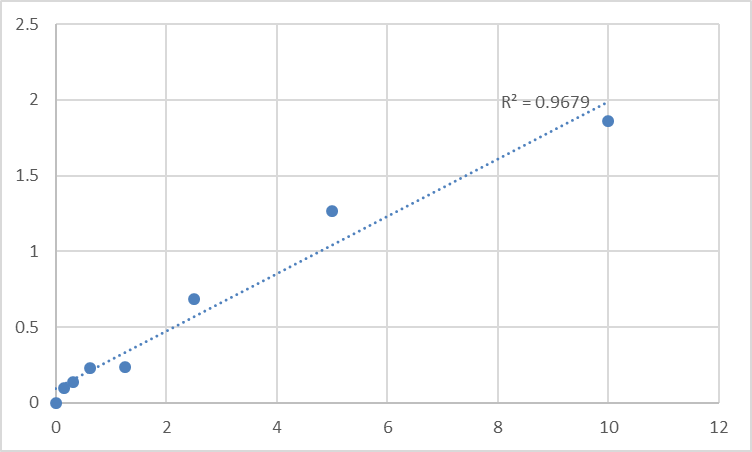
For decades, the quantitative measurement of small-molecule vitamins in biological fluids has been dominated by a single, frustratingly indirect format: the competitive ELISA. You coat a plate with a fixed amount of the antigen, you add your sample, and then you watch as the analyte and the plate-bound antigen wrestle for a limited number of antibody binding sites. This generates a signal that is inversely proportional to the concentration of your target and that sags into uselessness at both extremes of the standard curve. A 2025 technical assessment published by Abbkine explicitly acknowledges that traditional detection methods have limitations in precision and throughput, leaving a gap that specialized tools must fill. For vitamin researchers, who must track analytes spanning from profound deficiency to pharmacological excess, this gap between the biological question and the analytical tool has decided the fate of more experiments than any other single variable.
Abbkine's Human Vitamin A (VA) ELISA Kit (KTE60075) discards the competitive format entirely and replaces it with a true two-site sandwich ELISA architecture. An antibody specific for VA has been pre-coated onto a microplate; standards and samples are pipetted into the wells and any VA present is bound by the immobilized antibody. After removing unbound substances, a biotin-conjugated antibody specific for VA is added to the wells, followed by Streptavidin conjugated Horseradish Peroxidase (HRP). A substrate solution then develops color in direct proportion to the amount of VA captured in the initial step, and the absorbance intensity provides a quantitative readout. This is not a marginal refinement of an existing protocol. It is a biotechnological departure from the competitive inhibition logic that has dominated small-molecule detection for most of the history of the ELISA format. A 2023 analytical chemistry study noted that the success rate for achieving a sandwich immunoassay for small molecules was a mere 0.27%—a statistic that makes KTE60075's dual-site recognition architecture not merely an improvement but a methodological anomaly that the research community has been awaiting for years.
The practical implications of this sandwich architecture unfold in ways that directly affect the reliability of the data leaving the plate reader. The kit has high sensitivity and excellent specificity for detection of Human VA, with no significant cross-reactivity or interference between Human VA and analogues observed. The signal is directly proportional to the analyte concentration, eliminating the inverse curve dynamics that compress the usable range of competitive assays at both the lower and upper limits of quantification. A researcher quantifying vitamin A in serum from a nutritionally deficient population does not have to wonder whether the flat line at the bottom of the standard curve represents a genuine biological signal or an exhausted detection system. The color develops in proportion to what is actually present, not in inverse proportion to what the plate-bound antigen prevented from binding.
The kit components ship ready for same-day deployment: Human Vitamin A microplate, Human Vitamin A standard, Human Vitamin A detect antibody, Streptavidin-HRP, Standard diluent, Assay buffer, HRP substrate, Stop solution, Wash buffer, and Plate covers. The calibration range and limit of detection are documented in the package insert, and the unopened kit stores at 2–8°C, requiring no -20°C freezer space and subjecting the pre-coated capture antibody to none of the freeze-thaw cycling that progressively degrades binding affinity. Shipping occurs on gel packs with blue ice.
The protocol reflects standard sandwich ELISA discipline. All reagents must warm to room temperature for at least 30 minutes before opening. Pipette tips must be pre-rinsed and replaced between samples, standards, and reagents to prevent carryover contamination. The assay duration runs 3–5 hours, depending upon the experience of the operator. Do not mix components from different kit lots. These are the operating procedures that separate a standard curve with an R² above 0.99 from a dataset that a reviewer will eventually question.
Sample compatibility spans serum, plasma, cell culture supernatants, and other biological fluids, making the kit suitable for nutritional epidemiology, cancer biology, immunological research, and any experimental context in which the retinol-retinoic acid axis matters. Vitamin A is needed by the retina of the eye in the form of retinal, which combines with protein opsin to form rhodopsin, the light-absorbing molecule necessary for both low-light and color vision, and it also functions as retinoic acid, an important hormone-like growth factor for epithelial and other cells. A 2025 study in Nature Communications demonstrated that vitamin A acts as a potent suppressor of selenoprotein P, with potential relevance for multivitamin supplementation strategies. The same year, a comprehensive review in the Saudi Journal of Medicine and Public Health confirmed that vitamin A deficiency remains a global public health challenge, with supplementation reducing childhood morbidity and mortality. In oncology, vitamins A and E have recently been shown to exert beneficial effects against various cancers by regulating oxidative, immune, and inflammatory responses, as well as epigenetic processes. None of these clinical and translational questions can be answered with analytical confidence if the assay itself compresses the detection range into an unreadable flat line.
The product is for research use only and is not intended for use in human or clinical diagnosis. Applicants are advised to strictly follow the provided instructions. Yet within that research domain, KTE60075 delivers something that the vitamin A research community has been waiting for: a sandwich ELISA that replaces the inverse signal dynamics and narrow dynamic range of competitive immunoassays with the linearity, specificity, and direct proportionality that protein-level sandwich ELISAs have always provided. The small molecule that escaped dual-antibody capture for decades can now be trapped, quantified, and published.
Explore specifications, access the protocol, and place your order here: https://www.abbkine.com/product/human-vitamin-a-va-elisa-kit-kte60075/





