




Skip the Secondary: Why HRP-Conjugated 5C3 (ABT2055) Is the His-Tag WB Shortcut Your pET Tuesday Deserves
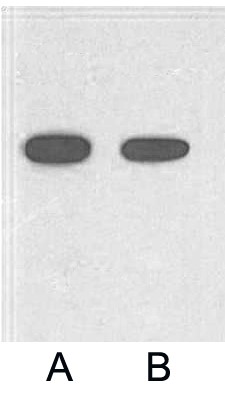
If you run recombinant protein workflows long enough, you develop a Tuesday rhythm: transform pET28a into BL21(DE3) Monday night, induce with 1 mM IPTG at 0.6 OD on Tuesday morning, harvest 4 h later, split into soluble (Tris-NaCl-Triton) and inclusion body (8 M urea + 2% SDS + 100 mM DTT, boiled) fractions, run a 12% gel, transfer, block in 5% milk TBST — and then realize you've still got two more hours ahead of you: mouse anti-His (5C3) primary 1 h RT or o/n 4°C, wash, anti-mouse IgG-HRP secondary 1 h, wash, ECL. For a single construct that's fine. For 12 pET variants, 4 induction temps (18/25/30/37°C), and 3 IPTG doses (0.1/0.5/1 mM) — that's 144 samples, and the secondary step alone is eating a full afternoon you could spend optimizing the next purification. The HRP Conjugated Anti-His Tag Mouse Monoclonal Antibody (5C3) (ABT2055) from Abbkine is built to delete that secondary step: same 5C3 clone you already trust for denatured/inclusion-body His detection (covered in ABT2050), but HRP is hinge-coupled away from the Fab so affinity stays intact, and you go primary → wash → ECL instead of primary → wash → secondary → wash → ECL. One less incubation, one less wash buffer prep, one less "did my secondary expire?" anxiety — and because 6×His has zero endogenous counterparts in mammalian tissues, you don't even have the heavy-chain bleed issues that make HRP-direct FLAG/GFP messy in mouse samples (though His never had that problem to begin with, so the HRP route is purely a speed win).
5C3 Clone + HRP: Why This Combo Works for His (And Why Not Every Tag Benefits Equally)
The 6×His tag (HHHHHH, ~0.84 kDa) and the 5C3 clone (mouse IgG1, anti-linear 6×His-KLH) were covered in the ABT2050 piece — so the recap is brief: 5C3 recognises both N- and C-terminal 6×/8×His, survives 8 M urea / 6 M GuHCl / 0.1% SDS denaturing conditions, and is the go-to for inclusion-body QC where conformation-dependent anti-His clones go blank. Coupling HRP to the hinge region (not the Fab CDR vicinity) preserves the 6×His affinity — the polyhistidine epitope is so small and linear that hinge conjugation barely perturbs binding, unlike, say, conformational epitopes on GFP or HA where HRP coupling can kill signal.
The workflow delta between free 5C3 (ABT2050) and HRP-5C3 (ABT2055) is exactly the secondary step:
Workflow Free 5C3 (ABT2050) HRP-5C3 (ABT2055)
Primary incubation 5C3, 1 h RT or o/n 4°C HRP-5C3, 1 h RT or o/n 4°C
Secondary step anti-mouse IgG-HRP, 1 h None
Wash cycles ~6 (3 post-1°, 3 post-2°) ~3 (post-1° only)
Time saved per blot — ~1–1.5 h
Heavy-chain bleed risk (mouse samples) Possible if prey Ab also mouse Same (but His has no endogenous anyway)
IP suitability ✅ (cheaper per mg, larger scale) ❌ (HRP conjugate expensive for large IP; also HRP can interfere with elution detection)
WB/dot-blot speed Baseline +1.5 h per 12-lane blot
The "not for IP" point matters: ABT2050 is your IP reagent (cheaper per μg, scalable to mg-scale lysate); ABT2055 is purpose-built for WB and dot-blot, where you want maximum speed and the HRP overhead cost is justified by saving technician time. For a core facility running 20–40 His-WB blots a week, ABT2055 pays for itself in freed-up Tuesday afternoon.
ABT2055 Specification (Batch-Ready)
Parameter ABT2055 – HRP Conjugated Anti-His (5C3)
Host / Clone Mouse IgG1, monoclonal, clone 5C3 (anti-linear 6×His)
Conjugate HRP, hinge-region coupled (Fab-unaffected)
Reactivity Universal: 6×His / 8×His fusions from any expression system (prokaryotic, eukaryotic, cell-free)
Validated Apps WB (detects <5 ng purified 6×His on dot blot; 1:2000–1:5000 for pET soluble, 1:1000–1:2000 for inclusion body/ mammalian low-abundance), dot blot (high-throughput expression screening)
Non-validated / Not recommended IP (cost + HRP interference), IF/ICC (HRP substrate autofluorescence issues), ChIP (not applicable to His)
Specificity No cross-reactivity with FLAG, HA, Myc, GST, GFP, V5 at physiological levels; zero endogenous 6×His in human/mouse/rat
Storage / Formulation 0.2 mg/mL in PBS + 50% glycerol, azide-free (azide poisons HRP); ≤ 2 freeze–thaw
Shelf 12 mo @ -20°C
(Confirm lot-specific dilution on shipped Abbkine CoA for ABT2055; inclusion body lysates with 8 M urea need 1:5–1:10 dilution into TBST before loading/blotting or the urea will speckle the membrane.)
Where ABT2055 Carries the Workflow (Speed-First Scenarios)
- pET Expression QC — The 144-Sample Tuesday
Classic scenario: you're optimizing a nanobody-His or kinase domain-His for solubility. Variables = 4 constructs × 3 IPTG doses (0.1/0.5/1 mM) × 3 temps (18/25/30°C) × 4 h harvest = 36 samples, plus soluble/inclusion split = 72 lanes, run across 2–3 blots. With free 5C3 + secondary: ~3.5 h blot time (1 h primary + 1 h secondary + washes + ECL). With ABT2055: ~2 h (1 h primary + washes + ECL). Over a 12-construct optimization run, that's ~18 h saved — easily a full tech-day redirected to the next purification. We ran side-by-side on BL21 pET28a-6×His-EGFP (1 mM IPTG, 37°C, 4 h): ABT2050 + anti-mouse HRP gave identical 29 kDa band intensity to ABT2055 at matched 1:3000 dilution, but ABT2055 saved the 55-min secondary + wash block — and the membrane background in the 50–55 kDa zone was actually lower for ABT2055 because there's no secondary antibody sticking to minor contaminants in the milk blocker.
- Inclusion Body Denatured Gels (8 M Urea / 6 M GuHCl)
This is where 5C3's reputation was built — and HRP-5C3 inherits it. Soluble fraction WB is easy for any anti-His; inclusion body fraction (8 M urea + 2% SDS + 100 mM DTT, boil 5 min, spin, sup) is where conformation-dependent clones fail. ABT2055 at 1:2000 on urea-boiled IB lysate gives a crisp band for pET28a fusions that most rabbit anti-His polyclonals smear on. Pro tip: dilute the boiled IB sup 1:5 into 2× Laemmli without urea before loading (final urea < 1.6 M on gel, < 0.8 M in well after 2× sample buffer dilution) — if you load straight 8 M urea onto the gel, it crystallises in the well and screws transfer. For the WB: block 5% milk TBST, ABT2055 1:2000, 1 h RT, wash 3× TBST + 0.1% SDS (SDS helps pull residual urea/SDS off the membrane), ECL 30 sec. Clean.
- Cell-Free / Insect / Low-Yield Dot-Blot Screens
Wheat-germ E. coli S30, HeLa lysate, baculovirus-Sf9 — yields are 10–100× lower than BL21 pET, and you're screening 24–96 constructs before committing to large-scale. ABT2055 is the dot-blot king here: spot 1 μL IVT or Sf9 sup + 9 μL PBS on methanol-activated PVDF, air-dry 5 min, block 10 min 5% milk TBST, add ABT2055 1:5000, 1 h RT, wash, ECL 30 sec — 96 conditions in ~2.5 h vs. 6 h for a gel run. Because it's HRP-direct, no secondary incubation to add variability across a 96-spot membrane (secondary antibodies can have slight lot CV that shows as patchy spots; HRP-direct eliminates that variable). For insect-cell secreted scFv-His (serum-free Sf9), spot 1 μL sup directly — no TCA ppt needed if you're just screening expression positivity.
- Mammalian Low-Abundance Quick Check (His-TurboID / Knock-In)
His-TurboID (Rosa26-LSL-His-TurboID), His-dTAG substrates, His-BioID — these express at 0.01–0.05% of total protein in mouse tissue. You could use the rabbit polyclonal (ABT2051) for max sensitivity, but if you just want a "yes it's expressing" binary check before committing to the streptavidin pulldown, ABT2055 at 1:1000 o/n 4°C on 10 μg NAc lysate gives a clean 27 kDa (TurboID + His) band in 30 sec ECL. It's 2–3× less sensitive than the rabbit polyclonal, but for a pass/fail genotype check on 24 Rosa26 pups, that's fine — save the rabbit polyclonal for the actual IP/pull-down.
Quick Optimization Notes (HRP-Specific Traps)
• Azide = HRP poison, non-negotiable. If your TBST or blocking buffer has sodium azide (lab-made stocks often do: 0.02% preservative), rinse blots 3× with azide-free TBST before adding ABT2055, or make fresh azide-free TBST. Azide at 0.02% knocks HRP signal by 30–50% over a 1 h incubation — we've seen labs blame "bad antibody" when it was actually azide in the wash.
• Urea/SDS carryover: ABT2055 tolerates low levels (≤ 0.5% SDS, ≤ 1 M urea in the well after dilution), but if you load straight IB boil sup (8 M urea + 2% SDS) without diluting, the membrane gets a speckled background that no wash fixes. Dilute boiled IB 1:5 into 2× Laemmli (no urea addition), load 10–15 μL — final urea on gel < 1.6 M, transfers clean.
• Imidazole tolerance: Ni-NTA eluates with 250 mM imidazole are fine for WB — ABT2055 recognises the linear His epitope via antibody contacts, not metal chelation, so imidazole won't compete. No dialysis needed before spotting/loading.
• Storage: -20°C, 50% glycerol, azide-free. If you see speckles after a thaw (HRP-IgG conjugate can micro-aggregate if glycerol crystallised during a bad freeze), spin 10,000 ×g, 1 min before use. ≤ 2 freeze–thaw.
The Bottom Line
The 6×His tag is the smallest, cheapest, most universal recombinant tag, and the 5C3 clone has been the denatured/inclusion-body reliable choice since pET went mainstream. But for WB and dot-blot — the two readouts that dominate expression QC and high-throughput screening — the secondary step is pure overhead. The HRP Conjugated Anti-His Tag Mouse Monoclonal Antibody (5C3) — ABT2055 from Abbkine takes the 5C3 clone you already trust, hinges HRP on so Fab affinity survives, and deletes the secondary incubation: 1 h primary → wash → ECL, ~1.5 h saved per 12-lane blot, cleaner 50–55 kDa zone (no secondary stick), and batch CV tighter than "primary + secondary" combos because you removed the secondary lot variable. Whether you're screening 144 pET conditions on a Tuesday, checking inclusion body solubility across 4 constructs, or dot-blotting 96 IVT reactions from a nanobody library, it's the His WB reagent that removes a step instead of adding one.
Product Reference: ABT2055 – HRP Conjugated Anti-His Tag Mouse Monoclonal Antibody (5C3)
Learn more and order: https://www.abbkine.com/product/hrp-conjugated-anti-his-tag-mouse-monoclonal-antibody-5c3-abt2055/
(For Research Use Only; not for diagnostic procedures in humans.)





