




Precision Oncology in Practice: Quantify Human CEA with Unmatched Sensitivity and Specificity
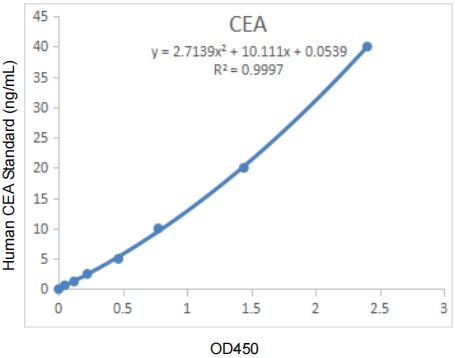
In the dynamic field of oncology, the ability to accurately measure tumor burden and monitor treatment response can mean the difference between timely intervention and disease progression. Carcinoembryonic Antigen (CEA), a high-molecular-weight glycoprotein, stands as one of the most widely utilized and clinically validated tumor markers across multiple cancer types. While present at low levels in healthy adults, elevated serum CEA concentrations are strongly associated with colorectal carcinoma, and are also observed in pancreatic, gastric, lung, and breast cancers. Its primary clinical utility lies not in initial diagnosis, but in the post-operative surveillance of cancer patients, monitoring for recurrence, and assessing the efficacy of chemotherapy or radiotherapy. Consequently, the precise and reliable quantification of CEA is a cornerstone of modern cancer management. The EliKine™ Human Carcinoembryonic Antigen (CEA) ELISA Kit (KTE6038) from Abbkine delivers this critical capability. This advanced enzyme-linked immunosorbent assay provides researchers and clinicians with a robust, highly sensitive, and specific tool for the quantitative determination of human CEA in serum, plasma, cell culture supernatants, and other biological fluids. Designed for performance and consistency, this kit transforms complex immunoassay procedures into a streamlined, high-throughput workflow, generating the reliable data essential for both clinical research and translational studies.
CEA: A Cornerstone Biomarker in Cancer Management
First identified in 1965 as an antigen present in fetal gut tissue and colorectal adenocarcinoma, CEA's role has evolved into a multifaceted clinical tool. It belongs to the immunoglobulin superfamily and is involved in cell adhesion. In healthy individuals, CEA is produced in low quantities by epithelial cells of the gastrointestinal tract. However, carcinogenesis often leads to the dysregulation of CEA expression and its shedding into the circulation, making it a valuable, albeit non-specific, serum marker. Its measurement is integral to several key clinical scenarios. Following curative surgery for colorectal cancer, serial monitoring of CEA levels is the standard of care; a rising trend can signal asymptomatic recurrence long before it is radiologically detectable, allowing for earlier salvage therapy. During palliative chemotherapy for metastatic disease, stable or decreasing CEA levels often correlate with treatment response, while increasing levels may indicate progression. Furthermore, pre-operative CEA levels can provide prognostic information, with higher levels often associated with more advanced disease and poorer outcomes. Beyond colorectal cancer, CEA monitoring is valuable in managing medullary thyroid carcinoma and certain types of lung and breast cancer. Therefore, a high-performance CEA assay is indispensable for: tracking disease course in oncology patients, evaluating new therapeutic regimens in clinical trials, studying CEA biology in cancer models, and exploring its potential in multi-marker panels for improved diagnostic accuracy.
Assay Principle: The Gold-Standard Sandwich ELISA for Accurate Quantification
The EliKine™ Human CEA ELISA Kit employs the sandwich enzyme-linked immunosorbent assay (ELISA) technique, renowned for its exceptional specificity and sensitivity in detecting soluble proteins. This method utilizes two highly specific antibodies that bind to distinct, non-overlapping epitopes on the CEA molecule, ensuring minimal cross-reactivity with related antigens. The process is conducted on a 96-well plate pre-coated with a capture antibody:
- Capture: CEA present in the sample or a known standard is bound by the immobilized capture antibody on the plate.
- Detection: After washing away unbound substances, a biotin-conjugated detection antibody is added. This antibody binds to a different site on the captured CEA, forming an antibody-antigen-antibody "sandwich" complex.
- Signal Amplification: Streptavidin-Horseradish Peroxidase (SA-HRP) is added, which binds with high affinity to the biotin on the detection antibody.
- Color Development and Measurement: A tetramethylbenzidine (TMB) substrate solution is added. The HRP enzyme catalyzes the conversion of TMB into a blue-colored product. The reaction is stopped with an acid solution, turning the product yellow. The intensity of this yellow color, measured by its optical density (OD) at 450 nm, is directly proportional to the amount of CEA initially present in the sample.
This design offers significant advantages over older methods like radioimmunoassays, providing excellent sensitivity down to picogram-per-milliliter levels, a broad dynamic range, high throughput, and quantitative results with outstanding reproducibility, all without the need for radioactive materials.
Key Features and Advantages of the EliKine™ Human CEA ELISA Kit
• High Sensitivity and Specificity: The matched antibody pair in a sandwich format ensures minimal interference and high specificity for human CEA, effectively distinguishing it from non-specific cross-reactive material (NCRM) and related antigens like CEACAM family members. The assay can detect very low concentrations, crucial for monitoring patients post-surgery when levels should normalize.
• Ready-to-Use Convenience: All critical components are provided pre-coated, pre-diluted, and optimized, including the antibody-coated microplate strips, recombinant human CEA standards, detection antibodies, and substrate solutions. This significantly reduces hands-on preparation time and minimizes procedural variability.
• Wide Dynamic Range and Linearity: The kit includes a precisely calibrated set of CEA standards, allowing the generation of a standard curve over a broad concentration range (e.g., 1.56-100 ng/mL, typical for such kits). This ensures accurate quantification of both low-baseline and pathologically elevated CEA levels within a single run.
• Excellent Reproducibility: Rigorous validation ensures low intra-assay and inter-assay coefficients of variation (CV), providing consistent and reliable data essential for longitudinal patient monitoring and multi-center research studies.
• Validated for Multiple Sample Types: The kit is optimized for the quantitative detection of CEA in a variety of human-derived matrices, offering great flexibility:
◦   Serum and Plasma (EDTA, heparin, citrate): The primary samples for clinical monitoring.

◦   Cell Culture Supernatants: For in vitro studies of CEA secretion by cancer cell lines.

◦   Tissue Homogenates: For research on CEA expression in tumor biopsies or xenografts.

◦   Other Biological Fluids: May include ascitic or pleural fluid, subject to validation.
• Streamlined, Time-Efficient Protocol: The total assay time is optimized for laboratory workflow. The procedure involves simple steps: sample/standard addition, incubation with detection reagents, washing, substrate development, and reading. Results for a full 96-well plate can typically be obtained within approximately 4.5 hours.
Diverse Applications in Clinical Research and Diagnostics Development
- Oncology Patient Management and Clinical Trials: Serve as a core tool for serial monitoring of CEA levels in colorectal, gastric, pancreatic, lung, and breast cancer patients to detect recurrence and assess therapeutic response in both standard care and investigational drug trials.
- Cancer Biomarker Research: Investigate the correlation between serum CEA levels and clinicopathological parameters such as tumor stage, grade, metastatic burden, and overall survival to refine its prognostic value.
- In Vitro Cancer Biology Studies: Quantify CEA secretion from cultured cancer cell lines under various experimental conditions, such as treatment with chemotherapeutic agents, targeted therapies, or during studies of epithelial-mesenchymal transition (EMT).
- Diagnostic Assay Development and Validation: Utilize this high-performance ELISA as a reference method or a component in the development and validation of novel diagnostic platforms, such as point-of-care devices or multiplex panels.
- Toxicology and Drug Safety Studies: Monitor CEA as a potential biomarker for certain drug-induced toxicities or in preclinical models of carcinogenesis.
- Quality Control and Proficiency Testing: Employ the kit as a reliable tool for generating quality control samples or for verifying the performance of other CEA testing systems in clinical laboratories.
Efficient and Reliable Four-Step Workflow
Step 1: Sample and Standard Preparation. Dilute serum, plasma, or other samples with the provided assay diluent as recommended. Prepare a serial dilution series from the concentrated CEA standard to generate a standard curve covering the expected range of concentrations.
Step 2: Antigen Capture and Detection. Add standards, samples, and blank controls to the designated wells of the pre-coated microplate. Incubate to allow CEA binding. After washing, add the biotin-conjugated detection antibody, followed by another incubation and wash step. Subsequently, add the Streptavidin-HRP conjugate.
Step 3: Signal Development and Termination. After a final wash, add the TMB substrate solution to all wells and incubate in the dark. A blue color will develop proportionally to the amount of captured CEA. Add the stop solution to convert the blue color to yellow and halt the enzyme reaction.
Step 4: Measurement and Data Analysis. Measure the absorbance (Optical Density, OD) of each well at 450 nm using a microplate reader. Generate a standard curve by plotting the average OD values of the standards against their known concentrations. Use this curve to interpolate the precise concentration of CEA in each unknown sample, typically expressed in nanograms per milliliter (ng/mL).
Why the EliKine™ Human CEA ELISA Kit is the Preferred Choice
• Clinical-Grade Performance: It is engineered to meet the stringent requirements of clinical research, offering the sensitivity, specificity, and reproducibility needed for generating credible data that can inform patient management and therapeutic strategies.
• Optimized for Productivity: The pre-coated plates, pre-mixed reagents, and straightforward protocol minimize hands-on time and technical complexity, allowing researchers and lab technicians to process large sample sets efficiently and reliably.
• Delivers Actionable Quantitative Data: It moves beyond qualitative "positive/negative" results to provide exact concentration values, enabling precise tracking of trends over time and robust statistical analysis for research purposes.
• Versatile and Trustworthy: Suitable for a wide range of applications from basic research to translational studies, this kit is backed by Abbkine's commitment to quality, ensuring lot-to-lot consistency and reliable performance.
• Foundation for Informed Decisions: In the critical context of cancer care and research, having access to a dependable CEA quantification tool is paramount. This kit provides the accurate, reproducible data necessary for making informed clinical observations and advancing scientific understanding.
Elevate your cancer monitoring and research with quantitative precision. The EliKine™ Human Carcinoembryonic Antigen (CEA) ELISA Kit (KTE6038) is your sensitive, specific, and robust solution for unlocking the clinical and research potential of this pivotal tumor marker.
Product Reference: KTE6038 – EliKine™ Human Carcinoembryonic Antigen (CEA) ELISA Kit
Learn more and order: https://www.abbkine.com/product/elikine-human-carcinoembryonic-antigen-cea-elisa-kit-kte6038/





