




Mastering RNA Editing: Unlock Neurological Insights with High-Specificity ADAR2 Antibody
Imagine a single molecular "editor" within your cells that can alter the very instructions of messenger RNA, fine-tuning protein function with profound implications for brain development, synaptic plasticity, and neurological disease. This editor is Adenosine Deaminase Acting on RNA 2 (ADAR2), a crucial enzyme responsible for the conversion of adenosine (A) to inosine (I) in double-stranded RNA—a process known as A-to-I RNA editing. This seemingly subtle change can recode proteins, alter splicing patterns, and influence RNA stability, with its most critical target being the GRIA2 mRNA encoding the GluA2 subunit of AMPA-type glutamate receptors. Proper ADAR2-mediated editing of GluA2 is essential for preventing excessive calcium influx into neurons, a process directly linked to excitotoxicity, neuronal death, and the pathogenesis of conditions like amyotrophic lateral sclerosis (ALS), epilepsy, and ischemic brain injury . Consequently, precise detection and quantification of ADAR2 protein expression and localization have become indispensable for neuroscientists and cell biologists. The ADAR2 Polyclonal Antibody (ABP50601) from Abbkine is a rigorously validated immunological tool designed to meet this critical need. This high-affinity rabbit polyclonal antibody enables researchers to reliably detect endogenous ADAR2 across multiple applications, including Western Blot (WB), Immunohistochemistry on paraffin-embedded sections (IHC-P), and ELISA, providing a window into the regulation of this vital RNA editor in health and disease.
ADAR2: The Molecular Editor Sculpting the Neuronal Proteome
ADAR2 operates as a master regulator of post-transcriptional diversity, primarily within the nucleus and nucleolus of cells, with its highest expression and activity observed in the central nervous system . Its canonical function involves binding to double-stranded RNA regions and deaminating specific adenosines to inosines, which are interpreted as guanosines by the cellular machinery. This activity is not random; it exhibits remarkable substrate specificity. The most well-characterized and physiologically critical edit occurs at the Q/R site of the GluA2 transcript. Here, ADAR2 converts a codon for glutamine (Q) to one for arginine (R), which fundamentally alters the ion channel properties of the resulting AMPA receptor, rendering it impermeable to calcium ions . Mice lacking ADAR2 die prematurely from seizures and exhibit widespread neuronal death, a phenotype that can be rescued by genetically introducing a pre-edited GluA2 allele, underscoring the non-redundant, life-sustaining role of this single editing event . Beyond GluA2, ADAR2 edits numerous other neuronal transcripts involved in neurotransmission (e.g., serotonin receptors, GABA receptors) and is dynamically regulated during brain development, neuronal activity, and in response to cellular stress . Dysregulation of ADAR2 expression or editing efficiency is now a recognized hallmark of several neurological disorders, including sporadic ALS, where reduced ADAR2 activity in motor neurons leads to the incorporation of calcium-permeable, unedited GluA2 receptors, triggering excitotoxic death—a pathway that mirrors key pathological features of the human disease . Therefore, tools to accurately visualize and measure ADAR2 are vital for investigating normal neurodevelopment, synaptic plasticity, learning and memory, and the molecular underpinnings of a growing list of brain disorders.
A Precision Tool for RNA Editing Research: The Abbkine ADAR2 Polyclonal Antibody
The Abbkine ADAR2 Polyclonal Antibody (ABP50601) is generated using a synthesized peptide derived from the internal region (amino acids 450-530) of human ADAR2 as the immunogen [web:11][web:12]. This careful selection of a conserved, internal epitope contributes to the antibody's high specificity and its ability to recognize the endogenous ADAR2 protein across multiple species, including human, mouse, and rat—a critical feature for translational research using common animal models. The antibody is affinity-purified to enhance specificity and is supplied as a liquid solution in PBS containing 50% glycerol and 0.02% sodium azide, with a concentration of 1 mg/mL, ensuring long-term stability at -20°C [web:12][web:13].
Validated Performance Across Key Techniques:
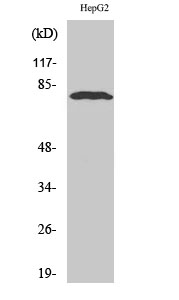
• Western Blot (WB): The antibody reliably detects ADAR2 at its predicted molecular weight of approximately 80-90 kDa in whole cell lysates from various tissues and cell lines, such as brain tissue lysates [web:6][web:8]. Suggested working dilutions range from 1:500 to 1:2000, allowing researchers to optimize for their specific sample types.
• Immunohistochemistry (IHC-P): For spatial analysis of ADAR2 expression within complex tissues like brain sections, this antibody performs excellently on formalin-fixed, paraffin-embedded (FFPE) samples. It produces clear nuclear staining, consistent with ADAR2's primary subcellular localization, at recommended dilutions of 1:100 to 1:300 [web:12][web:13].
• Enzyme-Linked Immunosorbent Assay (ELISA): The antibody is also suitable for quantitative applications like ELISA, with a suggested starting dilution of 1:20,000, enabling the precise measurement of ADAR2 protein levels in complex samples [web:12].
This multi-application validation makes the ABP50601 antibody a versatile and reliable cornerstone for any project aiming to study ADAR2 protein expression dynamics.
Key Features and Advantages for Robust Research
• High Specificity and Sensitivity: The polyclonal nature, combined with affinity purification, ensures broad epitope recognition and strong signal detection of endogenous ADAR2, minimizing non-specific background and cross-reactivity with related proteins like ADAR1.
• Broad Species Reactivity: Validated for use with samples from human, mouse, and rat, this antibody facilitates cross-species comparative studies and leverages the power of established rodent models of neurological disease.
• Multi-Application Validated: Ready-to-use for WB, IHC-P, and ELISA, providing flexibility in experimental design—from quantifying total protein levels (WB/ELISA) to visualizing cellular and subcellular distribution in tissue architecture (IHC-P).
• Excellent Reproducibility: Each batch is quality-controlled to ensure consistent performance and lot-to-lot uniformity, a critical factor for longitudinal studies and for comparing results across experiments and laboratories.
• Optimized for Challenging Samples: Particularly effective for detecting ADAR2 in neuronal tissues and brain sections, where the target is highly expressed but often requires specific antigen retrieval and detection conditions for IHC-P.
• Backed by Abbkine's Quality Commitment: As part of Abbkine's portfolio, this antibody is supported by technical data and is developed with a focus on providing reliable reagents that accelerate discovery in life science research.
Driving Discovery: Research Applications of the ADAR2 Antibody
- Neurological Disease Mechanisms: Investigate the downregulation or mislocalization of ADAR2 in post-mortem brain tissues from patients with ALS, epilepsy, or neurodegenerative diseases, and in corresponding animal models .
- Neuronal Development and Plasticity: Study the temporal and spatial expression patterns of ADAR2 during brain development, in different brain regions, and in response to stimuli that induce synaptic scaling or homeostatic plasticity 网页.
- Cancer Research: Explore the role of ADAR2 and RNA editing in tumorigenesis, particularly in glioblastoma and other cancers where A-to-I editing has been shown to be dysregulated, potentially affecting oncogene or tumor suppressor function.
- Gene Regulation Studies: Utilize the antibody in co-immunoprecipitation (Co-IP) experiments to identify novel protein interaction partners of ADAR2, shedding light on its regulatory mechanisms and recruitment to specific RNA targets.
- Drug Discovery and Therapeutic Validation: Monitor changes in ADAR2 protein expression as a biomarker or pharmacodynamic readout in preclinical studies evaluating compounds designed to modulate ADAR2 activity for therapeutic benefit in neurological disorders.
Reliable Experimental Workflow
For Western Blot, begin by preparing protein lysates from your samples (e.g., brain tissue, cultured neurons). After SDS-PAGE and transfer to a PVDF or nitrocellulose membrane, block the membrane and incubate with the ADAR2 polyclonal antibody at a dilution of 1:1000 overnight at 4°C. Following washes, incubate with an appropriate HRP-conjugated secondary antibody (e.g., goat anti-rabbit IgG). Develop the signal using a chemiluminescent substrate and image.
For Immunohistochemistry on FFPE sections, perform standard deparaffinization, rehydration, and antigen retrieval (e.g., citrate buffer, pH 6.0). After blocking endogenous peroxidases and non-specific sites, incubate sections with the ADAR2 antibody at a dilution of 1:150 for 1-2 hours at room temperature or overnight at 4°C. Detect using a compatible HRP-based detection system (e.g., compact polymer systems) with DAB as the chromogen, followed by counterstaining with hematoxylin.
Why Choose This Antibody for Your RNA Editing Studies?
In the rapidly evolving field of epitranscriptomics and RNA biology, having a dependable tool to track key players is non-negotiable. The Abbkine ADAR2 Polyclonal Antibody (ABP50601) offers a balance of specificity, sensitivity, and versatility that is essential for producing publication-quality data. Its validation across multiple platforms allows you to approach your research question from different angles—whether you need to confirm knockdown/overexpression efficiency, map protein distribution in a tissue, or quantify expression changes under different conditions. By providing a clear window into ADAR2 protein expression, this antibody empowers researchers to decipher the complex roles of RNA editing in cellular physiology and disease pathogenesis, making it an invaluable asset for any neuroscience or molecular biology laboratory.
Product Reference: ABP50601 – ADAR2 Polyclonal Antibody
Learn more and order: https://www.abbkine.com/product/adar2-polyclonal-antibody-abp50601/





