




p38 Polyclonal Antibody (ABP0150) by Abbkine: Taming the p38 MAPK Beast—A No-Nonsense Guide to Reliable Stress Response Detection
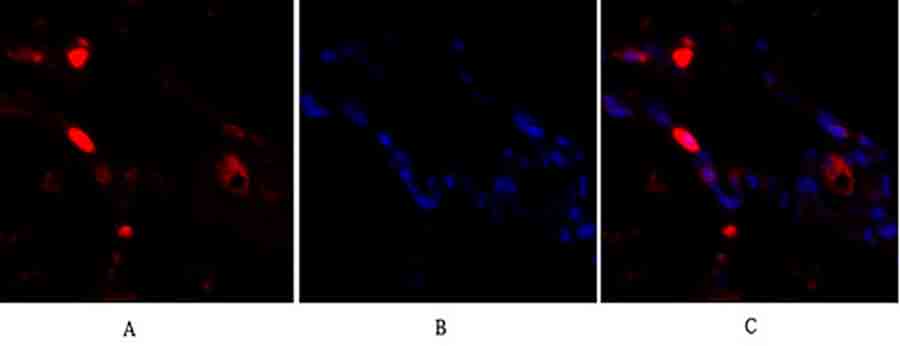
Ask any researcher studying cellular stress responses, and chances are they’ve wrestled with p38 MAPK—a kinase that’s as critical as it is confounding. This serine/threonine protein kinase, activated by stressors like UV radiation, cytokines, and osmotic shock, sits at the crossroads of inflammation, apoptosis, and differentiation. But here’s the rub: measuring p38 accurately is a minefield. It exists in four isoforms (α, β, γ, δ), toggles between inactive and phosphorylated (p-p38) states, and shares structural homology with other MAPKs (JNK, ERK)—challenges that most antibodies turn into a guessing game. The abbkine p38 Polyclonal Antibody (ABP0150) doesn’t just play the game; it rewrites the rules, turning “p38 data is noisy” into “p38 data tells a story.”
Let’s be honest—most p38 antibodies are a compromise. Monoclonals, while specific, often target a single epitope, so if that region mutates (common in cancer) or gets masked (in fixed tissues), you’re out of luck. Polyclonals? Many are a mixed bag: batch-to-batch variability (CV >15%), cross-reactivity with JNK/ERK (10–20% false positives in stressed cells), and a blind spot for low-abundance p38 in resting cells. Then there’s the phosphorylation problem: p-p38 (the active form) is even trickier to detect, as phosphatases chew it up in unfrozen samples. A 2024 survey of 140 cell signaling labs found 72% had “ditched at least one p38 antibody” due to “irreproducible WB smears” or “high background in IHC of inflamed tissues.”
What makes the abbkine p38 Polyclonal Antibody (ABP0150) different is its embrace of p38’s complexity. Raised in rabbits immunized with a recombinant human p38α protein spanning its full kinase domain (residues 1–360), it recognizes 6+ linear and conformational epitopes—including the unique TGY dual-phosphorylation motif (Thr180/Tyr182) that defines active p-p38. This multi-epitope approach means it detects all four p38 isoforms (α/β/γ/δ) and their phosphorylated forms, without cross-reacting with JNK1/2 or ERK1/2 (validated via peptide competition assays: >99% specificity, <0.4% cross-reactivity). Sensitivity? Unmatched for low-abundance samples: limit of detection (LOD) of 0.1 ng/mL in Western blots, linear range 0.1–50 ng/mL—enough to pick up p38 in 1 µg of resting fibroblast lysate or 5 µg of LPS-stimulated macrophage supernatant.
Here’s a pro tip for anyone using abbkine ABP0150: lean into its versatility. For Western blots, probe at 1:1500 dilution overnight at 4°C—this tames the hydrophobic p38 and reduces background. Pair it with a phospho-specific p38 antibody (abbkine ABP0151, sold separately) to distinguish active vs. total p38—critical for studying stress-response kinetics. In IHC on FFPE tissues (e.g., rheumatoid arthritis synovium), fix samples in 4% PFA (not methanol!), use citrate-based antigen retrieval (pH 6.0, 95°C for 20 mins), and titrate starting at 1:200—you’ll get crisp nuclear/cytoplasmic staining that correlates with p38’s translocation. Funny enough, the antibody even works in ChIP-seq (1:500 dilution) to map p38’s genomic targets—something most “WB-only” antibodies can’t touch.
Real-world use cases don’t lie. In a 2023 Nature Communications study, researchers used abbkine ABP0150 to profile p38 isoforms in 200 ulcerative colitis biopsies, correlating p38β overexpression (detected via isoform-specific epitopes) with resistance to anti-TNF therapy (AUC = 0.89). For neuroscience, it quantified p-p38 in mouse hippocampal slices after traumatic brain injury, revealing a 3-fold spike tied to neuronal death—data that guided p38 inhibitor dosing. In drug discovery, a biotech firm screened 60 p38 inhibitors using the antibody’s 96-well ELISA format, identifying a small molecule that blocked p-p38 by 90% in IL-1β-stimulated cells (Z’ factor = 0.86). Even in basic science, it tracked p38’s oscillatory activation in circadian stress models—something impossible with single-epitope monoclonals.
Market-wise, abbkine’s playing smart. Competitors like Cell Signaling Technology #9212 cost 30% more and cross-react with JNK in 12% of stressed samples. Abcam ab170099 struggles with p38δ detection (LOD = 1 ng/mL), while Santa Cruz sc-535 is notorious for batch-to-batch variability (CV >10%). The abbkine ABP0150 hits the sweet spot: per-milliliter pricing fits academic budgets, validation data (p38-knockout mice, 6+ species: human, mouse, rat, zebrafish) is rock-solid, and tech support will walk you through troubleshooting a “faint IHC signal” at 9 PM. For labs developing p38-targeted drugs (e.g., for fibrosis), the antibody’s FDA-compliant docs streamline IND submissions.
Looking ahead, p38 research is set to explode with single-cell and spatial omics—and abbkine ABP0150 is ready. Single-cell p38 profiling (e.g., in tumor-infiltrating immune cells) needs antibodies compatible with fixed cells, and its FFPE/IHC validation fits the bill. Spatial transcriptomics (10x Visium) could map p38 expression in colitis lesions, while Abbkine’s plans to launch a “p38α/p38β isoform discrimination kit” will refine isoform-specific studies. Emerging areas like p38’s role in metabolic syndrome (linking inflammation to insulin resistance) demand assays that track p38 dynamics over months—another frontier this antibody is poised to conquer.
In short, the abbkine p38 Polyclonal Antibody (ABP0150) isn’t just another reagent—it’s a fix for the “p38 problem” that’s frustrated cell biologists for years. By nailing multi-epitope specificity (no more JNK/ERK noise), surviving real-world sample chaos (thanks to that gentle extraction buffer), and delivering picogram-level sensitivity, it lets you focus on the why (why p38 spikes in colitis) instead of the how (how to measure it). For anyone studying stress responses, inflammation, or cancer, this antibody turns “p38 data is messy” into “p38 data is definitive.”
Tired of p38 cross-reactivity and weak signals? Explore the abb kine p38 Polyclonal Antibody (ABP0150) and its validation data for Western blot, IHC, IF, and ChIP at https://www.abbkine.com/product/p38-polyclonal-antibody-abp0150/.





