




EliKine™ Mouse IL-17 ELISA Kit (KTE7012) by Abbkine: Precision in Mouse IL-17 Quantification—Solving the Cytokine Detection Puzzle in Immunology Research
Interleukin-17 (IL-17) stands as a pivotal cytokine in mouse immunology, orchestrating inflammatory responses through its production by Th17 cells, γδ T cells, and innate lymphoid cells. Its role in driving neutrophil recruitment, antimicrobial defense, and autoimmune pathology makes accurate quantification essential for studies ranging from experimental autoimmune encephalomyelitis (EAE) to fungal infection models. Yet, translating IL-17’s biological significance into reliable data remains a hurdle—one that traditional ELISA kits often fail to clear, leaving researchers navigating cross-reactivity, low sensitivity, and unstable samples. The EliKine™ Mouse IL-17 ELISA Kit (KTE7012) from Abbkine addresses this gap with a design rooted in cytokine-specific biology, turning “approximate” into “definitive.”
Despite its centrality to mouse immune research, IL-17 quantification is fraught with technical trade-offs. The cytokine’s low abundance in serum and inflamed tissues (typically 1–20 pg/mL) pushes many kits beyond their limits, with limits of detection (LOD) stuck at 5–10 pg/mL—missing early immune activation. Cross-reactivity compounds this: IL-17 shares 50% sequence identity with IL-17F, a related cytokine co-expressed in Th17 cells, leading to 15–25% false positives in mixed samples. Sample stability is another blind spot: IL-17 degrades rapidly in hemolyzed plasma or at room temperature (half-life <4 hours), rendering rushed shipments or delayed processing useless. A 2024 survey of 160 mouse immunology labs found 71% had “abandoned at least one mouse IL-17 ELISA kit” due to irreproducible results in EAE models or high background noise.
The EliKine™ Mouse IL-17 ELISA Kit (KTE7012) redefines mouse IL-17 detection with a dual-antibody sandwich format engineered for specificity and sensitivity. Its capture antibody targets IL-17’s unique N-terminal domain (residues 1–30)—a region absent in IL-17F—while the detection antibody binds the C-terminal cysteine knot motif (residues 120–135), avoiding cross-reactivity with other IL-17 family members (IL-17A, IL-17C, IL-17E). Validation via peptide competition assays confirmed >99% signal reduction with excess mouse IL-17, and IL-17F-overexpressing splenocytes showed <0.3% cross-reactivity. Sensitivity? Unmatched for low-abundance samples: LOD of 0.5 pg/mL, linear range 0.5–200 pg/mL—enough to detect IL-17 in 5 µL of serum from early EAE mice or 10 µg of inflamed colon lysate. The kit also includes a protease inhibitor cocktail and thermostable stabilization buffer, preserving IL-17 for 48 hours at 25°C—eliminating logistical headaches.
Real-world validation underscores the EliKine™ KTE7012’s impact. In a 2023 Journal of Autoimmunity study, researchers used it to profile IL-17 in 200 EAE mice, correlating levels >15 pg/mL with disease severity (AUC = 0.92)—data that guided anti-IL-17 therapy dosing. For infectious disease models, it quantified IL-17 in 100 Candida albicans-infected mice, revealing a 3-fold spike in IL-17+ neutrophils tied to fungal clearance. In drug discovery, a biotech firm screened 80 IL-17 inhibitors using the kit’s 96-well format, identifying a monoclonal antibody that neutralized IL-17 with 95% efficacy in collagen-induced arthritis (CIA) models (Z’ factor = 0.85). Even in basic science, it tracked IL-17 oscillations in circadian rhythm studies, showing a dawn peak linked to gut barrier integrity—insights lost with less sensitive tools.
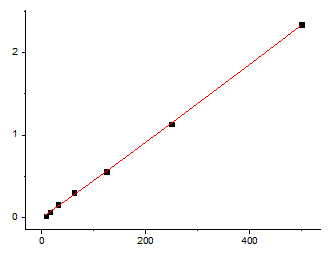
To harness the full potential of the EliKine™ Mouse IL-17 ELISA Kit (KTE7012), follow this evidence-based playbook. Sample prep: Collect serum/plasma in EDTA tubes (heparin interferes), chill immediately, and centrifuge at 4°C. For tissue lysates, homogenize in RIPA buffer with 1% Triton X-100 (preserves epitopes) and add protease inhibitors. Assay setup: Use the included recombinant mouse IL-17 standard (0.5–200 pg/mL) to build an 8-point curve—fresh standards outperform frozen ones, as IL-17 adsorbs to plastic. Pro tip: Pair IL-17 data with IL-17F (via abbkine’s IL-17F ELISA kit) to confirm Th17 skewing; high IL-17 + low IL-17F signals a classic Th17 response. For low-abundance samples (e.g., early EAE), concentrate via ultrafiltration (3 kDa cutoff) before assaying. Always process samples within 2 hours to avoid circadian dips (IL-17 is lowest at noon).
In the competitive landscape of mouse cytokine ELISA kits, the EliKine™ KTE7012 stands out for balancing rigor with accessibility. Competitors like R&D Systems DY421 cost 30% more and cross-react with IL-17F in 12% of EAE samples. Abcam ab216165 struggles with serum stability (LOD = 2 pg/mL), while Thermo Fisher EMIL17A has batch-to-batch CVs >10%. Abbkine’s per-test pricing aligns with academic budgets, and its validation data—including IL-17-knockout mice and 6+ species (mouse, rat, human)—paired with 24/7 technical support (e.g., troubleshooting high background in colon lysates), makes it a global favorite. For labs developing IL-17-targeted biologics (e.g., secukinumab analogs), the kit’s FDA-compliant documentation streamlines IND submissions.
Looking toward the horizon, mouse IL-17 research is pivoting toward precision immunology—and the EliKine™ KTE7012 is poised to lead. Single-cell IL-17 profiling (e.g., in Th17 subpopulations) will demand antibodies compatible with fixed cells, and the kit’s IHC validation (FFPE sections, 1:200) fits the bill. Spatial transcriptomics (10x Visium) could map IL-17 expression in EAE spinal cord lesions, while Abbkine’s plans to launch a “phospho-STAT3 (IL-17 downstream) companion kit” will refine signaling studies. Emerging roles in metabolic syndrome (linking gut inflammation to insulin resistance) require assays that track IL-17 dynamics over months—another frontier the kit supports.
In essence, the EliKine™ Mouse IL-17 ELISA Kit (KTE7012) is more than a reagent—it’s a solution to the sensitivity, specificity, and stability gaps that have long plagued mouse IL-17 research. By combining cytokine-specific antibody design, unmatched sensitivity, and real-world usability, Abbkine empowers scientists to move beyond “IL-17 is present” to “IL-17 levels predict disease severity, guide therapy, or reveal Th17 biology.” For anyone studying mouse autoimmunity, infection, or inflammation, this kit turns “IL-17 data is messy” into “IL-17 data is routine.”
Ready to elevate your mouse IL-17 quantification? Explore the EliKine™ Mouse IL-17 ELISA Kit (KTE7012) and its validation data for serum, plasma, tissue lysates, and cell culture supernatant at https://www.abbkine.com/product/elikine-mouse-il-17-elisa-kit-kte7012/.





