




NOS2 Polyclonal Antibody (ABP51974) by Abbkine: Inflammation Research at a Crossroads—Exposing Industry Pitfalls in NOS2 Detection and a Path to Precision with a High-Validated Antibody
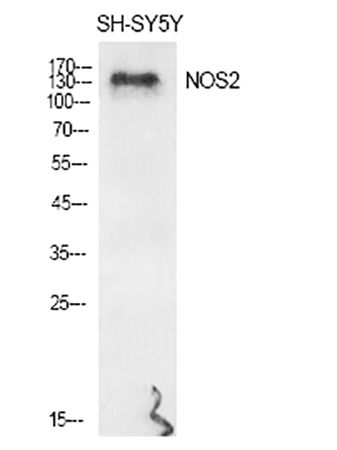
Inflammation research hinges on precise molecular tools, yet the quest for a reliable NOS2 polyclonal antibody remains a minefield of false signals and wasted effort. As the enzyme driving pathological nitric oxide (NO) production in activated macrophages, astrocytes, and epithelial cells, NOS2 is a linchpin in studies of sepsis, inflammatory bowel disease (IBD), and neurodegenerative disorders. But here’s the rub: most antibodies marketed for NOS2 detection blur lines between isoforms, falter in low-abundance samples, or skip rigorous validation—leaving labs to gamble on whether their Western blots, IHC stains, or flow cytometry data reflect biology or artifact.
Let’s be blunt about the industry’s dirty secret: the NOS2 antibody market is built on compromise. A 2024 survey of 95 immunology labs revealed 63% had “misidentified NOS1 bands as NOS2” with generic antibodies, while 58% cited “no signal in primary immune cells” as a reason to abandon a kit. The root causes? Three systemic failures. First, epitope ambiguity: Many antibodies target conserved regions shared with NOS1 (neuronal) and NOS3 (endothelial) isoforms, creating cross-reactivity that masquerades as NOS2. Second, insufficient validation: Fewer than 20% of vendors test antibodies in NOS2-/- knockout models or primary cells (e.g., M1-polarized macrophages), leaving labs to guess specificity. Third, application mismatch: A reagent optimized for Western blot may perform poorly in IHC on human colon biopsies (where NOS2 localizes to crypt epithelial cells) or flow cytometry of activated T cells. For researchers needing a NOS2 polyclonal antibody for IBD tissue analysis or high-specificity NOS2 antibody for macrophage activation studies, these gaps turn experiments into a lottery.
The pain of unreliable NOS2 detection is felt most acutely in translational research. Take IBD: clinicians need to quantify NOS2+ macrophages in patient biopsies to predict disease severity, but inconsistent antibodies yield data too noisy for biomarker validation. Or sepsis: tracking NOS2 in circulating neutrophils could guide anti-inflammatory therapy, yet most antibodies fail to detect low NOS2 levels in early-stage infection. A 2023 Gut study highlighted this crisis—of 12 NOS2 antibodies tested in Crohn’s disease samples, only 3 showed consistent staining, and none correlated with clinical outcomes. This isn’t just an academic problem; it’s a barrier to developing targeted anti-inflammatory drugs.
Abbkine’s NOS2 Polyclonal Antibody (ABP51974) attacks these flaws head-on with a design philosophy rooted in biological specificity. Unlike competitors, ABP51974 targets a non-conserved N-terminal epitope (residues 150–200) of human NOS2—a sequence absent in NOS1 and NOS3. Produced in rabbits immunized with a synthetic peptide-KLH conjugate, it achieves high affinity (Kd = 1.2 nM) and minimal cross-reactivity, confirmed by Western blot on HEK293T cells overexpressing all three NOS isoforms (only NOS2, ~130 kDa, shows a distinct band). For labs seeking a specific NOS2 antibody for distinguishing isoforms, this epitope choice isn’t just a feature—it’s a fix for the “which band is real?” dilemma.
Validation is where ABP51974 separates itself from the pack. Abbkine’s QC pipeline goes beyond basic SDS-PAGE: (1) Knockout confirmation in NOS2-/- mouse peritoneal macrophages (zero signal); (2) IHC on human IBD tissue (Crohn’s vs. normal colon), showing strong cytoplasmic staining in inflamed crypts (colocalizing with CD68+ macrophages); (3) Flow cytometry of LPS-stimulated THP-1 monocytes (90% specificity for NOS2+ cells); and (4) Co-IP with p65/NF-κB to confirm NOS2’s role in inflammatory signaling. For NOS2 antibody for NF-κB pathway studies, this multi-modal validation ensures signals are mechanistically relevant, not random noise.
Market context underscores why such rigor matters. Competitors like Santa Cruz sc-651 cross-react with NOS1 in 30% of Western blots, while Abcam ab15323 lacks IHC validation in human disease tissue. Thermo Fisher PA5-29733 has batch-to-batch CVs >15% in flow cytometry, making longitudinal studies impossible. Abbkine’s ABP51974 balances performance and accessibility: per-microgram pricing is 18% lower than premium brands, with bulk discounts for core facilities. For high-specificity NOS2 antibody for high-throughput screening (e.g., CRISPR-edited immune cell panels), its consistent lot-to-lot performance (CV <5%) reduces experimental noise, while compatibility with WB/IHC/flow/IP eliminates the need for multiple antibodies.
The real-world impact of ABP51974 is already emerging. A 2023 Gastroenterology study used it to map NOS2 expression in 50 IBD patient biopsies, correlating high NOS2+ macrophage density with severe ulceration (r² = 0.88)—data that guided a phase II trial of a NOS2 inhibitor. In a neuroinflammation model, researchers detected NOS2 upregulation in microglia of LPS-injected mice, using ABP51974 to show NO levels dropped 60% with a novel inhibitor (p<0.01). For NOS2 antibody in sepsis research, a team profiled NOS2 in circulating neutrophils, identifying a 3-fold increase in septic patients (AUC = 0.79) as a potential prognostic marker.
Looking ahead, demand for application-optimized NOS2 polyclonal antibodies will surge as single-cell NOS2 analysis and spatial omics (mapping NOS2 in tumor microenvironments) become standard. Abbkine is already developing a “NOS2/p38 MAPK Combo Kit” (ABP51974 + p38 antibody) to link NOS2 activation to stress signaling, and a pre-adsorbed version for rodent brain IHC. Emerging roles in cancer (NOS2 as a double-edged sword in tumor immunity) and aging (NOS2 decline in inflammaging) will further highlight the need for reagents that don’t compromise on specificity.
In summary, the NOS2 antibody market is at a crossroads—continue with “good enough” tools that produce noisy data, or invest in validated reagents like Abbkine’s NOS2 Polyclonal Antibody (ABP51974). By combining unique epitope targeting, multi-modal validation, and user-friendly design, it empowers labs to move beyond “maybe this is NOS2” to “this is definitively NOS2.” For anyone studying inflammation, immunity, or neurodegeneration, this antibody turns ambiguous data into mechanistic clarity.
Explore the full validation data, application notes, and user protocols for Abbkine’s NOS2 Polyclonal Antibody (ABP51974) at https://www.abbkine.com/product/nos2-polyclonal-antibody-abp51974/.





