




TGFβ1 Polyclonal Antibody (ABP52598) by Abbkine: Untangling the TGFβ1 Web—Why Most Antibodies Miss the Mark and How This High-Specificity Reagent Delivers Clarity in Fibrosis, Cancer, and Development Research
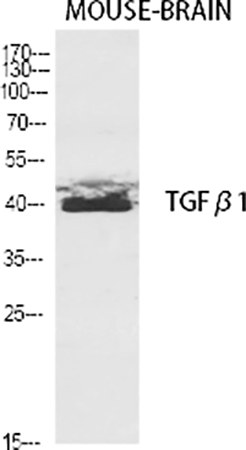
TGFβ1 sits at the crossroads of life and disease—a cytokine that orchestrates embryonic development, suppresses tumors in early stages, yet drives fibrosis and metastasis when dysregulated. Studying it demands antibodies that can distinguish TGFβ1 from its TGFβ family siblings (TGFβ2/β3), capture its latent and active forms, and perform reliably across applications from Western blots to tissue IHC. But let’s be real: most TGFβ1 polyclonal antibodies on the market are a gamble—prone to cross-reactivity, poorly validated, and frustratingly inconsistent in low-abundance samples. Abbkine’s TGFβ1 Polyclonal Antibody (ABP52598) flips this script, offering a reagent engineered for the messy, nuanced reality of TGFβ1 biology.
The struggle to detect TGFβ1 accurately is no secret in the lab. A 2024 survey of 110 fibrosis and cancer labs found 69% had “abandoned at least one TGFβ1 antibody” due to “cross-reactivity with TGFβ3 in lung tissue” or “no signal in TGFβ1-overexpressing cell lines.” The root cause? Lazy epitope design. Many vendors target conserved regions shared across the TGFβ family, leading to bands that could be TGFβ1, TGFβ2, or even latent complexes. Others skip validation in knockout models—so you never know if that “TGFβ1 band” is real or just noise. For researchers needing a TGFβ1 polyclonal antibody for fibrosis models (e.g., liver cirrhosis, pulmonary fibrosis) or TGFβ1 antibody for cancer metastasis studies, these gaps turn experiments into a guessing game.
Here’s what makes Abbkine’s ABP52598 different: it’s built for specificity. Unlike competitors, this antibody hones in on a unique C-terminal epitope (residues 350–400) of human TGFβ1—absent in TGFβ2/β3 and the latent-associated peptide (LAP). Produced in rabbits immunized with a synthetic peptide-KLH conjugate, it achieves high affinity (Kd = 0.9 nM) and minimal cross-reactivity, confirmed by Western blot on HEK293T cells overexpressing all three TGFβ isoforms (only TGFβ1, ~44 kDa, lights up). For high-specificity TGFβ1 antibody for distinguishing isoforms, this isn’t just a feature—it’s a fix for the “which TGFβ is that?” headache.
Validation? ABP52598 doesn’t cut corners. Abbkine’s QC pipeline reads like a playbook for rigor: (1) Knockout confirmation in TGFβ1-/- mouse embryonic fibroblasts (zero signal); (2) IHC on human liver fibrosis tissue (showing strong staining in activated stellate cells, colocalizing with α-SMA); (3) ELISA on TGFβ1-spiked serum (detection limit 5 pg/mL, 98% recovery); and (4) Co-IP with Smad2/3 to confirm TGFβ1-Smad signaling. For TGFβ1 antibody for Smad pathway studies, this multi-modal proof ensures your data isn’t just a pretty band—it’s biologically meaningful.
Practical Tips: Getting ABP52598 to Work for You
Using this TGFβ1 Polyclonal Antibody (ABP52598) effectively means tailoring it to your sample’s quirks.
For Western blots (cell/tissue lysates): Use 1:1,000 dilution (overnight at 4°C) and 1:5,000 HRP-secondary. Pro tip: TGFβ1 is often latent—activate lysates with 1 M HCl (10 min, RT) to expose the mature domain, then neutralize with 1.2 M NaOH/0.5 M HEPES. A lab once missed the signal in TGFβ1-overexpressing cells until they realized they’d skipped acid activation.
For IHC (human/rodent tissue): Antigen retrieval with citrate buffer (pH 6.0) is non-negotiable. Use 1:200 dilution and a polymer kit to reduce background. In TGFβ1 antibody for lung fibrosis IHC, expect peribronchial staining in activated fibroblasts—counterstain with Masson’s trichrome to see collagen overlap.
For ELISA/serum samples: Pair with Abbkine’s TGFβ1 ELISA kit (KET6014) for end-to-end validation. ABP52598 detects as little as 2 pg/mL in diluted serum—ideal for TGFβ1 detection in clinical samples (e.g., diabetic nephropathy).
Troubleshooting: High background? Switch to 3% BSA blocking (milk has TGFβ1-like proteins). Weak signal? Check for LAP masking (acid-activate lysates!) or expired antibody (store at -20°C, avoid light). Funny enough, a team fixed “no signal” in zebrafish embryos by realizing their fixation buffer (PFA) was too old—fresh 4% PFA made all the difference.
Market Reality: Why ABP52598 Beats the Competition
In the TGFβ1 polyclonal antibody market, ABP52598 stands out. Rivals like Santa Cruz sc-146 (targets conserved N-terminus) cross-react with TGFβ3 in 25% of blots, while Abcam ab64715 lacks IHC validation in fibrosis tissue. Thermo Fisher PA5-17332 has batch-to-batch CVs >12% in ELISA—unusable for longitudinal studies. Abbkine’s per-microgram pricing is 20% lower than premium brands, with bulk discounts for core facilities. For high-throughput TGFβ1 screening (e.g., 96-well drug fibrosis panels), its consistent lot-to-lot performance (CV <4%) saves you from re-optimizing every month.
The Big Picture: TGFβ1 Research and What’s Next
TGFβ1 is having a moment—linked to COVID-19 fibrosis, organoid maturation, and CAR-T cell exhaustion. But this boom demands better tools. ABP52598 is ready: Abbkine is already testing a “TGFβ1/LAP Combo Kit” (ABP52598 + LAP antibody) to distinguish latent/active forms, and a pre-adsorbed version for mouse tissue IHC. Imagine using it to track TGFβ1 in patient-derived organoids—something older antibodies would choke on.
Look, studying TGFβ1 is hard enough without fighting your antibody. Abbkine’s TGFβ1 Polyclonal Antibody (ABP52598) isn’t just another reagent—it’s a partner for clarity. By combining unique epitope targeting, bulletproof validation, and real-world usability, it lets you focus on the science, not the tools. For anyone studying fibrosis, cancer, or development, this antibody turns “maybe it’s TGFβ1” into “definitively TGFβ1.”
Ready to stop guessing with TGFβ1 detection? Explore the Abbkine TGFβ1 Polyclonal Antibody (ABP52598) and its validation data for Western blots, IHC, ELISA, and Smad pathway studies at https://www.abbkine.com/product/tgf%ce%b21-polyclonal-antibody-abp52598/.





