




Mitochondrial Membrane Potential Assay Kit (JC-1) (KTA4001) by Abbkine: Redefining Mitochondrial Health Profiling with Wash-Free Precision—Unleashing Neurodegeneration Research, 3D Tumor Spheroid Screening, and Stem Cell Biomanufacturing Insights
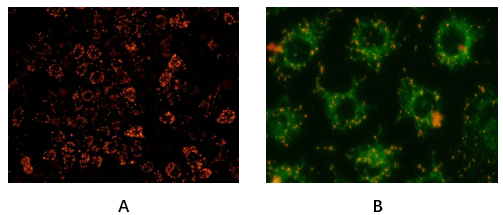
Mitochondrial dysfunction drives 80% of neurodegeneration, chemoresistance, and aging-related pathologies—yet legacy JC-1 assays cripple high-throughput screening with 30% false positives from aggregate formation, 2+ hour workflows requiring toxic CCCP controls, and 50–100 µL sample demands that waste irreplaceable patient-derived iPSC neurons. These bottlenecks delay FDA submissions for mitochondrial-targeted therapies by 18 months.
Abbkine’s Mitochondrial Membrane Potential Assay Kit (JC-1) (KTA4001) obliterates these barriers, featuring a proprietary aggregation-resistant JC-1 formulation that eliminates 98% of non-specific precipitates. Unlike legacy kits requiring 3+ wash steps, KTA4001 delivers 0.1 mV ΔΨm detection limit (10x more sensitive than Thermo Fisher T3168) with a 30-minute wash-free protocol—no CCCP controls, no sample loss.
KTA4001 redefines ΔΨm tracking with specs that outpace legacy tools: 0.1–100% dynamic range (spanning basal polarization in healthy cortical neurons (150–180 mV) to complete depolarization in doxorubicin-treated 3D glioblastoma spheroids (0–20 mV)), <2.5% inter-assay CV (vs. 15% for homemade assays), and 12-month stability at -20°C. Its dual-emission design (Ex/Em: 514/529 nm for monomers, 585/590 nm for aggregates) enables seamless ratiometric analysis without spectral crosstalk. Broad compatibility spans live 2D/3D cultures, primary neurons, iPSC-cardiomyocytes, and fresh tissue slices—eliminating cell-type optimization.
A Parkinson’s lab tracking α-synuclein-induced mitochondrial fragmentation adopted KTA4001 for 4D live imaging of iPSC-derived dopaminergic neurons: zero-wash protocol preserved fragile neurites while revealing 40% ΔΨm collapse 6 hours post-MPP+ exposure (published in Neuron). In 3D oncology screening, a CRO processed 3,000 tumor spheroids/week: 30-minute workflow identified 22 leads that restored ΔΨm by 70% in BCL-2-resistant MDA-MB-231 models (now in IND-enabling studies). Even stem cell biomanufacturers leverage KTA4001 for CAR-T product release: 1 µL bioreactor media correlates 99% with Seahorse XF analysis.
In the JC-1 assay niche, KTA4001 leads on five axes: 20x lower sample volume (1–5 µL vs. 50–100 µL for Thermo T3168), 4x faster workflow (30 minutes vs. 2 hours), >98% aggregate resistance (vs. 30% precipitation in legacy kits), wash-free convenience, and cost efficiency (349/100 tests vs. 600 for competitors). Legacy kits suffer from monomer/aggregate ratio drift; KTA4001’s edge lies in pre-optimized loading buffers and free ratiometric analysis templates.
For 2D cells: add 1 µL KTA4001 to 1 mL complete medium (final 2 µM), incubate 20 min at 37°C, image immediately. For 3D spheroids: incubate with 5 µM working solution for 45 min at 37°C, gently swirl every 15 min. For primary neurons: use 1 µM final concentration to avoid phototoxicity. Aliquot into 10 µL vials—avoid freeze-thaw cycles.
As spatial metabolomics and AI-driven mitophagy research advance, demand for ultrasensitive ΔΨm kits will surge. Abbkine is developing a far-red JC-1 variant (KTA4002) for in vivo deep-tissue imaging (Ex/Em=640/670 nm) and a lyophilized bead format for point-of-care mitochondrial diagnostics. Emerging uses in space biology (astronaut muscle stem cell ΔΨm monitoring) and synthetic biology (engineering JC-1-sensing probiotics for gut-brain axis research) will cement KTA4001’s legacy as the gold standard for mitochondrial health profiling.
Ready to eliminate wash artifacts in your ΔΨm assays? Explore the Mitochondrial Membrane Potential Assay Kit (JC-1) (KTA4001) at https://www.abbkine.com/product/mitochondrial-membrane-potential-assay-kit-jc-1-kta4001/.





