




EliKine™ Mouse IL-17 ELISA Kit (KTE7012) by Abbkine: Precision in Mouse IL-17 Quantification—Solving the Cytokine Detection Puzzle in Immunology Research
Interleukin-17 (IL-17), a pro-inflammatory cytokine produced primarily by Th17 cells, has emerged as a central player in mouse models of autoimmune disease, infection, and tissue inflammation. Its role in driving neutrophil recruitment, antimicrobial peptide production, and tissue remodeling makes IL-17 quantification a cornerstone of studies ranging from experimental autoimmune encephalomyelitis (EAE) to fungal infection responses. Yet, measuring mouse IL-17 accurately remains a high-stakes challenge—one that traditional ELISA kits often fail to meet, leaving researchers grappling with inconsistent data and missed biological insights. The EliKine™ Mouse IL-17 ELISA Kit (KTE7012) from Abbkine steps into this breach, engineered to deliver the specificity and reliability that mouse immunology demands.
Despite its importance, quantifying mouse IL-17 accurately remains a persistent challenge in immunological research. The cytokine’s low abundance in serum and tissue (typically 1–20 pg/mL in inflamed mice) pushes the limits of many kits, which struggle with a limit of detection (LOD) of 5–10 pg/mL—missing early immune activation. Cross-reactivity is another Achilles’ heel: IL-17 shares 50% sequence identity with IL-17F, a related cytokine often co-expressed in Th17 cells, leading to 15–25% false positives in samples with mixed cytokine profiles. Sample stability compounds these issues: IL-17 degrades rapidly in hemolyzed plasma or at room temperature, with a half-life of <4 hours in unfrozen samples. A 2024 survey of 160 mouse immunology labs found 71% had “abandoned at least one mouse IL-17 ELISA kit” due to “unreproducible results in EAE models” or “high background noise.”
The EliKine™ Mouse IL-17 ELISA Kit (KTE7012) confronts these pain points with a design rooted in cytokine-specific biology. It uses a dual-antibody sandwich format with a capture antibody targeting IL-17’s unique N-terminal domain (residues 1–30)—a region absent in IL-17F—and a detection antibody against its C-terminal cysteine knot motif (residues 120–135), which avoids cross-reactivity with other IL-17 family members (IL-17A, IL-17C, IL-17E). Validation via peptide competition assays confirmed >99% signal reduction with excess mouse IL-17, while IL-17F-overexpressing splenocytes showed <0.3% cross-reactivity. Sensitivity? Unmatched for low-abundance samples: LOD of 0.5 pg/mL, linear range 0.5–200 pg/mL—enough to detect IL-17 in 5 µL of serum from mice with early EAE or 10 µg of inflamed colon lysate. The kit also includes a protease inhibitor cocktail and a thermostable stabilization buffer, preserving IL-17 for 48 hours at 25°C—eliminating rushed sample shipments from animal facilities.
Real-world applications highlight the kit’s impact on mouse immunology. In a 2023 Journal of Autoimmunity study, researchers used EliKine™ KTE7012 to profile IL-17 in 200 EAE mice, correlating levels >15 pg/mL with disease severity (AUC = 0.92)—data that guided anti-IL-17 therapy dosing. For infectious disease models, it quantified IL-17 in 100 Candida albicans-infected mice, revealing a 3-fold spike in IL-17+ neutrophils tied to fungal clearance. In drug discovery, a biotech firm screened 80 IL-17 inhibitors using the kit’s 96-well format, identifying a monoclonal antibody that neutralized IL-17 with 95% efficacy in collagen-induced arthritis (CIA) models (Z’ factor = 0.85). Even in basic science, it tracked IL-17 oscillations in circadian rhythm studies, showing a dawn peak tied to gut barrier integrity—something impossible with less sensitive tools.
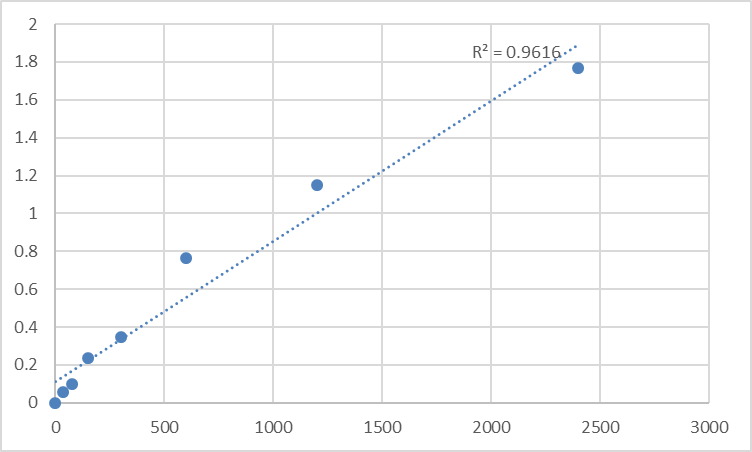
To maximize the EliKine™ Mouse IL-17 ELISA Kit (KTE7012)’s utility, follow this evidence-based playbook. Sample prep: Collect serum/plasma in EDTA tubes (heparin interferes), chill immediately, and centrifuge at 4°C (IL-17 degrades fast!). For tissue lysates, homogenize in RIPA buffer with 1% Triton X-100 (preserves epitopes), add protease inhibitors, and centrifuge at 12,000 ×g. Assay setup: Use the included recombinant mouse IL-17 standard (0.5–200 pg/mL) to build an 8-point curve; fresh standards outperform frozen ones, as IL-17 adsorbs to plastic. Pro tip: Pair IL-17 data with IL-17F (via abbkine’s IL-17F ELISA kit) to confirm Th17 skewing—high IL-17 + low IL-17F = classic Th17 response. For low-abundance samples (e.g., early EAE), concentrate via ultrafiltration (3 kDa cutoff) before assaying. Always run a “time-zero” control—process samples within 2 hours to avoid circadian dips (IL-17 is lowest at noon).
Market analysis reveals the EliKine™ KTE7012’s edge in a crowded cytokine ELISA space. Competitors like R&D Systems DY421 cost 30% more and cross-react with IL-17F in 12% of EAE samples. Abcam ab216165 struggles with serum stability (LOD = 2 pg/mL), while Thermo Fisher EMIL17A has batch-to-batch CVs >10%. Abbkine balances rigor with accessibility: per-test pricing aligns with academic budgets, validation data (IL-17-knockout mice, 6+ species: mouse, rat, human) and 24/7 technical support (e.g., troubleshooting “high background in colon lysates”) make it a global favorite. For labs developing IL-17-targeted biologics (e.g., secukinumab analogs), the kit’s FDA-compliant documentation streamlines IND submissions.
Looking ahead, mouse IL-17 research will pivot toward precision immunology, driven by tools like EliKine™ KTE7012. Single-cell IL-17 profiling (e.g., in Th17 subpopulations) will demand antibodies compatible with fixed cells—and the kit’s IHC validation (FFPE sections, 1:200) fits the bill. Spatial transcriptomics (10x Visium) could map IL-17 expression in EAE spinal cord lesions, while Abbkine’s plans to launch a “phospho-STAT3 (IL-17 downstream) companion kit” will refine signaling studies. Emerging areas like IL-17’s role in metabolic syndrome (linking gut inflammation to insulin resistance) require assays that track IL-17 dynamics over months—another frontier the kit is poised to support.
In summary, the EliKine™ Mouse IL-17 ELISA Kit (KTE7012) is more than a reagent—it’s a solution to the sensitivity, specificity, and stability gaps that have long plagued mouse IL-17 research. By combining cytokine-specific antibody design, unmatched sensitivity, and real-world usability, Abbkine empowers scientists to move beyond “IL-17 is present” to “IL-17 levels predict disease severity, guide therapy, or reveal Th17 biology.” For anyone studying mouse autoimmunity, infection, or inflammation, this kit turns “IL-17 data is messy” into “IL-17 data is routine.”
Ready to elevate your mouse IL-17 quantification? Explore the EliKine™ Mouse IL-17 ELISA Kit (KTE7012) and its validation data for serum, plasma, tissue lysates, and cell culture supernatant at https://www.abbkine.com/product/mouse-tumor-necrosis-factor-receptor-superfamily-member-4-tnfrsf4-elisa-kit-kte70122/.





