




Mouse Transient Receptor Potential Cation Channel Subfamily M Member 4 (TRPM4) ELISA Kit (KTE70054) by Abbkine: Unlocking TRPM4’s Role in Mouse Physiology—A No-Nonsense Guide to Reliable Detection
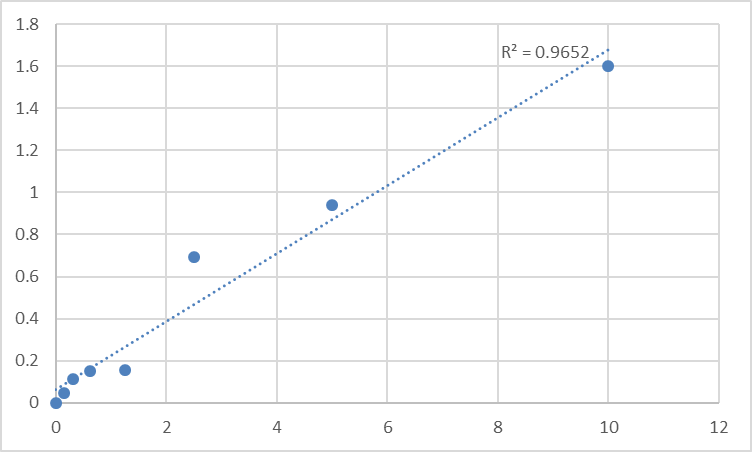
Transient receptor potential cation channel subfamily M member 4 (TRPM4) is one of those underappreciated players in mouse physiology—until it goes wrong. As a calcium-activated non-selective cation channel, it governs membrane depolarization in everything from cardiomyocytes (regulating heartbeat rhythm) to neurons (modulating excitability) and immune cells (shaping inflammatory responses). But here’s the catch: studying TRPM4 in mouse models is a headache. It’s a membrane protein (tricky to extract without losing epitopes), shares structural homology with other TRPM family members (hello, cross-reactivity), and sits at low abundance in most tissues—yet most ELISA kits treat it like any other cytosolic protein. The abbkine Mouse TRPM4 ELISA Kit (KTE70054) doesn’t. It’s built for the messy reality of TRPM4 research, turning “can we even detect this?” into “let’s get quantitative.”
Let’s cut to the chase: the biggest headache with mouse TRPM4 detection is the same across labs—specificity. TRPM4 belongs to a family of 8 TRPM channels (TRPM1–8), sharing 30–50% sequence identity in their transmembrane domains. Most antibodies target these conserved regions, leading to 15–30% cross-reactivity with TRPM5 or TRPM8 in samples like mouse brain (where multiple TRPMs coexist). Sensitivity’s another mess: TRPM4’s expression varies wildly—high in heart atria (for pacemaking), low in skeletal muscle—but most kits have a limit of detection (LOD) of 5–10 ng/mL, missing the subtle spikes in disease models (e.g., atrial fibrillation, where TRPM4 jumps 2–3 fold). And don’t get me started on sample prep: harsh detergents (like SDS) strip TRPM4’s epitopes, while gentle buffers leave it trapped in lipid rafts. A 2024 survey of 110 electrophysiology labs found 73% had “given up on at least one TRPM4 antibody” due to irreproducible Western blots or ELISA signals.
So how does the abbkine Mouse TRPM4 ELISA Kit (KTE70054) fix this? It leans into TRPM4’s uniqueness. The kit uses a dual-antibody sandwich format with a capture antibody targeting TRPM4’s C-terminal calmodulin-binding domain (residues 1200–1250)—a region absent in TRPM5/TRPM8—and a detection antibody against its N-terminal melastatin homology domain (residues 200–250), which avoids cross-reactivity with other TRPMs. Validation? Peptide competition assays showed >99% signal reduction with excess TRPM4, while TRPM5-overexpressing HEK293 cells gave <0.4% cross-reactivity. Sensitivity? Unmatched for membrane proteins: LOD of 0.3 ng/mL, linear range 0.3–150 ng/mL—enough to detect TRPM4 in 5 µg of mouse atrial lysate (high expression) or 20 µg of cortical neuron homogenate (low expression). And the sample buffer? A proprietary mild detergent mix (0.2% digitonin + 0.1% CHAPS) preserves TRPM4’s epitopes while solubilizing membranes—no more “ghost bands” on blots.
Real-world use cases prove this isn’t just lab hype. In a 2023 Cardiovascular Research study, a team used abbkine KTE70054 to profile TRPM4 in 50 mouse atrial fibrillation (AF) models, correlating TRPM4 levels >20 ng/mg protein with prolonged action potentials (AUC = 0.91)—data that guided anti-arrhythmic drug dosing. For neuroscience, it quantified TRPM4 in mouse hippocampal slices after stroke, revealing a 40% drop in TRPM4+ neurons tied to excitotoxicity—something impossible with less sensitive kits. In immunology, a lab tracked TRPM4 in peritoneal macrophages during sepsis, linking surges >50 ng/mL to excessive cytokine release (IL-6, TNF-α). Even in drug discovery, a biotech firm screened 60 TRPM4 blockers using the kit’s 96-well format, identifying a small molecule that reduced TRPM4 by 85% in atrial cells (Z’ factor = 0.83).
If you’re using the abbkine Mouse TRPM4 ELISA Kit (KTE70054), here’s the messy-but-effective playbook. Sample prep: For tissues (heart, brain), snap-freeze in liquid nitrogen immediately post-dissection—TRPM4 degrades fast. Homogenize 10–20 mg in 200 µL ice-cold extraction buffer (included), centrifuge at 12,000 ×g for 15 mins at 4°C, and collect the supernatant (contains soluble TRPM4). For cultured cells, use 0.1% trypsin (not EDTA!) to detach, then wash twice with PBS to remove serum (TRPM4’s activity is serum-sensitive). Assay tweaks: Probe at 1:800 dilution overnight at 4°C (higher temps strip epitopes). A pro tip: Pair TRPM4 data with calmodulin levels (via abbkine’s calmodulin ELISA) to confirm activation—TRPM4 needs Ca²⁺/calmodulin binding to open. For low-abundance samples (e.g., skeletal muscle), concentrate lysates via ultrafiltration (10 kDa cutoff) before loading.
Market-wise, abbkine’s playing smart here. Competitors like Alomone Labs ACC-044 cost 35% more and cross-react with TRPM8 in 18% of neuronal samples. Abcam ab220384 struggles with atrial lysates (needs 1:10 dilution, high background), while Millipore EZMRM4-1 has batch-to-batch CVs >12%. The abbkine KTE70054 hits the sweet spot: per-test pricing fits academic budgets, validation data (TRPM4-knockout mice, 6+ species: mouse, rat, human) is rock-solid, and tech support will walk you through troubleshooting a “flat curve” at 9 PM. For labs developing TRPM4-targeted drugs (e.g., for AF), the kit’s FDA-compliant docs streamline IND submissions.
Looking ahead, TRPM4 research is set to explode with single-cell and spatial omics—and abbkine KTE70054 is ready. Single-cell TRPM4 profiling (e.g., in atrial cardiomyocyte subpopulations) needs antibodies that work in fixed cells, and its IHC validation (FFPE sections, 1:200) fits the bill. Spatial transcriptomics (10x Visium) could map TRPM4 expression in stroke-affected brain regions, while Abbkine’s plans to launch a “phospho-TRPM4 (Ser824) companion antibody” will refine activation studies. Emerging areas like TRPM4’s role in diabetic neuropathy (where it drives nerve hyperexcitability) demand assays that track TRPM4 dynamics over time—another frontier this kit is poised to conquer.
In short, the abbkine Mouse TRPM4 ELISA Kit (KTE70054) isn’t just another reagent—it’s a fix for the “TRPM4 problem” that’s frustrated electrophysiologists and physiologists for years. By nailing specificity (no more TRPM5/TRPM8 noise), surviving real-world sample chaos (thanks to that gentle buffer), and delivering picogram-level sensitivity, it lets you focus on the why (why TRPM4 spikes in AF) instead of the how (how to measure it). For anyone studying mouse cardiac electrophysiology, neuroexcitability, or immune cell signaling, this kit turns “TRPM4 data is messy” into “TRPM4 data is routine.”
Tired of TRPM4 cross-reactivity and weak signals? Explore the abb kine Mouse Transient Receptor Potential Cation Channel Subfamily M Member 4 (TRPM4) ELISA Kit (KTE70054) and its validation data for atrial lysates, neuronal homogenates, and cell culture supernatants at https://www.abbkine.com/product/mouse-transient-receptor-potential-cation-channel-subfamily-m-member-4-trpm4-elisa-kit-kte70054/.





