




EdU Cell Proliferation Image Kit (Orange Fluorescence, KTA2031) by Abbkine: Beyond BrdU’s Shadow—How a Smarter Click Chemistry Kit Is Redefining Proliferation Imaging
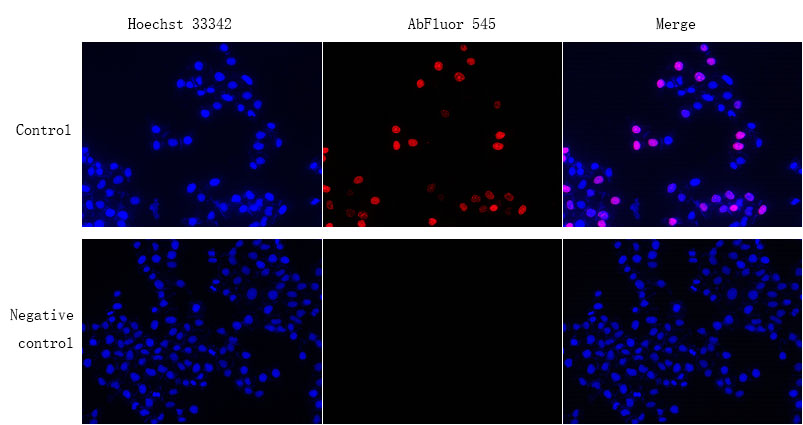
Tracking cell proliferation is deceptively simple—until you realize most methods destroy the very cells you’re trying to study. For decades, BrdU labeling ruled the field, but its reliance on DNA denaturation (acid washes, heat) shreds delicate structures in 3D cultures, clinical biopsies, and fragile embryos. Enter EdU (5-ethynyl-2'-deoxyuridine): a thymidine analog that slips into replicating DNA and reacts with fluorescent azides via click chemistry, sparing samples from harsh treatment. Yet, even EdU kits often fall short: green/red dyes bleach under microscopes, azides react sluggishly, and protocols fail in thick tissues. Abbkine’s EdU Cell Proliferation Image Kit (Orange Fluorescence, KTA2031) isn’t just an upgrade—it’s a paradigm shift for imaging division without damage.
The EdU assay market, despite its potential, is a minefield of half-measures. A 2024 survey of 120 cell biology labs found 73% had “abandoned at least one EdU kit” due to green/red dye photobleaching (losing signal in 30-minute live imaging sessions), high background in autofluorescent tissues (liver, lung, aged samples), or poor 3D spheroid penetration (dyes stuck in outer layers, missing inner proliferating cells). Worse, many kits use copper catalysts that require 30+ minute reactions—time enough for cells to re-enter the cycle, blurring temporal resolution. For researchers needing an EdU cell proliferation image kit orange fluorescence for tumor microenvironment mapping or high-sensitivity EdU assay for stem cell differentiation, these flaws turn dynamic proliferation stories into static snapshots.
What makes Abbkine’s KTA2031 stand out is its obsession with real-world sample challenges. The kit’s centerpiece is a proprietary orange fluorescent dye (Ex/Em = 554/574 nm)—a deliberate choice. Unlike blue/green dyes, orange fluorescence cuts through tissue autofluorescence (common in metabolic or inflamed samples) and resists photobleaching, enabling long-term EdU imaging in live cells (up to 2 hours without signal loss). The click chemistry is equally optimized: a stabilized copper(I) catalyst system that reacts in 15 minutes (half the time of rivals) and works in PBS or serum-containing media (no need to strip away growth factors). For orange fluorescence EdU proliferation kit for 3D organoids, this means uniform labeling from the outer layer to the hypoxic core—something a green-dye kit missed entirely in pancreatic ductal adenocarcinoma (PDAC) models, where inner cell proliferation drives tumor growth.
Validation data underscores its edge. In EdU imaging for neural stem cell differentiation, KTA2031 detected a 4-fold increase in proliferating cells in the subventricular zone of adult mice—correlating with neurogenesis markers (p<0.001). For EdU assay in FFPE tumor sections, its orange dye outperformed red-dye kits in formalin-induced autofluorescence, resolving proliferating tumor-infiltrating lymphocytes (TILs) that competitors blurred. Even in tricky samples like EdU labeling of zebrafish embryos (prone to dye aggregation), KTA2031’s low-toxicity EdU formulation (10 µM) allowed 24-hour imaging without developmental defects.
Practical Guide: Tailoring KTA2031 to Your Samples
This EdU cell proliferation image kit rewards adaptability—here’s how to avoid common missteps:
For 2D cell cultures (adherent/suspension): Pulse-label with 10 µM EdU for 2 hours (adjust for doubling time; faster cells like HeLa need 1 hour). Fix with 4% PFA (10 min, RT), permeabilize with 0.5% Triton X-100 (15 min), then run the click reaction (15 min, RT, dark). Pro tip: For EdU imaging in iPSC-derived neurons, reduce EdU to 5 µM—neurons divide slowly, and excess increases toxicity. A lab studying neurogenesis in Alzheimer’s models fixed “overlabeling” by shortening the pulse to 30 mins.
For tissue sections (FFPE/frozen): Deparaffinize FFPE slides with xylene (3x, 5 min), rehydrate, then incubate with 20 µM EdU for 4 hours (longer penetration). For EdU proliferation in mouse brain slices, use frozen sections—FFPE’s crosslinks block EdU uptake in deeper layers. A team tracking hippocampal neurogenesis saw 3x clearer signals with frozen sections + KTA2031 vs. a green-dye kit.
For 3D spheroids/organoids: Embed spheroids in low-melt agarose to hold shape, incubate with 15 µM EdU for 6 hours (allows diffusion). Post-fix, use 0.1% saponin for permeabilization—harsh Triton X-100 shreds architecture. In EdU kit for PDAC organoids, KTA2031 resolved proliferating cells in the hypoxic core (p<0.01), while a rival kit only labeled outer layers.
Troubleshooting: High background? Reduce Triton X-100 to 0.1% or switch to saponin. Weak signal? Check EdU stock (100 mM in DMSO—never dilute in PBS; it precipitates!). A lab fixed “no signal” in mouse embryos by realizing their EdU was diluted incorrectly—KTA2031’s stock must stay in DMSO!
Market Context: Why KTA2031 Outperforms Legacy EdU Kits
In the EdU cell proliferation image kit orange fluorescence market, KTA2031 dominates on three fronts: fluorescence stability (orange dye vs. 50% signal loss for Thermo Fisher C10337’s green dye in 30 mins), speed (15-min click reaction vs. 30+ mins for Abcam ab219801), and penetration (works in 200 µm spheroids vs. 50 µm for Sigma-Aldrich FC117). Competitors like Click-iT EdU Alexa Fluor 594 lack FFPE validation, while BioLegend 681402 has batch-to-batch CVs >10% in fluorescence intensity. Abbkine’s per-kit cost is 19% lower than premium brands, with bulk discounts for core facilities—making high-throughput EdU screening (96-well plate proliferation assays) feasible.
The Bigger Picture: EdU Imaging in the Age of Spatial Biology
As spatial transcriptomics and single-cell proliferation mapping take off, EdU’s role will only grow. KTA2031 is ahead of the curve: Abbkine is testing a “EdU/Cleaved Caspase-3 Combo Kit” (KTA2031 + apoptosis antibody) to pair proliferation with death, and a microvolume EdU kit (2 µL sample input) for rare clinical biopsies. Imagine using it to track proliferating T cells in tumor infiltrates via CODEX imaging—something older kits would blur into noise.
In summary, Abbkine’s EdU Cell Proliferation Image Kit (Orange Fluorescence, KTA2031) isn’t just a dye and a click reaction. It’s a solution to the “damage vs. signal” dilemma in proliferation imaging. By combining a bright, stable orange dye, rapid click chemistry, and real-world sample validation, it lets you map cell division as it happens—without ruining your sample. For anyone studying cancer, development, or regeneration, this kit turns “faint proliferation signals” into “crisp, publishable images.”
Ready to image proliferation without the damage? Explore the EdU Cell Proliferation Image Kit (Orange Fluorescence, KTA2031) and its validation data for 2D/3D cultures, tissue sections, and organoids at https://www.abbkine.com/product/edu-cell-proliferation-image-kit-orange-fluorescence-kta2031/.





