




CheKine™ Micro GSSG Assay Kit: Why the GSH/GSSG Ratio Demands True GSSG Specificity
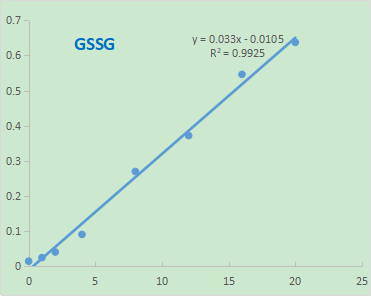
GSSG: The True Measure of Cellular Redox Stress
Glutathione exists in two forms: reduced (GSH) and oxidized (GSSG). While total glutathione tells you how much is there, the GSH/GSSG ratio tells you the real story of cellular redox status[reference:0][reference:1]. GSSG is formed by the oxidation of two GSH molecules and is reduced back to GSH by glutathione reductase (GR)[reference:2]. When oxidative stress tips the balance, GSSG accumulates—making its accurate quantification essential for understanding everything from cancer progression to neurodegeneration[reference:3].
But here's the catch: most GSSG assays can't fully eliminate GSH contamination, leading to inflated GSSG numbers and misleading GSH/GSSG ratios[reference:4].
Why Abbkine KTB1610 Leads the Field
| Feature | Abbkine KTB1610 | Traditional GSSG Assays |
|---|---|---|
| Detection Principle | DTNB-based colorimetry (412 nm) after GSH removal[reference:5] | Often measure total glutathione without true GSH elimination |
| Sample Volume | 5–10 µL (10x less than standard kits)[reference:6] | 100+ µL |
| Detection Range | 1–20 µM[reference:7] | Narrower range |
| Limit of Detection | 1 µM[reference:8] | Often >5 µM |
| GSH Removal | 99% GSH removal via inhibitor step[reference:9] | Partial or absent |
| Sample Types | Serum, plasma, animal/plant tissues, blood cells, cells, bacteria[reference:10] | Limited compatibility |
| Storage | 12 months at -20°C, protected from light[reference:11] | Shorter shelf life |
The DTNB-Based Chemistry Advantage
The principle is elegant and specific: reduced glutathione reacts with 5,5-dithiobis(2-nitrobenzoic acid) (DTNB) to generate 2-nitro-5-mercaptobenzoic acid, which has maximum absorbance at 412 nm[reference:12]. But the critical innovation is the GSH removal step—an inhibitor (2-vinylpyridine) that eliminates endogenous reduced glutathione before GSSG is measured[reference:13]. Then, GR reduces GSSG to GSH, and the resulting thiol groups react with DTNB to produce the yellow chromophore[reference:14]. The result? True GSSG quantification, not total glutathione masquerading as GSSG.
Why the GSH/GSSG Ratio Matters
Determination of intracellular GSH and GSSG content and the GSH/GSSG ratio reflects the redox state of cells and is one of the main indicators of the glutathione redox cycle[reference:15]. This ratio is critical for:
- Cancer research — tumor microenvironments are oxidative hotspots; GSSG levels rise with chemotherapy-induced stress[reference:16]
- Neurodegenerative disease — GSH/GSSG imbalance in Alzheimer's and Parkinson's
- Aging research — oxidative stress accumulation over time
- Drug toxicity screening — assessing redox perturbations
Validated in Real-World Samples
The kit's buffer includes EDTA (to chelate metals) and BSA (to block non-specific binding), ensuring reliable performance even in challenging samples like hemolyzed blood or lipemic serum[reference:17]. The linear range (1–20 µM) covers physiological to pathological levels[reference:18][reference:19].
Critical Sample Handling Tips
- Before formal testing, select 2-3 samples with large expected differences for pre-experiment[reference:20]
- The Inhibitor is toxic and has a pungent odor—experiment in a fume hood[reference:21]
- Store all components at specified temperatures: Extraction Buffer at 4°C, Inhibitor at -20°C[reference:22]
- Run samples and standards in duplicate for optimal precision
The Bottom Line
For researchers who need true GSSG quantification—not total glutathione with contamination—KTB1610 delivers the specificity, sensitivity, and microscale efficiency that modern redox biology demands. The 99% GSH removal ensures your GSH/GSSG ratio data reflects biological reality, not technical artifact.
👉 Quantify true GSSG with confidence. View Product





