




Your Fruit-Softening & Fungal Fermentation Paper Lives or Dies by One Enzyme Family—Here's Why the Hand-Mixed DNS Method Is Burning Your Replicates (and How KTB1581 Fixes It Permanently)
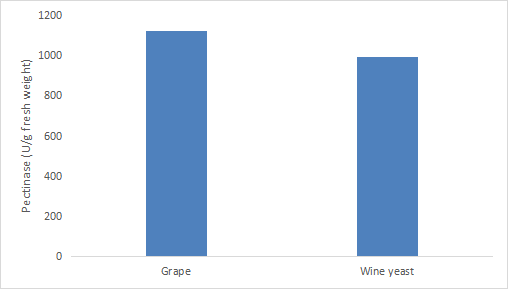
Pectinase isn't one enzyme—it's an entire degradative arsenal: protopectinase, pectinesterase, polygalacturonase, and pectin lyase, all conspiring to dismantle the pectin-rich middle lamella that glues plant cells together. That's exactly why it matters everywhere that plants get processed: fruit ripening and post-harvest softening, fungal pathogenesis of cell walls, industrial juice/wine clarification, textile bio-degumming, and even environmental bioremediation of plant-mass waste. The cruel irony? Everyone knows pectinase activity is the functional readout that proves their treatment works—but the actual quantification step is stuck in a era of hand-weighed DNS powder, boiling water baths, and cuvette rituals that produce a different shade of brown every Tuesday.
The Chemistry Is Rock-Solid—Your Reagents Are the Problem
The underlying principle is textbook and battle-tested: pectinase hydrolyzes pectin → liberates galacturonic acid (GalA), and those freshly exposed reducing aldehyde terminals react with 3,5-dinitrosalicylic acid (DNS / DNSA) to form a reddish-brown chromophore you read cleanly at 540 nm. More enzyme activity = more GalA = deeper color = higher A₅₄₀. The science isn't debated. What is debated (by frustrated reviewers) is whether your 540 nm number belongs to enzymatic cleavage or to sloppy extraction pH / inconsistent DNS freshness / boiled-sample handling variance.
The most common failures are entirely preventable:
• Homemade DNS that crystallizes or slowly oxidizes → your standard curve slope drifts batch-to-batch.
• Pectin substrate not properly prepared → you're measuring "whatever solubilized today" instead of true catalytic rate.
• Boiling/quenching timing inconsistencies → the red-brown develops differently for well 1 vs. well 12.
• No supplied GalA standard curve → you're back-calculating via extinction coefficients that assume ideal conditions your crude extract is not.
Enter CheKine™ Micro Pectinase Activity Assay Kit — KTB1581 (Abbkine)
This kit packages the DNS colorimetric principle into a microplate-ready, component-controlled system so your pectinase readout behaves like real data instead of a fruit-ripening Rorschach test.
Detection Principle (what's actually happening in your well):
Pectinase in your sample → hydrolyzes the pectin substrate supplied in the system → releases galacturonic acid with free reducing aldehyde groups → aldehydes reduce DNS reagent (Reagent II/III system) → forms a reddish-brown compound with a characteristic absorption peak at 540 nm → you interpolate from the supplied GalA Standard curve to compute activity.
Parameter KTB1581 Specification
Assay type Colorimetric — DNS (3,5-dinitrosalicylic acid) method
Readout 540 nm (visible spectrophotometer or 96-well plate reader)
Sample types Plant tissues / fruits, bacteria, fungi, cell culture supernatants & other liquid samples
Key components Extraction Buffer · Reagent I (substrate/assay buffer environment) · Reagent II (DNS reagent) · Reagent III (termination/development) · Standard (galacturonic acid)
Format 48 T/24 S and 96 T/48 S micro-scale configurations
Storage / Ship 4°C, protected from light, valid ~6 months from receipt; ships blue-ice gel pack
Enzyme definition context One activity unit typically defined as the amount of enzyme producing 1 mg galacturonic acid per hour under the specified pH/temperature conditions
Status For research use only; not for clinical/diagnostic use
The competitive edge is what you'd expect from a purpose-built kit vs. "weigh 10 g DNS + 200 mL water + phenol…": the Reagent I/II/III system is pre-balanced so the DNS reduction, boiling time, and color development stay locked across every plate you run, and the supplied GalA Standard means you're interpolating from a kit-calibrated curve, not guessing from a textbook ε at 540 nm.
What Actually Changes in Your Lab When You Stop DIY-ing the DNS
① Your fruit-ripening and post-harvest panels stop looking like shotgun scatter.
When the DNS reagent concentration, pH, and development time are baked into Reagent II/III, your A₅₄₀ per minute of incubation maps to GalA production rate instead of "who turned off the boiling water bath 30 seconds early." That's the difference between a defensible bar plot and a revise-and-resubmit asking you to validate enzyme specificity more rigorously.
② You save irreplaceable material.
The micro format (48T/96T) means you can work from tiny fruit punches, localized tissue zones (exocarp vs. mesocarp), or microliter fungal supernatants without sacrificing a whole apple/pear/tomato for every timepoint. For breeding trials with limited tagged lines? That math matters.
③ Fungal/industrial strain screens become high-throughput-ready.
If you're comparing Aspergillus or Penicillium isolates for pectin-degrading capacity (juice cloud-loss prediction, pomace valorization, biofuel pretreatment screening), the plate format lets you run condition × isolate grids in one afternoon instead of one cuvette per hour.
The Bench-Level SOP (Fast, Repeatable, No "Artisanal" Variables)
- Extract: Homogenize weighed plant/fungal/material in the provided Extraction Buffer (keep on ice; centrifuge; keep supernatant cold).
- React: Mix supernatant with Reagent I (substrate environment) → incubate at the prescribed temperature/time so pectinase generates GalA.
- Develop: Add Reagent II (DNS) → boil (or per manual's boiling step) to drive the reductive coloring → immediately quench/terminate with Reagent III (or ice bath, per protocol) → centrifuge if precipitate is present.
- Read: Transfer clear supernatant to a 96-well plate or cuvette, read A₅₄₀, interpolate from the GalA Standard curve, calculate activity normalized to g fresh weight, mL supernatant, or mg protein (BCA) per your experimental design.
Pro rules from the kit's own caution list:
• 🧊 Fresh > thaw, but if you must bank: -80°C, ≤ a few weeks; thaw on ice, finish measurement within ~4 h at room temp.
• 🔒 Never mix components across different lots or vendors. The DNS chemistry is exquisitely sensitive to reagent concentration and pH balance—your standard curve is lot-calibrated.
• 🌑 Protect from light during storage/handling where noted; 4°C + sealed.
Where KTB1581 Carries Real Papers (and Industrial R&D Logs)
Research Context Why Pectinase + This Kit Format Is the Right Call
Fruit ripening & post-harvest physiology (ethylene mutants, cold-storage softening, ME/PG activity zoning) Micro-scale means you can punch exocarp vs. mesocarp vs. core from the same fruit and still have replicates
Fungal/oenological strain screening (mold isolates, juice/wine clarification, pomace valorization) Culture supernatants read directly; plate format scales to 96 isolates in one run
Pathogenesis & host-cell-wall degradation (necrotrophic fungi, soft-rot bacteria) Temporal PG/protopectinase burst is the virulence timeline—DNS 540 nm gives you the kinetic slope
Biomass pretreatment R&D (pectin-rich agri-waste → fermentable sugars) Process-liquor pectinase tracking → optimize steam/acid/enzyme pre-treatment without over-consuming sample
Plant tissue culture & fruit-setting studies Localized pectin remodeling during abscission-zone softening → micro-sampling is the only way to not destroy the zone
A Clean Methods Paragraph You Can Drop In
Pectinase activity was determined using a DNS-based colorimetric microplate assay (CheKine™ Micro Pectinase Activity Assay Kit, KTB1581; Abbkine). Samples were extracted in the provided Extraction Buffer on ice, and pectinase-catalyzed release of galacturonic acid was allowed to proceed under the kit's controlled temperature/time conditions. Released reducing sugar-aldehydes were reacted with DNS reagent (Reagent II), terminated/developed per protocol, and absorbance was measured at 540 nm. Activities were interpolated from the supplied galacturonic acid standard curve and expressed as mg GalA·h⁻¹·g⁻¹ FW (or per mg protein as indicated).
Explore the CheKine™ Micro Pectinase Activity Assay Kit (KTB1581) full specs & ordering options here:
🔗 https://www.abbkine.com/product/chekine-mirco-pectinase-activity-assay-kit-ktb1581/
(For research use only. Not for human or clinical diagnostic use. Handle boiling steps and reagents per the manual's safety notes; protect components from light; do not intermix lot numbers.)





