




The Skinny Hormone from Fat: Why Measuring Human Adiponectin (ADP) Correctly Is the Metabolic Insight Your Current Assay Might Be Missing
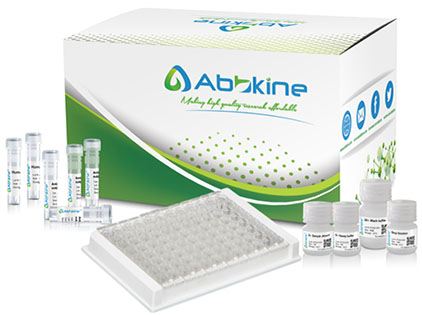
Adiponectin (ADP/ACRP30/AdipoQ) is the rarest kind of hormone: one whose absence—not excess—is the problem. Produced almost exclusively by mature adipocytes, circulating at strikingly high concentrations (3–30 µg/mL in healthy adults, sometimes higher), and assembling into trimers, hexamers, and high-molecular-weight (HMW) multimers, adiponectin is the metabolic world's most counterintuitive success story: the more healthy subcutaneous fat you have (up to a point), the more of it you make—and the better your insulin sensitivity, endothelial function, and inflammatory tone. But in obesity, insulin resistance, visceral adiposity, and NAFLD, circulating ADP paradoxically drops, and it's that drop—more than BMI or waist circumference alone—that tracks with the real risk: type 2 diabetes, cardiovascular disease, non-alcoholic fatty liver, PCOS, and the long-term complications of the metabolic syndrome. The Human Adiponectin (ADP) ELISA Kit (KTE60939) from Abbkine is purpose-built to quantify this critical adipokine the right way: a two-site sandwich ELISA designed to capture total adiponectin across its oligomeric forms, giving you a calibrated, plate-readable concentration (µg/mL or ng/mL) from serum, plasma, and other biological fluids—so your metabolic data rests on a number, not a rumor.
ADP 101: A 30-kDa Trimer That Becomes a 360+ kDa Complex — And Why That Matters for ELISA Design
Human adiponectin (UniProt: Q15848, gene ADIPOQ/APM1/ACDC, 244 aa, ~30 kDa monomer) is secreted as a collagen-like homotrimer (globular C1q-like domains at the C-terminus, collagenous stalk at the N-terminus). Those trimers then assemble into hexamers and 12–18-mer HMW complexes stabilized by disulfide bonding and collagen-domain bundling. The three classic receptors (AdipoR1, AdipoR2, T-cadherin) respond differently to different oligomeric forms—HMW adiponectin in particular is considered the most bioactive fraction for insulin sensitization and endothelial protection—which is why clinical papers often report both total ADP and the HMW/total ADP ratio.
The practical implication for your bench? Sample handling is half the assay:
• ADP is sensitive to proteolysis and to conditions that break oligomers or cause aggregation/precipitation that can artificially raise or lower your reading.
• Because it circulates at µg/mL (orders of magnitude higher than TNF/IL-6/leptin-class cytokines), the assay needs a dynamic range and antibody pair that stay linear in that upper bracket without saturating.
• Repeated freeze–thaw and warm handling can degrade the collagenous domain epitopes, so cold-chain discipline isn't optional.
Why a Dedicated Sandwich ELISA for ADP — And Why "Any Adipokine Panel" Isn't the Same
You can measure adiponectin indirectly via a multiplex bead assay or a semi-quantitative Western of serum (HMW band ~540 kDa is striking if you run a gradient gel), but neither is ideal for routine, reproducible quantification:
Approach Strength Weakness
Gradient gel + densitometry (HMW focus) Beautiful for oligomeric profiling Low throughput, semi-quantitative, labor-heavy
Multiplex bead Fast, multi-analyte Cross-reactivity/bead-allocation limits; less ideal for µg/mL-range dynamic tuning
Sandwich ELISA (KTE60939 type) Gold standard for total ADP, quantitative, scalable, clear units Needs good Ab pair + clean prep
The KTE60939 sandwich ELISA solves the core requirement: two independent anti-ADP epitopes (pre-coated capture + biotinylated detection) → Streptavidin–HRP → TMB → 450 nm → interpolate from a recombinant human adiponectin standard curve. This architecture is what lets you say "patient serum ADP = 6.8 µg/mL" with a CV you can defend in a table.
Assay Principle: KTE60939 — Total Adiponectin, Plate-Readable
- A microplate is pre-coated with a capture antibody specific for human adiponectin (ADP/ACRP30).
- Standards and samples (serum, plasma, tissue homogenates, cell culture supernatants, other biological fluids) are added; ADP present—across its detectable oligomeric forms—binds.
- After washing, a biotinylated anti-ADP detection antibody (different epitope) forms the sandwich complex.
- Streptavidin–HRP binds biotin → TMB → color ∝ bound ADP.
- Stop solution → yellow → read Absorbance at 450 nm → interpolate ADP concentration from the standard curve.
Typical assay duration: ~3–5 hours, easily slotted into a morning–afternoon. Sample types emphasized across this kit family: serum, plasma, tissue homogenates, cell culture supernatants, other biological fluids.
Performance Snapshot (the numbers that go in your Methods)
Parameter Typical KTE60939-class spec
Target Human Adiponectin (ADP/ACRP30, UniProt Q15848)
Format 96-well sandwich ELISA, pre-coated capture
Detection Biotin-Ab → Streptavidin–HRP → TMB, 450 nm read
Dynamic Range Often extends into the low–mid µg/mL bracket (e.g., ~0.156–10 ng/mL in neat-well terms; many labs dilute serum 1:100–1:500 into the working range — follow the manual's prescribed dilution)
Sensitivity / LOD ≤ ~0.1–0.156 ng/mL (kit-chemistry level)
Intra-Assay CV < 10% (often ≤ ~5–6%)
Inter-Assay CV < 10–12%
Specificity No significant cross-reactivity with other abundant plasma proteins/adipokines
Samples Serum, plasma (EDTA/citrate preferred), tissue homogenates, culture supernatants
(Always confirm exact range, dilution scheme, and lot-specific recovery on the shipped CoA/datasheet.)
Where Quantifying ADP Actually Drives the Story
- Obesity ↔ Insulin Resistance ↔ T2DM Research
Low serum adiponectin is one of the earliest, most reproducible metabolic biomarkers of impending insulin resistance, often dropping before fasting glucose or HbA1c cross thresholds. A sandwich ELISA lets you run longitudinal cohorts (diet, bariatric surgery, GLP-1 trials, exercise interventions) and correlate ADP changes with HOMA-IR, lipids, liver enzymes, and inflammatory panels on the same subject set.
- NAFLD / MASLD & Hepatic Fat Metabolism
Liver fat accumulation inversely tracks circulating ADP; moreover, adiponectin's AMPK-activating and anti-inflammatory actions are hepatoprotective. Tissue-level work (liver homogenates/biopsies) benefits from a calibrated readout rather than a "band vs. housekeeping" guess.
- Cardiovascular & Endothelial Studies
Epidemiologically, ADP is one of the strongest inverse predictors of MI/stroke risk after age and smoking. Measuring it alongside hs-CRP, lipids, endothelial markers (VCAM-1, ICAM-1, E-selectin) lets you build multi-variable models where ADP isn't just "another adipokine" but a mechanistic anchor.
- PCOS, Reproductive Endocrinology & Pregnancy Metabolism
Women with PCOS frequently show low adiponectin, high free testosterone, and insulin resistance; tracking ADP across menstrual-phase-corrected samples or ovulation-induction protocols gives you a metabolic severity index that BMI alone can't touch.
- Adipocyte Differentiation & Secretion Assays (in vitro)
If you're running 3T3-L1 or human primary preadipocyte → adipocyte conversions, or testing TNF-α / IL-6 / dexamethasone / thiazolidinediones on adipokine secretion, ADP in the conditioned medium is a direct readout of mature adipocyte function—best quantified as ng/mL secreted per µg cellular protein or per well.
ADP-Specific Sample Prep Rules (Because It Circulates at µg/mL, Not ng/mL)
• EDTA or citrate plasma preferred over serum for some comparative studies (less platelet-release artifact risk), but serum works well if processed cold/fast.
• No repeated freeze–thaw — aliquot at -80 °C; warm reagents to RT before opening; keep samples on ice until dilution.
• If you care about HMW fraction separately, the gold standard is still a non-denaturing gradient gel + Western or ELISA after fractionation — but for most clinical/experimental "total ADP" questions, a well-run sandwich ELISA of properly handled serum is the right workhorse.
• Dilute into kit buffer, not plain water, to keep ionic strength and any carrier protein stable; always run the full standard curve on every plate.
The Bottom Line
Adiponectin is the fat-cell hormone that tells your liver, muscles, and endothelium to chill out—stay insulin-sensitive, stay anti-inflammatory, stay protected. When it drops, the whole metabolic axis tilts toward disease. Measuring it demands more respect than a random "adipokine" bead assay or a gel band: you need a calibrated, two-antibody sandwich ELISA that sees total ADP across its oligomeric forms, handles serum/plasma cleanly, and gives you µg/mL with a proper CV. The Human Adiponectin (ADP) ELISA Kit — KTE60939 from Abbkine is built for exactly that job: pre-coated capture → biotin detection → HRP–TMB → 450 nm → ADP concentration you can put in a table and stand behind.
Product Reference: KTE60939 – Human Adiponectin (ADP) ELISA Kit
Learn more and order: https://www.abbkine.com/product/human-adiponectin-adp-elisa-kit-kte60939/
(For Research Use Only; not for diagnostic procedures in humans.)





