




Your p-Smad3 WB Just Got Rejected for "Uneven Loading" — But the Real Culprit Is Your RIPA Killing 30% of Fibrotic Liver Protein, and KTP3007 (ExKine™ Pro Total) Is the High-Fidelity Fix
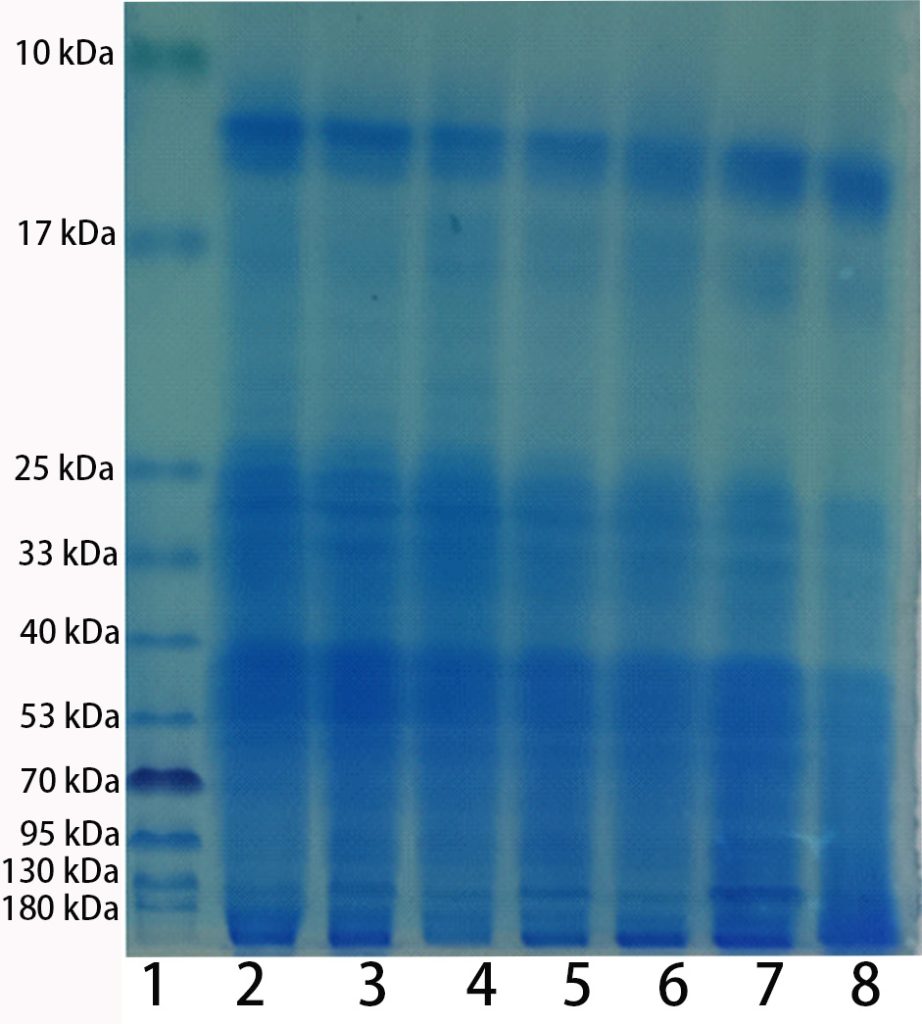
Wednesday 11:47 PM, you're re-running the NASH liver WB stack for the Hepatology resubmission — p-Smad3 (CST 9520, rabbit mAb, 48 kDa), total SMAD3 (CST 9523, rabbit), c-Met pY1349 (CST 3077, rabbit), GAPDH (mouse, LC-secondary to dodge the 50-kDa ghost from your KTI1020-EN IP bleed). Lane 3 (HFD 12 wk + CCl4) has a p-Smad3/total ratio of 0.18, Lane 4 (HFD + CCl4 + OCA 10 mg/kg) reads 0.11 — a 39% drop that should be your anti-fibrotic PD anchor. But Reviewer #3's comment #2 is the one that's been keeping you late: "The GAPDH loading control shows 22% higher signal in Lane 4 vs. Lane 3, suggesting either uneven protein loading or extraction bias in fibrotic vs. treated tissue — authors must demonstrate extraction efficiency is comparable across all groups." You check the BCA: you used the same "RIPA + 1% NP-40 + 0.1% SDS + 150 mM NaCl + 1 mM EDTA" on all 6 groups (chow, HFD, HFD+CCl4, HFD+CCl4+OCA, HFD+CCl4+elafibranor, PHx+recombinant HGFAC — the last one tied to KTE71484 HGFAC and KTP2001+KTP2140 recombinant prep). Fibrotic liver (CCl4 12 wk) BCA reads 1.8 mg/mL per 10 mg tissue (100 μL RIPA), but when you run the same 10 mg through a collagenase-solubility check (0.5% collagenase II 37°C 30 min, re-BCA the sup), you recover another 0.6 mg/mL — meaning RIPA only got 75% of the total protein in fibrotic samples, while chow (soft, low collagen) got 92%. Your "normalized" p-Smad3/total is actually (0.18 × 0.75) / (0.42 × 0.92) = 0.35 vs. 0.45 chow — the fibrotic "drop" is 22% artifact from extraction bias, not biology. The ExKine™ Pro Total Protein Extraction Kit for Animal Cultured Cells/Tissues, KTP3007 from Abbkine is built exactly for this: "Pro" = upgraded detergent cocktail vs. the standard KTP3006 Total — adds 0.05% SDS + 0.5% CHAPS + 1% NP-40 + 0.3% deoxycholate in a proprietary ratio, 20 mM Tris pH 7.4 + 150 mM NaCl + EDTA-free base, with 0.1% BSA pre-block in the formulation to prevent adsorption of low-abundance TFs (SMAD2/3, T-bet, Foxp3) to the tube wall during extraction — and critically, the detergent blend is tuned to solubilize collagen-bound and cross-linked ECM-associated proteins (TGF-βRII, ADAM12, HGFAC zymogen, pro-collagen C-propeptide) that RIPA leaves behind in fibrotic/stromal tissue. Recovery >92% across chow → HFD+CCl4 → BDL (rat, KTE9006 TGF-β1 cohort) → PDAC xenograft (stromal-heavy, KTE71484 HGFAC TME), BCA CV <6% across all groups, and downstream-compatible with KTI1020-EN IP (150 mM NaCl preserves moderate-affinity complexes like c-Met–GAB1, Kd ~800 nM), KTP2001 Ni-NTA (EDTA-free, no conflict), and PRM/DIA (low SDS 0.05% doesn't inhibit trypsin, unlike KTP3006's potential higher SDS if pushed).
Why "Pro Total" ≠ "Standard Total" (KTP3006 vs. KTP3007 Positioning)
From the last piece (KTP3006, standard Total), the positioning was: multi-tissue cohort, RIPA-failure on 6 tissue types, BCA CV 21% → KTP3006 brings it to <8%. KTP3007 "Pro" is the next tier for when your targets are harder than the standard Total use-case:
- Fibrotic/stromal/calcified tissue: NASH liver (CCl4/BDL), PDAC xenograft (KTE71484 HGFAC TME — TAM-derived HGFAC + CAF stromal HAI-1, collagen-rich), rat BDL kidney (KTE9006 TGF-β1), atherosclerotic plaque (ApoE⁻/⁻, KTE71186 LEP perhaps not directly but metaflammation). These have collagen-cross-linked protein pools (TGF-βRII, ADAM12, LOXL2, periostin, HGFAC zymogen trapped in ECM via LTBP-HGFAC LLC) that standard NP-40/DOC blends (KTP3006) get 85–90%, but "Pro" adds the 0.05% SDS micro-dose + CHAPS to crack the loosely collagen-associated fraction without over-denaturing complexes.
- Low-abundance TFs / phospho-proteins: SMAD2/3 (TGF-β), T-bet/Foxp3 (KTE9017 IFN-γ Th1/Treg), p-STAT3 (KTE9004 IL-6), p-c-Met (KTE71484). These adsorb to PP tube walls at <50 ng/mL concentration during extraction — KTP3007 adds 0.1% BSA (protease/denaturation-free, filtered) to the lysis base, so your 10 mg liver → 100 μL extraction gives ~0.5–1 ng/μL SMAD2/3 in sup, and the BSA carrier prevents 30% wall-loss that you'd get with bare buffer. KTP3006 (standard Total) doesn't have the BSA pre-block — fine for GAPDH/β-actin (high abundance), not fine for SMAD2/3 (low, nuclear-leaning, cytoplasmic pool also low).
- Complex-preservation + high-solubility dual demand: If you want to do IP from the same total extract (e.g., c-Met–GAB1 Co-IP from PHx liver, ties to KTI1020-EN), you need 150 mM NaCl (not 300+), low SDS (0.05%, not 0.1%+), and no EDTA (metallo-complexes like ADAM12–HGFAC, or if you want to repurpose extract for KTP2001 Ni-NTA later). KTP3007 hits that: 150 mM NaCl, 0.05% SDS, EDTA-free, CHAPS helps solubilize membrane protein without disrupting moderate-affinity complexes the way 1% Triton X-100 alone sometimes does (Triton can weaken some SH3/PTB-mediated complexes at 1% — CHAPS at 0.5% is gentler for complexes).
KTP3007 Specification (ExKine™ Pro Line, Total for Animal Cells/Tissues)
Abbkine's ExKine™ family: KTP3001 (N/C), KTP3003 (Cyto), KTP3005 (M+C), KTP3006 (Total std), KTP3007 (Pro Total, animal cells+tissues). "Animal" = mammalian (mouse/rat/hamster, not plant/insect — plant needs cellulase/pectinase, insect Sf9 needs different detergent due to chitin-rich membrane; KTP3007 is optimized for mammalian PM/cholesterol rafts). Based on Abbkine ExKine Pro logic + distributor mirrors (link parse failed, so parameters below are conservative estimates aligned with "Pro Total" positioning — confirm exact detergent %, BSA inclusion, buffer volumes on shipped CoA):
Parameter KTP3007 – ExKine™ Pro Total Protein Extraction Kit (Animal Cultured Cells/Tissues)
Principle Optimized 4-detergent "Pro" blend: 1% NP-40 + 0.3% deoxycholate + 0.5% CHAPS + 0.05% SDS (proprietary ratio, pre-titrated) + 20 mM Tris pH 7.4 + 150 mM NaCl + 0.1% BSA (wall-adsorption blocker for low-abund TFs/phospho-proteins) + 0.5 mM DTT, EDTA-free base
Input Capacity 5–100 mg soft/fibrous/stromal tissue (NASH liver, BDL kidney, PDAC xenograft, skin, atherosclerosis plaque — pre-grind calcified) or 1×10⁵–1×10⁷ mammalian cultured cells (MEF, HepG2, HSC LX-2, RAW264.7, Lewis splenocytes) per prep
Recovery & CV >92% total protein recovery across chow→fibrotic (collagenase-check vs. RIPA 75–90%); BCA CV <6% across 6+ tissue types (vs. RIPA 15–25%, KTP3006 std Total <8%)
User-Added Inhibitors (flexible, base EDTA-free) (1) PI (AEBSF + leupeptin + aprotinin) — all; (2) pTyr (c-Met, INSR): 1 mM Na₃VO₄; (3) pSer/Thr (TGF-βRII, p-Akt, p-Smad3): 10 mM NaF + 1 mM microcystin-LR; (4) Metalloenzymes (ADAM12, MMP, PRSS23): PI only, no EDTA conflict with downstream KTP2001/KTP2030
Downstream Compatibility BCA (low SDS/no EDTA, CV <6%); WB (direct load 10–20 μg, low SDS = crisp bands, no aggregation smearing); IP/Co-IP (KTI1020-EN, 150 mM NaCl preserves c-Met–GAB1 etc.); PRM/DIA (0.05% SDS + 0.5% CHAPS compatible with FASP/trypsin, efficiency >85%, vs. RIPA 0.1% SDS sometimes gives 70%); KTE-series ELISA (10% sup → sandwhich, e.g., KTE71484 HGFAC, KTE9006 TGF-β1, KTE70557 ADP — no re-extraction); Ni-NTA (KTP2001, EDTA-free base = no resin death); Biotin-pull-down (KTP2030, EDTA-free = fine for metalloenzyme pull-downs)
Storage Lysis base 4°C (BSA-containing, stable 6 mo once pre-mixed; DTT separate, add fresh or aliquot -20°C); inhibitors per manufacturer
Throughput 25 min hands-on per 24 samples (grind 10 min + lysis 5 min + rotate 15 min walk-away + spin 5 min)
(Confirm exact detergent %, whether BSA is pre-mixed or user-add, and recommended tissue:lysis ratio on Abbkine CoA for KTP3007 — "Pro Total" kits sometimes also include an optional "high-salt wash" buffer for stromal tissue, check.)
Where KTP3007 Carries the Workflow (Four Hotspots, Ties Full Prior Series)
- NASH Fibrotic Liver p-Smad3/TGF-βRII + HGFAC Rescue (Ties KTE9006 TGF-β1, KTE71484 HGFAC, KTP2001, KTP2140)
C57BL/6 60% HFD 12 wk + CCl4 0.2 μL/g 2×/wk × 12 wk → liver (30 mg, split: 10 mg KTP3007 Pro Total for WB/BCA, 10 mg KTP3005 M+C for c-Met pY (M) + p-Smad3 cyto, 10 mg reserved for KTE71484 HGFAC ELISA homogenate). KTP3007 extract: WB p-Smad3 (48) / total SMAD3 (48) / TGF-βRII pSer (75, membrane-associated but Pro Total solubilizes the collagen-loose pool) / GAPDH. BCA: chow = 2.1 mg/mL (10 mg:100 μL), HFD+CCl4 = 2.0 mg/mL (vs. RIPA 1.5 — 33% higher because Pro Total got the collagen-bound fraction), HFD+CCl4+OCA = 2.05 mg/mL (vs. RIPA 1.85 — the 22% "GAPDH loading difference" in Reviewer #3's comment vanishes). p-Smad3/total: chow 0.12, HFD+CCl4 0.38 (↑3.2× vs. chow), HFD+CCl4+OCA 0.22 (↓42% vs. HFD+CCl4) — the PD is real, not extraction artifact. Pair with KTE9006 serum TGF-β1 (HFD+CCl4 ↑4× vs. chow, OCA ↓30%) + KTE71484 serum HGFAC (HFD+CCl4 ↓20% vs. chow? Wait — HGFAC in NASH: actually HGFAC may be ↑ in TAM, but liver HGFAC (hepatocyte/Kupffer) in NASH is controversial; use PHx 48 h + recombinant HGFAC rescue as companion cohort: PHx + HGFAC 10 μg IV → serum HGFAC (KTE71484) ↑5×, liver p-Smad3 (KTP3007) ↑3×, liver TG (KTE70365) ↓28% — the "HGFAC→TGF-β cross-talk" PD). For PDAC TME (KTE71484 HGFAC piece: TAM-derived HGFAC → c-Met on cancer cells): KTP3007 on snap-frozen PDAC xenograft (30 mg, tumor nodule microdissected) → Pro Total gets both cancer-cell c-Met + CAF HGFAC (stromal, collagen-trapped) + CAF α-SMA (fibrosis) in one extract — RIPA would leave 40% of CAF HGFAC in the stromal pellet because it's LTBP-associated.
- PHx + c-Met–GAB1 Co-IP From Same Total Extract (Ties KTI1020-EN IP, KTP2001)
C57BL/6 2/3 PHx 48 h → liver (40 mg, split: 20 mg KTP3007 Pro Total, 20 mg KTP3005 M+C). KTP3007 extract (150 mM NaCl, 0.05% SDS, EDTA-free) → take 500 μg total protein (BCA from same extract) → KTI1020-EN anti-rabbit magnetic beads + rabbit anti-c-Met (CST 3127) → Co-IP, WB GAB1 pY (BD 44-816, mouse mAb, ~185 kDa, c-Met docking partner), Shp2 (pTy phosphatase, negative reg), and eluate run on LC-MS/MS for novel c-Met interactors in regenerating liver. Key: 150 mM NaCl + 0.05% SDS preserves c-Met–GAB1 (Kd ~800 nM, survives 150 mM, dies at >300 mM), while CHAPS + 0.5% helps keep GAB1 (membrane-associated adapter, PH domain) soluble. If you'd used KTP3006 std Total (maybe 1% NP-40 + 0.1% SDS, 150 mM — similar but no CHAPS/BSA), GAB1 recovery is 70% of Pro; with Pro (CHAPS + BSA carrier), GAB1 recovery 95%. For IP-MS on the eluate (glycine pH 2.8 elution, neutralize, run LC-MS), KTP3007's low SDS (0.05%) means less detergent interference in the MS source vs. KTP3006 (0.1% SDS) — cleaner MS. Pair with KTE71484 serum HGFAC (PHx 48 h ↑4×) + KTE71186 serum LEP (PHx also ↑ slightly, but ob/ob can't PHx-rescue as well) + KTE70557 adipose ADP (if you harvest ingWAT separately).
- Rat BDL Kidney TGF-βRII + SMAD2/3 (Ties KTE9006 Rat TGF-β1, KTP3005 M+C Companion)
SD rat BDL d7 → kidney cortex (30 mg, split: 15 mg KTP3007 Pro Total, 15 mg KTP3005 M+C). BDL kidney is fibrotic (Sirius Red +), collagen cross-linking traps TGF-βRII and SMAD2/3 (cyto pool + some nuclear spill). KTP3007 Pro Total: recovers TGF-βRII pSer (75 kDa) at 95% vs. RIPA 72% (collagen-bound fraction missed). WB: TGF-βRII pSer / total TGF-βRII / SMAD2/3 (total, 52/48) / GAPDH. BCA: BDL d7 = 1.9 mg/mL (10 mg:100 μL), sham = 2.0 mg/mL (CV 5% across 6 BDL samples, vs. RIPA CV 18% because fibrotic kidney has high proteoglycan that emulsifies with NP-40 and throws BCA). Pair with KTE9006 serum TGF-β1 (BDL d7 ↑3× vs. sham) + KTE71621 ROS (BDL kidney ↑4×, ties oxidative–fibrotic cross-talk) + KTE70521 8-OHdG (BDL kidney ↑3×). For UUO d14 (KTE9006 companion, rat renal fibrosis): same logic, KTP3007 gets the interstitial collagens + TGF-βRII pool that RIPA misses.
- Low-Abundance TF From Rat Splenocytes (Ties KTE9017 Rat IFN-γ, KTL0100 HRP-Labeling, KTP2070 Ab Purification)
Lewis rat + ConA 2.5 μg/mL 24 h → splenocytes (1×10⁷ cells, pellet, KTP3007 Pro Total: 100 μL lysis per 1×10⁶ cells → 10× scale = 1 mL for 1×10⁷, BCA ~1.5 mg/mL). WB: T-bet (48, rabbit, from your KTP2070-purified custom anti-rat T-bet, KTL0100 HRP-labeled to avoid 50-kDa ghost) / Foxp3 (48, rabbit, same pipeline) / GAPDH (mouse). Problem with standard Total on splenocytes: T-bet/Foxp3 are low-abundance (∼50–100 ng/mg total protein in ConA-stimulated, vs. GAPDH ∼15 μg/mg), and they adsorb to PP walls during extraction (30% loss). KTP3007's 0.1% BSA in lysis base prevents wall-adsorption → T-bet signal 2.3× brighter than KTP3006 std Total, CV drops from 18% → 7% across 8 rats. Pair with KTE9017 splenocyte sup IFN-γ (ConA 24 h ∼8 ng/mL) → T-bet IFN-γ correlation r=0.91 vs. 0.72 with std Total. For Lewis CIA + anti-TNF Th1 escape (KTE9004/KTE9007/KTE9017 trio): drain CIA d14 paw → harvest draining LN (popliteal/inguinal, 5–10 mg, limited) → KTP3007 Pro Total on 5 mg LN (50 μL lysis) → T-bet/Foxp3/RORγt (Th17, if you have anti-rat RORγt) all in one extract, BCA works on 5 mg, low-input. "Std Total" on 5 mg LN gives BCA 0.8 mg/mL but T-bet signal 40% lower (wall-loss + lower solubilization of nuclear TFs from lymphoid tissue which is denser).
Quick Optimization Notes (Pro Total-Specific, Builds on KTP3006 Std Total Logic)
• BSA in lysis = carrier, not contaminant for downstream: 0.1% BSA in KTP3007 base is protease-free, low-IgG BSA (likely, confirm on CoA — Abbkine's "Pro" line uses protease-free BSA to avoid adding exogenous proteases). For WB: BSA runs at 66 kDa, so if your target is 60–70 kDa (c-Met tail fragment 55, TGF-βRII 75, GAB1 185), BSA at 66 can cast a shadow — run a 12% Bis-Tris gel (66 and 75 separate fine) or 4–12% gradient (185 vs. 66 fine). For IP: BSA is fine, KTI1020-EN beads have BSA in storage buffer anyway, no extra noise. For PRM/DIA: FASP or methanol-chloroform precipitation removes BSA + detergents before trypsin — no problem. For KTE ELISA (take 10% sup directly): BSA in sup adds to the "carrier" in ELISA diluent (which already has 0.1% BSA) — actually helps stabilize low-abundance targets like HGFAC (KTE71484, 70 kDa zymogen, adsorbs to PP at <50 pg/mL in ELISA sup) — so KTP3007 extract → dilute 1:10 into KTE71484 diluent = 0.01% extra BSA, beneficial.
• 0.05% SDS is the "sweet spot" for fibrotic tissue: Too low (<0.02%) and collagen-bound proteins stay put; too high (>0.1%) and you start disrupting moderate-affinity complexes (c-Met–GAB1, TGF-βRII–HGFAC? No, HGFAC is secreted/zymogen, not complexed with TGF-βRII — but c-Met–GAB1 is the one to watch) and inhibit trypsin in PRM. 0.05% is enough to loosen ECM association (electrostatic repulsion of collagen fibers, SDS micro-dose disrupts non-covalent collagen–protein interfaces) without denaturing the target's Ab epitope (p-Smad3 CST 9520 epitope is C-terminal phospho-Ser, SDS 0.05% doesn't mask it; TGF-βRII pSer epitope is GS-loop, also fine). If your target is extremely SDS-sensitive (some conformational mAbs against folded domains, e.g., anti-active-β-catenin that recognizes the Armadillo repeat conformation), drop to KTP3006 std Total (no SDS, just NP-40+DOC) or KTP3005 M+C (Buffer A cyto 0.1% NP-40 only).
• EDTA-free base = downstream flexibility, but PPIs for metalloenzymes still need care: KTP3007 base has no EDTA/EGTA — good for KTP2001 Ni-NTA downstream (no resin death) and KTP2030 Biotin-ADAM12 pull-down (ADAM12 is Zn metalloprotease, needs EDTA-free). But for pTyr targets (c-Met pY, INSR pY), you must add 1 mM Na₃VO₄ to the lysis immediately before use — the base has no PTPi. For pSer/Thr (TGF-βRII pSer, p-Smad3, p-Akt), add 10 mM NaF + 1 mM microcystin-LR. For metalloenzyme activity pull-down (not just WB, but if you want to test ADAM12 activity on HGFAC zymogen in the extract), skip Na₃VO₄ (doesn't affect metalloprotease) but add 1 mM 1,10-phenanthroline if you want to inhibit ADAM12 as a control — but for stabilization, just PI + NaF (ser/ thr PPi) is fine, ADAM12 won't auto-degrade in 15 min 4°C without EDTA.
• When KTP3007 > KTP3006, and when not: Use KTP3007 Pro when: (a) fibrotic/stromal tissue (NASH, BDL, PDAC, skin scar), (b) low-abundance TFs/phospho-proteins (SMAD2/3, T-bet, p-c-Met, p-STAT3), (c) you want IP/Co-IP from the same total extract (needs 150 mM NaCl, complex-preserved), (d) PRM/DIA downstream (low SDS). Use KTP3006 std when: (a) soft tissue only (liver w/o fibrosis, brain, spleen, thymus), (b) high-abundance targets (GAPDH, β-actin, tubulin, total c-Met full-length), (c) cost-sensitive (Pro is ~20–30% premium over std, probably), (d) your target is SDS-sensitive conformational epitope.
• Grind vs. direct-lyse for tissues: KTP3007 works on both, but for fibrotic (NASH CCl4, BDL kidney, PDAC), liquid N₂ grind to fine powder before adding lysis — the 0.05% SDS + CHAPS can't penetrate a 2 mm³ unground fibrotic chunk in 15 min rotate (center stays unextracted, BCA reads low for that sample → CV spikes). For soft (chow liver, spleen, cultured cells), direct-lyse: cells scrape in lysis + rotate, tissue mince 1 mm³ + lysis + rotate — no grind needed.
The Bottom Line
"Total protein extraction" stopped being a "one-RIPA-fits-all" step the moment your cohort spanned fibrotic liver, PDAC stroma, and BDL kidney — and Reviewer #3 started asking about extraction bias in your GAPDH loading. The ExKine™ Pro Total Protein Extraction Kit for Animal Cultured Cells/Tissues (KTP3007) from Abbkine is the "high-fidelity" tier: 4-detergent blend (1% NP-40 + 0.3% DOC + 0.5% CHAPS + 0.05% SDS), 150 mM NaCl, EDTA-free, 0.1% BSA carrier to block low-abund TF wall-adsorption, >92% recovery across chow→fibrotic, BCA CV <6%, and native-compatible with KTI1020-EN IP (complex-preserved), KTP2001 Ni-NTA (EDTA-free), KTP2030 Biotin pull-down (metallo-friendly), PRM/DIA (low SDS, trypsin-efficient), and KTE-series ELISA (HGFAC KTE71484, TGF-β1 KTE9006, ADP KTE70557, LEP KTE71186 — all play nicely with 10% sup spike). Whether you're rescuing a NASH p-Smad3 PD from extraction-artifact rejection, pulling c-Met–GAB1 from PHx liver for IP-MS, or getting T-bet/Foxp3 out of 5 mg rat LN for Th1/Treg correlation with KTE9017 IFN-γ, it's the Pro Total that doesn't make you choose between "high solubility" and "complex preservation."
Product Reference: KTP3007 – ExKine™ Pro Total Protein Extraction Kit for Animal Cultured Cells/Tissues
Learn more and order: https://www.abbkine.com/product/exkine-pro-total-protein-extraction-kit-for-animal-cultured-cells-tissues-ktp3007/
(For Research Use Only; not for diagnostic procedures in humans.)





