




The 4,203-Dalton Smoking Gun: Why Your Alzheimer's & Amyloid Research Lives or Dies by How Well You Measure Aβ42
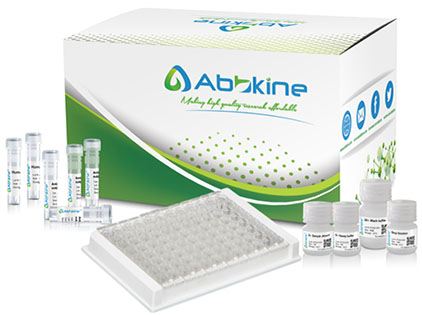
Aβ42 — the 42-amino-acid isoform of amyloid-beta — is only ~4.2 kDa, but it casts a shadow over the entire field of neurodegeneration. It is the dominant peptide species in amyloid plaques, the toxic engine behind familial AD (FAD) mutations in APP/PSEN1/PSEN2), and the numerator of the single most debated biomarker ratio in clinical neurology — Aβ42 / Aβ40 — which today drives CSF diagnostics, amyloid-PET stratification, and anti-amyloid therapeutic monitoring (aducanumab, lecanemab, donanemab era). Yet for something so central, labs still trip over the same avoidable mistake: treating Aβ42 like any other protein that you can semi-quantify with a Western or a luminescence "kit" and call it a day. The Human Amyloid beta 42 (AB42) ELISA Kit (KTE60867) from Abbkine exists to end that ambiguity — a two-site sandwich ELISA engineered around high-affinity, isoform-selective anti-Aβ42 antibodies (C-terminal-specific, discriminating Aβ42 from Aβ40 / Aβ38 / Aβ43), giving you a picogram-sensitive, plate-readable number you can trust in CSF, serum, plasma, cell-culture supernatant, and tissue homogenates.
Aβ42 Isn't Just "Plaque Stuff" — It's a Soluble-First, Oligomer-First Problem
The classic textbook image — extracellular senile plaques riddled with Aβ — is real, but it's also the end-stage of a much longer, subtler failure. The pathogenic sequence begins long before fibrils form:
- APP is sequentially cleaved by β-secretase (BACE1) → sAPPβ + C99/CTFβ → γ-secretase (PSEN complex) releases Aβ peptides of varying length, with Aβ40 (∼90%) and Aβ42 (∼10%) as the two dominant species.
- Aβ42 aggregates faster than Aβ40 because its two extra C-terminal hydrophobic residues (Ile41-Ala42) act like an insoluble "sticky tail." It seeds small soluble oligomers → protofibrils → fibrils → plaques, and those soluble oligomers are increasingly viewed as the most synaptotoxic, memory-impairing species — not the big plaque tombstones themselves.
- The Aβ42/Aβ40 ratio drops in CSF of prodromal/early AD patients because Aβ42 is being sequestered into brain amyloid deposits and/or cleared differently, making the ratio more informative than absolute Aβ42 alone for many diagnostic models.
All of which means: your assay has to do three non-negotiable things — catch Aβ42 at pg/mL, ignore Aβ40, and work in real biological matrices without inventing a cross-reactivity ghost story.
Why Sandwich ELISA — And Why "Any Aβ Antibody" Won't Suffice
Aβ42 is a short peptide, not a folded multidomain protein, so antibody specificity lives or dies by whether the epitope is truly C-terminal selective. Many "pan-Aβ" antibodies recognize the mid-region (e.g., 17–24, GFVVIAA) and happily bind Aβ40, Aβ43, and even sAPP fragments — which is why generic Aβ detection can inflate your signal unless the capture/detection pair is explicitly validated for Aβ42 vs. Aβ40 cross-reactivity.
The KTE60867 architecture solves this with a two-site sandwich:
• Pre-coated microplate with a capture antibody selective for Aβ42 (C-terminal conformation).
• Sample/standard added → Aβ42 binds.
• Biotin-conjugated anti-Aβ42 detection antibody (different epitope) → Streptavidin–HRP → TMB → color ∝ [Aβ42].
• Stop → read 450 nm → interpolate from the Aβ42 standard curve.
The documented performance envelope you'll cite:
Parameter Specification
Assay type Quantitative sandwich ELISA
Dynamic range 0.156 – 10 ng/mL (7-point standard, reproducible)
LOD ≤ 0.094 ng/mL (94 pg/mL)
Intra-assay CV < 10% (often ≤ ~5–6%)
Inter-assay CV < 10%
Specificity No significant cross-reactivity with Aβ40, Aβ38, Aβ43 or related APP fragments at physiological ratios
Samples Serum, plasma (EDTA/citrate/heparin), cell culture supernatants, tissue homogenates, other biological fluids
Runtime ~3–5 hours (or overnight option with some protocols)
The 3-Matrix Reality: CSF vs. Blood vs. Cell Culture — And Why You Need the Right Kit for Each
CSF: The Gold-Standard Fluid Biomarker
CSF Aβ42 is the most established readout — low baseline (ng/mL range), sensitive to plaque sequestration, and central to the Aβ42/Aβ40 ratio used in clinical-AD research. The sandwich ELISA format excels here because the matrix is relatively clean (once centrifuged/debris-removed) and the antibody selectivity prevents Aβ40 bleed-through that would artificially lift your "Aβ42" number.
Plasma/Serum: The Holy Grail Everyone Struggles With
Blood Aβ42 is orders of magnitude lower than CSF and sits in a protein-rich, platelet-contaminated soup (platelets carry Aβ and can spike readings if not handled cold and rapid). KTE60867's validated-plasma/serum compatibility means you can pursue exploratory blood-biomarker pipelines, provided you respect two rules: (1) process within 30–60 min of draw at 4°C, (2) PPACK/anticoagulant + centrifugation protocol must be locked across all subjects — one sloppy tube ruins the cohort.
Cell Culture & Tissue: Where Mechanism Lives
If you're testing BACE1 inhibitors, γ-secretase modulators (GSMs), or APP-mutation rescue (CRISPR/iPSC-neurons), Aβ42 secretion into the medium — and residual Aβ42 in lysed tissue slices — is the direct pharmacodynamic readout. An ELISA lets you run dose–response grids across 6–12 conditions × replicates in one plate instead of burning a week on immunoprecipitation/blotting.
Where KTE60867 Earns Its Keep in Real Programs
- Preclinical AD drug discovery — BACE1 inhibitor or γ-secretase modulator screens need Aβ42 ↓ and Aβ40 relatively stable as the first-pass PD marker. The ratio change is your drug's fingerprint.
- iPSC-neuron & organoid modeling of FAD mutations — isogenic APP/PSEN1 lines let you show Aβ42/Aβ40 normalizes upon correction; ELISA gives the pg-precision needed for small-volume organoid media.
- Aβ immunotherapy monitoring — anti-Aβ mAbs (lecanemab, etc.) shift Aβ42 and complex it with antibody → free vs. bound fractions matter; baseline KTE60867 quantifies the total/extractable pool.
- Aging & TBI (chronic traumatic encephalopathy) models — mechanical injury can perturb APP processing and spike soluble Aβ42 oligomers in interstitial fluid/perfusate; ELISA is the accessible readout.
- Method comparison & validation studies — if your lab is bridging SIMOA/Quanterix ultrasensitive platforms and conventional ELISA, KTE60867 provides the robust conventional-arm anchor for correlation and cost-effective large-cohort pre-screens.
A Minimal Clean-Data Workflow (That Protects Your Signal)
• Collect CSF/plasma at 4°C, spin promptly (≤ 2,000 × g, 4°C, 10–15 min), aliquot, freeze –80°C, never refreeze.
• For serum: allow clotting 30 min on ice → spin → harvest clear supernatant only.
• For tissue: homogenize in cold PBS/Tris + protease inhibitors → spin hard → keep supernatant cold.
• Warm all kit reagents to RT (≥ 30 min) before opening; protect TMB from light; stop uniformly; read 450 nm within 15 min of stop.
• Run the full standard curve on every plate — Aβ peptides are adsorption-prone; plate-to-plate drift is real, and the curve is your insurance.
The Bottom Line
Aβ42 is a 4.2 kDa peptide that manages to dictate the fate of entire clinical programs, billions in drug spend, and how we define presymptomatic Alzheimer's. Measuring it deserves more than a guess or a cross-reactive signal. The Human Amyloid beta 42 (AB42) ELISA Kit — KTE60867 from Abbkine gives you the C-terminal-selective sandwich ELISA platform — pre-coated capture, biotin detection, HRP–TMB, 450 nm read — with the pg/mL sensitivity, <10% CVs, and matrix-validated range that turns Aβ42 from a vague Western shadow into a defensible, interpolatable concentration: ng/mL you can plot, normalize, and stake a paper on.
Product Reference: KTE60867 – Human Amyloid beta 42 (AB42) ELISA Kit
Learn more and order: https://www.abbkine.com/product/human-amyloid-beta-42-ab42-elisa-kit-kte60867/
(For Research Use Only; not for diagnostic procedures in humans.)





