




The Last Drop Before the Objective Lens: Why Your Fluorescence Signal Deserves the SuperKine™ Antifade Mounting Medium with DAPI
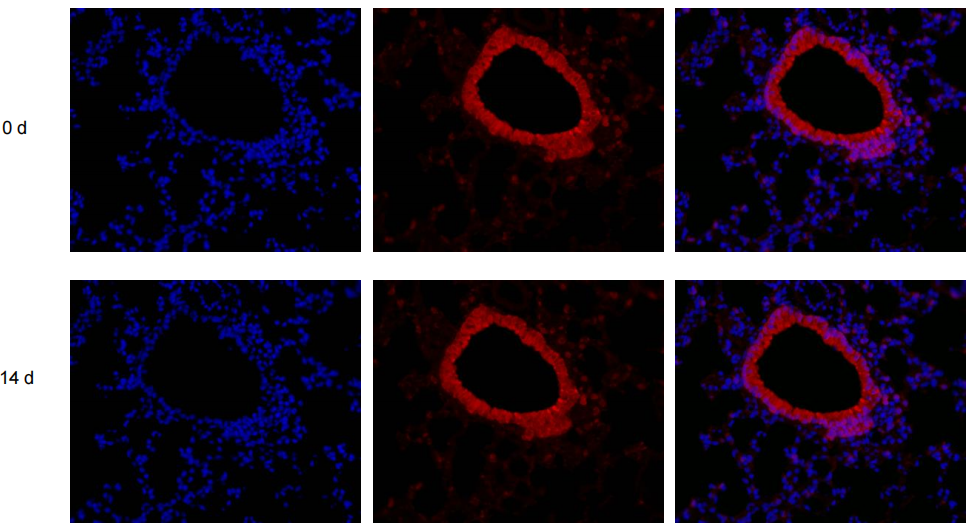
Every immunofluorescence experiment is a race against time, light, and chemistry. You've spent 48 hours fixing, permeabilizing, blocking, and incubating. Your secondary is a DyLight 594 or Alexa Fluor 555 that cost more than your lunch for the month. You lower the objective, hit the 561 nm laser, and within three Z-stack frames your beautiful stress fibers and nuclear rim staining start fading into a washed-out ghost of what they were at frame one. This isn't a resolution problem. It's photobleaching and oxidative fluorophore destruction—and the difference between a figure that lands in Nature Communications and one that ends up in the supplementary data is often decided at the exact moment you touch the mounting medium. The SuperKine™ Enhanced Antifade Mounting Medium with DAPI (BMU107-EN) from Abbkine is purpose-built to stop that loss: a ready-to-use, single-component mountant that integrates nuclear counterstaining and long-acting antifade chemistry into one drop, so the signal you fought three days to create is the signal your camera actually records.
The Mounting Medium Is Not an Afterthought—It's Half the Optical System
A coverslip sits on a thin film of liquid between glass and specimen. Inside that micron-scale gap, your fluorophores are exposed to dissolved oxygen, pH drift, and continuous photon energy from the excitation source. Without intervention, reactive oxygen species (ROS) generated locally bleach the dye, and the fluorescence intensity collapses mid-scan. An antifade mountant's job is to buffer that microenvironment—scavenging radicals, stabilizing pH, and forming a physical matrix that limits oxygen diffusion—while keeping the refractive index compatible with high-NA oil immersion optics.
What makes BMU107-EN stand out in a crowded market of "antifade" claims is that it solves two tasks simultaneously in one product:
- Antifade/antibleach protection across the visible and near-IR spectrum (FITC/Cy3/TRITC/Alexa/DyLight families).
- Nuclear counterstaining with DAPI (~6 μg/mL) built into the same mountant, eliminating a separate DAPI dip-and-rinse step and saving ~30 minutes per slide while keeping staining uniform.
What's Inside (and Why the Formula Matters More Than the Branding)
This is a glycerol/polyol-based aqueous mounting matrix fortified with a proprietary blend of radical scavengers and pH buffers that keep the micro-environment hostile to oxidative bleaching but optically clear enough for high-resolution work. The included DAPI binds AT-rich DNA in the minor groove and emits in the blue channel (Ex/Em ~350/460 nm), giving you the nuclear map every fluorescence channel needs as ground truth.
Key performance characteristics documented for this product line:
Feature Specification
Format Ready-to-use liquid — no weighing, no mixing, no pH-adjusting
DAPI concentration ~6 μg/mL (pre-calibrated — consistent blue channel intensity slide-to-slide)
Fluorescence retention Signal decay ≤ ~5% after ≥14 days stored protected from light at 4°C / -20°C
Spectral compatibility Validated for FITC (green), Cy3/TRITC (orange/red), Alexa Fluor & DyLight series (whole visible + NIR)
Refractive index behavior Optimized for oil-immersion high-NA objectives (minimal crystallization, minimal bubble propensity)
Storage / Stability -20°C, protected from light, 12-month shelf life; ship blue ice
Sizes 10 mL (bench-scale) / 50 mL (core/high-throughput)
The 60-Second Workflow (Because It Really Is This Simple)
One of the reasons this product exists is to eliminate the "is my glycerol/PBS/PPD mix fresh?" anxiety:
- Finish your final wash after secondary antibody (or direct fluorescent probe) — typically PBS or TBS.
- Remove excess buffer gently (tap edge on Kimwipe, don't let the sample dry completely — air-dried cells = dead signal).
- Apply 1 drop (~20–30 µL for a standard 18×18 mm coverslip area) of BMU107-EN directly onto the sample.
- Lower the coverslip at an angle to avoid bubbles. Seal the edges if you plan to archive (nail polish or commercial sealant).
- Image immediately or store flat, protected from light, at 4°C for short-term / -20°C for longer archiving.
No DAPI dilution series. No "wait 5 min then rinse." No worrying about your DAPI molarity drifting between batches.
Where This Mountant Earns Its Keep (Real Applications)
① Immunofluorescence (IF/IHC-IF) on Cells & FFPE Sections
Whether you're doing phospho-H3 Ser10 mitotics, γH2AX foci, tubulin/actin cytoskeleton, or tissue biomarker panels, the combination of antifade + built-in DAPI means every field is automatically registered to nucleus count and morphology. The radical-scavenging matrix lets you push higher laser power or more Z-slices without watching the channel burn out.
② FISH & DNA/RNA Hybridization
The DAPI component doubles as your chromatin morphology reference for spot-counting (X/Y FISH, translocation probes, telomere PNA-FISH). The antifade ensures your Cy2/FITC or Cy3 probe doesn't bleach before you've scored all 300 nuclei.
③ Confocal & Tile-Scan Archives
This is where the ≥14-day signal stability matters most — when you come back Tuesday to re-scan a region or add a new channel, the slide should look like it did Friday. BMU107-EN's formulation is explicitly aimed at long-duration and revisit-heavy imaging.
④ Cell Cycle (PI/DAPI-combined) & Apoptosis (Annexin V-FITC / PI)
The pre-added DAPI gives you a clean G₀/G₁/S/G₂ contour even in samples where your primary cell-cycle dye is in the orange/red window — and the antifade protects the green annexin signal that usually dies first.
⑤ High-Content Screening (HCS) Plates
Because it's a homogeneous, ready-to-dispense liquid, it adapts cleanly to multi-well plate sealing workflows where you can't afford per-slide manual DAPI dipping.
Three Rules That Separate "Okay" from "Publish-Ready"
- Never let the sample dry before mounting. A dried-out cell monolayer or section isn't revived by a good mountant — it's already lost membrane integrity and the focal plane will fight you.
- Keep the bottle at -20°C when not in use, and protect from light at all times — the antifade components are consumable by light/oxygen too.
- Seal if archiving matters. Even the best antifade can't protect against edge evaporation over weeks. One dot of nail polish or rubber cement around the coverslip rim = months of retrievable data.
The Bottom Line
The SuperKine™ Enhanced Antifade Mounting Medium with DAPI (BMU107-EN) is the definition of a small decision with outsized consequences: it's the final reagent that stands between three days of staining and a figure that survives peer review. Ready-to-use, DAPI-integrated, spectrally broad, and formulated for ≥2-week signal stability, it replaces ad-hoc glycerol mixes and underperforming mountants with a single, reproducible drop. If your fluorescence costs are high and your time is higher, this is the cheapest insurance policy on the bench.
Product Reference: BMU107-EN – SuperKine™ Enhanced Antifade Mounting Medium with DAPI
Learn more and order: https://www.abbkine.com/product/superkine-enhanced-antifade-mounting-medium-with-dapi-bmu107-en/
(For Research Use Only; not for diagnostic or therapeutic use in humans.)





