




The Molecule That Tells Hemoglobin When to Let Oxygen Go: Why 2,3-DPG Demands a Dedicated ELISA — and How KTE60832 Delivers
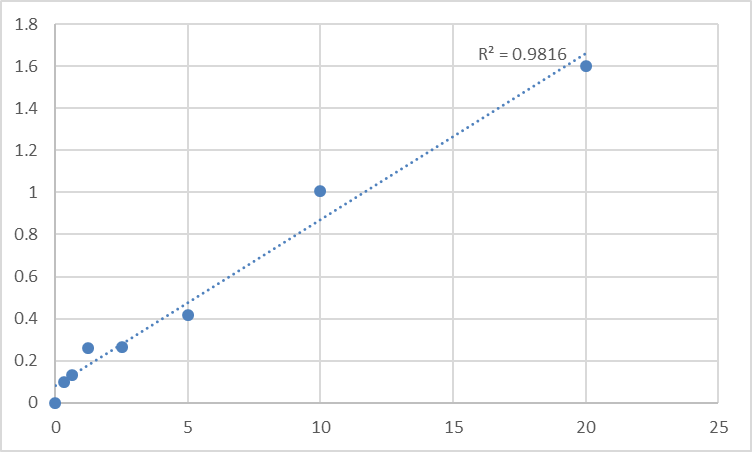
Most people remember 2,3-Disphosphoglycerate (2,3-DPG / 2,3-BPG) from a single line in a physiology textbook: “it shifts the oxyhemoglobin curve to the right.” But anyone who has actually worked with RBCs — transfusions, neonatal care, high-altitude adaptation, or sickle cell — knows that line hides a high-stakes metabolic lever. 2,3-DPG is a tri-carbon, negatively charged, intracellular phosphometabolite that binds deoxyhemoglobin (HbA) in the central cavity and lowers hemoglobin's affinity for O₂, ensuring oxygen actually unloads where tissues need it. Its concentration swings fast (hours), it is exquisitely pH-sensitive (the classic Bohr effect coupling), and it can make the difference between a patient waking up perfused or staying cyanotic — yet many labs still treat it like a “side-measure” they’ll get to later. The Human 2,3-Disphosphoglycerate (2,3-DPG) ELISA Kit (KTE60832) from Abbkine exists to change that: a competitive/small-molecule ELISA architecture purpose-built to turn this short-lived phosphometabolite into a reproducible, plate-readable concentration (µg/mL or mmol/L) you can run on hemolysates, RBC lysates, whole-blood lysates, or serum/plasma under defined prep, without rebuilding your entire lab around enzyme-cycling reagents and UV-vis kinetics.
2,3-DPG in One Paragraph: Not a Waste Product — a Gas-Exchange Tuner
2,3-DPG lies on the Rapoport–Luebering shunt, a specialized side-loop off glycolysis that bypasses ATP generation to produce a high-energy bisphosphate:
1,3-BPG → (bisphosphoglycerate mutase, BPGM) → 2,3-BPG
2,3-BPG → (2,3-PG phosphatase, same BPGM context) → 3-PG → rejoin glycolysis
Crucially, 2,3-DPG binds the central cavity of deoxy-Hb (β-chain His2/His143 salt bridges) and stabilizes the T (tense) state, shifting the p₅₀ upward so O₂ unloads more readily. The same molecule is consumed during cold storage of RBCs (the famous RBC storage lesion), which is why “old blood” comes out hyperoxygenated relative to the curve — O₂ sticks too tightly, microcirculatory delivery can suffer, and the recipient may have to re-adapt (often manifesting as a transient left-shift after massive transfusion).
Why Not Just Use the “Classic” Enzyme-Cycling / Spectrophotometric Method?
The gold-standard reference for 2,3-DPG is still the enzyme-cycling assay (linked to NADH consumption via 3-PG dehydrogenase, read at 340 nm). It works, but it is:
• Reagent-heavy (multiple coupling enzymes, cofactors, tight pH/temperature control)
• Low-throughput (essentially manual kinetics)
• Sensitive to hemolysate matrix (Hb absorbance, phosphates, other glycolytic intermediates) that can force extra cleanup
An ELISA-format small-molecule kit wins on three pragmatic grounds:
- Throughput + reproducibility: 96-well, standard curve on every plate, OD → concentration you can log & normalize.
- Lower sample volume: precious cord/neonatal or limited stored aliquots benefit.
- Easier inter-lab harmonization: once you define your hemolysis and deproteinization (TCA/PCA) step, the plate readout becomes a routine SOP instead of an artisanal kinetic assay.
⚠️ Key reality check: 2,3-DPG is intracellular and unstable ex vivo (insulate from cold, minimize delays, fix with cold acid immediately if required by your protocol). ELISA doesn’t magically “find” 2,3-DPG in serum if it wasn’t liberated during controlled hemolysis/lysis.
Assay Architecture: How You Immunoassay a Tiny Bisphosphate
Small molecules can’t bind two antibodies like a protein sandwich, so the robust way is a competitive ELISA:
- 2,3-DPG–protein conjugate is pre-coated on the plate (captures anti-DPG from the next step).
- Your sample 2,3-DPG (free) + a fixed amount of anti-2,3-DPG antibody are added together.
• More 2,3-DPG in your sample → more antibody gets “pulled away” from the coated conjugate. - After incubation & wash, a HRP-labeled secondary (or direct HRP-antibody format) reports what remains bound.
- TMB → stop → 450 nm, but now:
Signal is INVERSELY proportional to [2,3-DPG] — your standard curve slopes down, not up.
This is textbook small-molecule immunoassay logic, and it’s exactly the lane KTE60832 occupies: human 2,3-DPG → competitive readout → calibrated ng/mL or µg/mL → convertible to mmol/L if you prefer clinical units.
When You Absolutely Want 2,3-DPG Numbers (Not Just Hematology)
- RBC storage lesion & transfusion medicine
Track 2,3-DPG decay during 1–42 day storage (CPD/CP2D/AS-1/AS-3 bags) → explain post-transfusion O₂-release dynamics, especially in:
• massive transfusion
• neonates / ECMO / cardiac surgery
• sickle cell chronically transfused cohorts (storage + endogenous RBC metabolism combined)
Paired outputs: 2,3-DPG + ATP + pH/glucose/lactate + hemolysis markers (K⁺/free Hb) = the modern storage-characterization panel.
- Altitude, hypoxia & acclimatization studies
2,3-DPG rises within hours–days of ascent to maintain tissue O₂ delivery despite lower pO₂. If you have fingerstick/venous RBC lysate banks from altitude cohorts, quantifying 2,3-DPG is the clean variable that validates “the curve really shifted.”
- Neonatal & perinatal hematology
Neonatal RBCs start with lower 2,3-DPG vs. adults (left-shifted curve = higher fetal O₂ uptake from maternal circulation logic), but the transition post-birth is metabolically sensitive — prematurity, respiratory distress, and transfusion policies all intersect here.
- Hemoglobinopathies & inherited glycolytic enzymopathies
Pyruvate kinase deficiency, hexokinase deficiency, and BPGM/phosphatase variants can alter 2,3-DPG in compensatory or paradoxical ways. ELISA-scale screening lets you phenotype multiple mutants/families in parallel.
- Anti-glycolytic drug / metabolism-intervention studies
If your compound changes glycolysis or the Rapoport–Luebering shunt (even indirectly), 2,3-DPG is the functional metabolite readout that proves the shunt moved — not just a “phosphate level on an LCMS peak.”
Sampling & Prep Rules That Decide Whether Your Curve Is Real
• Work fast & cold after lysis: 2,3-DPG can be consumed by residual GAPDH/PGK if you don’t halt metabolism (common lab practice: cold PCA/TCA precipitation to quench enzymes and liberate small metabolites). Follow the kit’s recommended precipitation/neutralization exactly — this step is 90% of your accuracy.
• Define “hemolysate” clearly: % hematocrit matters; if you want a tissue-delivery interpretation, normalize to Hb concentration or RBC count so 2,3-DPG isn’t misread as “higher” just because cells packed differently.
• Run standards in the same matrix: at minimum, run a blank-RBC-lysate control through your precipitation to confirm background subtraction is honest.
• Convert units for clinicians if needed:
• MW 2,3-DPG ≈ 266 g/mol
• Normal human RBC ≈ 3.0–5.0 g/dL (≈ 110–185 µmol/L RBC water) depending on pH, altitude, age, and storage — your kit will report in its own ng/mL/µg/mL, but you can back-calculate for papers intended for physiologists or transfusion scientists.
The Bottom Line
2,3-DPG is not a biochemical curiosity — it is the molecular dial that decides whether hemoglobin holds O₂ tight or lets it go, and it does so in a compartment (the RBC) that touches every organ system. If your work lives anywhere near transfusion, altitude, neonatal hematology, sickle cell, or RBC storage, you shouldn’t be treating 2,3-DPG as a footnote. The Human 2,3-Disphosphoglycerate (2,3-DPG) ELISA Kit (KTE60832) from Abbkine gives you a practical, plate-based way to quantify it: competitive immunoassay → HRP–TMB → 450 nm → calibrated concentration, so your “right-shift” story comes with numbers, CVs, and a Methods section that reviewers can actually evaluate.
Product Reference: KTE60832 – Human 2,3-Disphosphoglycerate (2,3-DPG) ELISA Kit
Learn more and order: https://www.abbkine.com/product/human-23-disphosphoglycerate-23-dpg-elisa-kit-kte60832/
(For Research Use Only; not for diagnostic procedures in humans.)





