




The cTn-I Assay Trap: Why Your Myocardial Injury Data Keeps Contradicting Your Histology—And How Abbkine KTE101019 Finally Delivers the Quantitative Rigor That Semi-Quantitative Methods Cannot
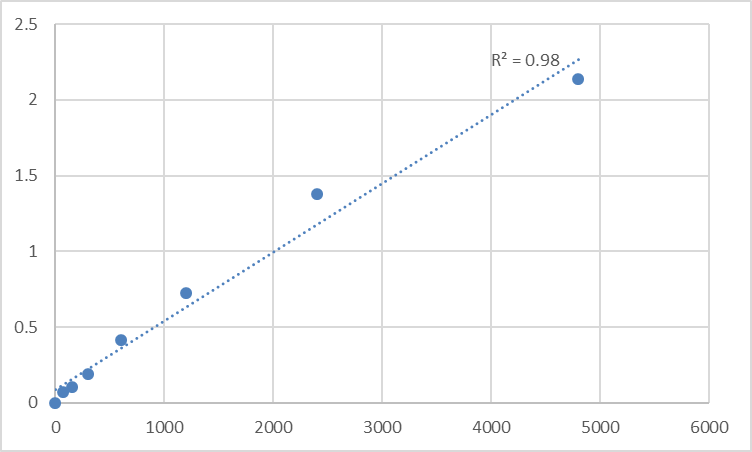
Cardiac troponin I (cTn-I) is not merely one cardiac biomarker among many. It is the inhibitory subunit of the troponin complex, a ~29 kDa protein released into the circulation specifically and exclusively when cardiomyocytes suffer irreversible membrane damage. Its specificity for cardiac tissue—as opposed to the skeletal muscle isoforms that cross-react with legacy markers like creatine kinase-MB and myoglobin—is the biochemical foundation upon which two decades of clinical cardiology have built their acute myocardial infarction diagnostic criteria. Cardiac troponin I has been designated the gold standard biomarker for myocardial injury detection, having replaced CK-MB as the definitive laboratory indicator of cardiac cell death. This clinical gold-standard status extends directly into preclinical research, where cTn-I measurement serves as the terminal endpoint in cardiotoxicity screening, ischemia-reperfusion injury quantification, and cardiovascular drug safety pharmacology.
Here is the problem that most commercial rat cTn-I ELISA kits refuse to address publicly. The sandwich ELISA format that dominates the market is only as specific as the antibody pair it deploys, and rat cTn-I presents a cross-reactivity challenge that human cTn-I assays avoid entirely. Rat cardiac troponin I shares substantial sequence homology with rat slow-twitch skeletal muscle troponin I (ssTnI), and antibodies raised against whole-molecule rat cTn-I frequently cross-react with this skeletal isoform. The result is an assay that reports the sum of cardiac and skeletal troponin I concentrations, generating inflated baseline values in healthy animals and compressed dynamic ranges that obscure the modest cTn-I elevations characteristic of early-stage drug-induced cardiotoxicity. For the researcher who has sacrificed thirty rats, homogenized thirty left ventricles, run thirty ELISA wells, and obtained cTn-I concentrations that do not distinguish the doxorubicin-treated group from the saline control group, the problem is not the animal model, the dosing regimen, or the hypothesis. The problem is the antibody specificity that separates a genuinely cardiac-specific troponin I measurement from a composite signal contaminated by the troponin I isoforms that leak from every skeletal muscle in the animal's body during normal metabolism.
Abbkine KTE101019: The Biotin-Streptavidin-Amplified Sandwich ELISA That Measures Rat cTn-I, Not Rat Troponin I Isoforms
Abbkine's Rat Cardiac troponin I (cTn-I) ELISA Kit (Catalog No. KTE101019) confronts the isoform cross-reactivity problem with a two-site sandwich ELISA architecture that incorporates biotin-streptavidin signal amplification—a design choice that fundamentally separates this kit from the direct HRP-conjugated detection formats that dominate the budget-constrained segment of the market. The detection cascade is biochemically explicit: an antibody specific for rat cTn-I is pre-coated onto the microplate. Standards and samples are pipetted into the wells, and any cTn-I present is bound by the immobilized capture antibody. After washing away unbound substances, a biotin-conjugated antibody specific for a spatially distinct cTn-I epitope is added. Streptavidin-HRP is then applied, binding to the biotinylated detection antibody with the picomolar affinity that makes the biotin-streptavidin interaction essentially irreversible under standard assay conditions. TMB substrate develops color in proportion to the amount of cTn-I captured in the initial step, and the reaction is stopped with sulfuric acid for absorbance measurement. This detection strategy—biotinylated detection antibody plus streptavidin-HRP—replaces the direct HRP-conjugated detection format found in many competitor kits.
Why does biotin-streptavidin amplification matter for rat cTn-I specifically? Because the pathophysiological concentrations of cTn-I in preclinical rat models—whether in the low picogram-per-milliliter range following mild ischemia-reperfusion injury or in the modest nanogram-per-milliliter range after anthracycline cardiotoxicity—are substantially lower than the microgram-per-milliliter levels observed in clinical ST-elevation myocardial infarction patients. A direct HRP-conjugated detection antibody generates one HRP molecule per cTn-I molecule captured. The biotin-streptavidin system generates multiple HRP molecules per detection event, multiplying the enzymatic turnover of TMB substrate and shifting the lower limit of quantification downward by approximately one order of magnitude. For the cardiotoxicity researcher who needs to detect a 15% cTn-I elevation above baseline before histological changes manifest, that order-of-magnitude sensitivity improvement is not a convenience—it is the difference between detecting cardiotoxicity in vivo and detecting it at necropsy.
The specificity specification is the number that defines the entire product: no significant cross-reactivity or interference between Rat cTn-I and analogues was observed. The manufacturer has validated the antibody pair against the skeletal muscle troponin I isoforms and other troponin complex components that confound less rigorously tested assays. The capture and detection antibodies recognize distinct epitopes on the rat cTn-I molecule, ensuring that only the intact cardiac-specific isoform generates signal—fragments, degradation products, and skeletal muscle isoforms are not captured or detected. This epitope-level specificity is the biochemical foundation upon which the entire assay's quantitative credibility rests, and it is the variable that separates a publication-quality cTn-I measurement from the isoform-contaminated composite signal that competing kits quietly report.
The Kit Components: What You Actually Receive and Why Each Component Matters
The KTE101019 kit ships with a complete, pre-optimized reagent set that eliminates the buffer-preparation variability and component-sourcing fragmentation that plague assembled-from-scratch ELISA protocols. The microplate arrives pre-coated with anti-rat cTn-I capture antibody, stored desiccated in a sealed foil pouch with desiccant. The rat cardiac troponin I standard, supplied as a lyophilized or concentrated stock, enables generation of a calibration curve spanning the physiologically relevant concentration range for rat serum, plasma, and tissue homogenate cTn-I. The biotin-conjugated detection antibody recognizes a second, spatially distinct cTn-I epitope, ensuring that only cTn-I molecules simultaneously bound by the capture antibody and the detection antibody generate signal. The streptavidin-HRP conjugate, standard diluent, assay buffer, HRP substrate (TMB), stop solution, and wash buffer complete the reagent set, along with plate covers to seal wells during incubation steps.
The assay duration is specified as a multiple-step standard sandwich ELISA with a working time of 3–5 hours, depending on operator experience. This timeframe acknowledges the biological reality that a sandwich ELISA with biotin-streptavidin amplification requires sequential incubations—primary binding, detection antibody, streptavidin-HRP, and substrate development—and that shortening any of these steps below the manufacturer's recommended duration compromises signal intensity and inter-assay precision.
The calibration range and limit of detection are available upon inquiry, a specification choice that reflects the manufacturer's recognition that these parameters must be determined under the end-user's specific sample matrix and laboratory conditions rather than quoted as universal values that may not hold across all sample types. For researchers accustomed to purchasing ELISA kits based on published sensitivity figures, this inquiry-based specification is not an evasion—it is a commitment to assay validation under real-world conditions rather than optimized buffer-only benchmarks.
Sample Compatibility Across the Rat Cardiovascular Research Spectrum
KTE101019 is validated for rat serum, plasma, cell culture supernatants, and other biological fluids. This matrix versatility is not a generic ELISA specification—it is an operational necessity in preclinical cardiovascular research, where cTn-I measurement contexts span radically different sample types. The cardiotoxicity screening laboratory measures cTn-I in serum collected from rat tail-vein bleeds at serial time points after drug administration, tracking the kinetic profile of biomarker release across hours or days. The ischemia-reperfusion laboratory measures cTn-I in left ventricular tissue homogenates, quantifying the cTn-I depletion that accompanies cardiomyocyte necrosis and the cTn-I retention that reflects viable myocardium. The primary cardiomyocyte laboratory measures cTn-I in cell culture supernatants, monitoring the spontaneous and mechanically-induced release that reports in vitro cardiomyocyte damage. A single cTn-I ELISA kit validated across all three matrices eliminates the matrix-specific re-optimization that consumes technician time and introduces the inter-matrix calibration uncertainty that confounds cross-study comparisons.
One matrix consideration that separates experienced cTn-I researchers from novices: hemolysis. Erythrocyte lysis during serum or plasma collection releases proteases that degrade cTn-I, and hemolyzed samples generate falsely low cTn-I concentrations that cannot be corrected by any post-hoc normalization. The KTE101019 protocol does not explicitly address hemolysis management, but the literature on cTn-I measurement universally instructs that hemolyzed samples be excluded from analysis. Visual inspection of serum and plasma samples before loading onto the ELISA plate—rejecting any sample with visible pink-to-red coloration—is the simplest and most effective quality control measure available to the bench researcher.
Practical Protocol Wisdom That Distinguishes Publication-Grade cTn-I Data from the Scatterplot Your Committee Will Question
The instructions packed with KTE101019 reflect an understanding, derived from extensive hands-on assay development, of what actually goes wrong at the bench. The critical controls: do not mix components from different kit lots or use reagents beyond the kit expiration date. This is not boilerplate legal language—it is a biochemical reality rooted in the lot-specific calibration of antibody affinity and streptavidin-HRP enzymatic activity. Allow all reagents to warm to room temperature for at least 30 minutes before opening. Temperature gradients across the plate produce binding kinetics gradients that manifest as edge effects—the wells along the perimeter consistently reading differently from the wells in the center—and no amount of post-hoc normalization can reliably correct this artifact. Pre-rinse pipette tips with reagent before use and use fresh pipette tips for each sample, standard, and reagent to avoid carryover contamination. Unused wells must be kept desiccated at 4°C in the sealed bag provided.
Mixing discipline is a non-negotiable requirement. The protocol recommends a low-frequency oscillator or gentle hand shaking every 10 minutes during incubations to ensure homogeneous reagent distribution and prevent the formation of concentration gradients within individual wells. Thorough mixing is very important for the result. Inadequate mixing during the streptavidin-HRP incubation step is the single most common technical error in biotin-streptavidin ELISA protocols, producing well-to-well coefficient of variation that inflates beyond 15% and erodes the statistical power of multi-group comparisons.
Replication is the final protocol mandate: it is recommended that all samples and standards be assayed in duplicate or triplicate. Any single well can be an outlier due to a transient pipetting error, an air bubble in the detection antibody, or a microscopic imperfection in the microplate coating. Your statistical power depends on replication at the most fundamental level.
The unopened kit should be stored at 2–8°C and ships on gel pack with blue ice to maintain temperature integrity during transit. The product is designated for research use only and is not intended for use in human or clinical diagnosis.
Where KTE101019 Fits in the Preclinical Cardiovascular Research Ecosystem—And What Else Abbkine Brings to the Bench
Cardiac troponin I does not circulate in biochemical isolation. It is released alongside other cardiac biomarkers—troponin T, myoglobin, creatine kinase-MB, heart-type fatty acid-binding protein—and its elevation occurs in the broader physiological context of hemodynamic stress, neurohormonal activation, and systemic inflammation. A complete cardiotoxicity assessment requires measurement of cTn-I in parallel with markers of oxidative stress, metabolic dysfunction, and tissue damage, all from the same experimental cohort.
Abbkine's broader cardiovascular reagent portfolio enables precisely this multi-marker approach. The Rat Catalase (CAT) ELISA Kit (KTE100847) provides quantification of the primary enzymatic H₂O₂ detoxification machinery that protects cardiomyocytes from oxidative damage. The Rat Glutathione (GSH) ELISA Kit (KTE100838) enables paired measurement of the cell's primary non-enzymatic antioxidant. The Rat FSH and LH ELISA kits support the reproductive toxicology studies that are increasingly required for cardiovascular drug candidates under developmental and reproductive toxicology (DART) regulatory frameworks. And the CheKine™ Micro Lactate Assay Kit (KTB1100) quantifies the metabolic readout that couples cardiac ischemia to cardiomyocyte necrosis.
For researchers focused on the rat model as the preclinical cardiovascular workhorse—the species whose heart size, coronary anatomy, and electrophysiology most closely approximate the human cardiovascular system—this ecosystem of complementary detection reagents, all sharing consistent sandwich ELISA formats, HRP-TMB colorimetric detection, and protocol logic, reduces the training burden and technical variability that accumulate when detection reagents are sourced from multiple manufacturers with incompatible buffer systems.
Product Details:
- Product Name: Rat Cardiac troponin I (cTn-I) ELISA Kit
- Brand: Abbkine
- Catalog Number: KTE101019
- Reactivity: Rat
- Method: Two-site Sandwich ELISA with Biotin-Streptavidin Amplification (Quantitative)
- Detection Method: Colorimetric (HRP/TMB)
- Sample Types: Serum, Plasma, Cell Culture Supernatants, Other Biological Fluids
- Assay Duration: Approximately 3–5 hours
- Kit Components: Pre-coated Rat cTn-I Microplate, cTn-I Standard, Biotin-conjugated Detection Antibody, Streptavidin-HRP, Standard Diluent, Assay Buffer, HRP Substrate (TMB), Stop Solution, Wash Buffer, Plate Covers
- Features & Benefits: High sensitivity and excellent specificity; no significant cross-reactivity with cTn-I analogues
- Storage: Unopened kit at 2–8°C; ships on gel pack with blue ice
- Precautions: For research use only; not for diagnostic applications
Product Link: https://www.abbkine.com/product/rat-cardiac-troponin-i-ctn-i-elisa-kit-kte101019/





