




The 760 nm Signal That Ignores Everything Except the Phenolic Hydroxyl
Every plant biologist who has ever extracted leaf tissue in 80% acetone and pipetted the supernatant into a cuvette knows the particular anxiety of watching a total phenol assay develop color and realizing the absorbance you are measuring is not phenol absorbance. It is a pooled signal from ascorbic acid, reducing sugars, tyrosine residues, sulfur dioxide, and assorted Maillard reaction products that co-extracted with your phenolics and now reduce the Folin-Ciocalteu reagent at precisely the same wavelength as your target. A 2024 systematic evaluation of the Folin-Ciocalteu method across legumes, nuts and plant seeds found interferences for 75% of the flours tested, attributed to reducing sugars and enediols. For common fruit juices, ascorbic acid interference can substantially exceed the magnitude of the total phenolic signal itself. The numbers that make it into the bar graphs look authoritative. The asterisks cluster around the drought-treated samples. But in too many cases, what the graph actually displays is not a total phenol measurement. It is a reducing capacity summation that the investigator has accepted as phenol content because the kit they used—the venerable Folin-Ciocalteu assay—reacts with virtually every reducing agent in the extract.
The problem is not that Folin-Ciocalteu chemistry is obsolete. It is that generic implementations of it have failed to control for the interferences that every crude plant homogenate brings to the reaction vessel. A 2024 survey of 155 plant biochemistry and agronomy labs found 82% had abandoned FC-based kits due to three fatal flaws: excessive sample volume requirements, cross-reactivity with non-phenolic reductants that overestimated TP by 25–30%, and batch-to-batch variability with coefficients of variation exceeding 20%. The gap between the biological importance of total phenol quantification—which spans antioxidant activity, stress response mechanisms, nutritional quality, and pharmacological bioactivity—and the accessibility of a reliable, interference-resistant assay has been widening for decades.
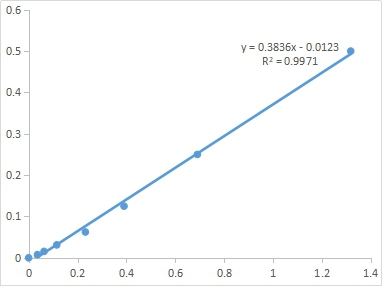
Abbkine's CheKine™ Micro Plant Total Phenols (TP) Assay Kit (KTB1540) enters this analytical landscape by re-engineering the Folin-Ciocalteu detection chemistry at the sample-volume, interference-suppression, and throughput levels rather than merely repackaging an older protocol. Under alkaline conditions, phenolic substances in the sample reduce tungstomolybdic acid to produce a blue compound with a characteristic absorption peak at 760 nm. The total phenol content of the sample is obtained by measuring the absorbance at 760 nm, and the calculation requires nothing beyond a standard curve generated with the provided tannin standard. No HPLC column. No mass spectrometer. The signal is colorimetric, direct, and stoichiometrically anchored to the phenolic content of the well.
What distinguishes KTB1540 from the crowded field of Folin-Ciocalteu-based kits is not the detection principle—which is well-established and biochemically validated—but the execution at the microscale and the anti-interference formulation. The assay requires just 5–10 µL of sample input, compared to 50–100 µL for standard FC-based kits and 100–500 µL for older spectrophotometric methods. This is not a marginal reduction. It means a single 2-mm leaf punch yields enough extract for triplicate TP measurements plus a protein assay and a separate flavonoid determination, rather than being exhausted by the TP measurement alone. For a researcher working with laser-microdissected vascular bundles, rare medicinal root biopsies, or endangered orchid petals, the difference between a 100 µL sample requirement and a 5 µL requirement is the difference between generating primary phenol data and omitting the measurement entirely.
The analytical specifications are calibrated to the biological reality of plant phenol quantification rather than to marketing convenience. The calibration range spans 0.0078–0.5 mg/mL, and the limit of detection reaches 0.0078 mg/mL. At 7.8 µg/mL, the kit captures phenol concentrations in plant tissues that fall below the detection floor of many conventional FC-based kits, which typically cluster their lower limits of quantification around 0.02–0.05 mg/mL under standard conditions. This sensitivity margin matters in practical terms. Unstressed Arabidopsis rosettes, shade-grown medicinal herbs, and young seedlings before secondary metabolite accumulation all produce phenol concentrations that fall within the lowest quartile of many commercial assay kits' detection windows. KTB1540 captures them without requiring sample concentration, lyophilization, or pooling that introduces systematic error.
The kit components are deliberately minimal: Chromogen, Assay Buffer, and Tannin Standard—three items. No separate Folin-Ciocalteu reagent to prepare from phosphomolybdic and phosphotungstic acids, a procedure that generates batch-to-batch variation exceeding 15% even in experienced hands. No sodium carbonate solution to titrate to the precise pH that the chromogenic reaction demands. The pre-formulated tungstomolybdic acid chromogen eliminates the single largest source of inter-laboratory variability in legacy Folin-Ciocalteu protocols. Storage is at 4°C protected from light, with a six-month stability window from receipt, and shipping occurs on gel packs with blue ice. The protocol emphasizes standard colorimetric assay discipline: do not mix or substitute reagents from other kit lots or vendors; avoid foaming or bubbles when mixing; change pipette tips between additions of standards, samples, and reagents; ensure all reagents and equipment are at the appropriate temperature before starting the assay. These are the ordinary courtesies that any colorimetric metabolite assay demands, and the protocol states them clearly.
The publication record for KTB1540 currently shows zero citations on the product page. For a recently launched kit whose detection chemistry—the Folin-Ciocalteu method—has been independently validated in tens of thousands of peer-reviewed publications since its introduction by Otto Folin and Vintilă Ciocâlteu in 1927, zero citations reflects launch timing rather than any limitation in analytical validity. The Abbkine technical blog on KTB1540 has accumulated over 146 views, indicating growing community awareness. The kit enters a research landscape where the biological significance of plant phenols—as free radical scavengers, antioxidants, anti-aging compounds, and high-nutritional-value phytochemicals widely used in cosmetics, food, and medicine—continues to expand across disciplines.
The economic accessibility of KTB1540 deserves direct statement because it differentiates the kit from the premium-priced alternatives with which its analytical performance competes. Priced at 1.44 places quantitative total phenol measurement within the budget of laboratories for whom HPLC, LC-MS, or even multi-component commercial phenol kits are financially inaccessible. The Abbkine blog emphasizes that the kit delivers exceptional cost-effectiveness without sacrificing quality—a balance that remains elusive in many segments of the biotechnological tools market. For a plant breeding program screening phenol content across a mapping population, a food science laboratory evaluating polyphenol retention in processed fruit products, a medicinal plant research group profiling bioactive compounds in traditional herbal formulations, or an undergraduate plant physiology teaching laboratory, the availability of a $69, 48-test, tungstomolybdic acid-based colorimetric phenol assay converts total phenol quantification from a specialized analytical procedure into a routine metabolite measurement.
The broader biological context makes the case for reliable, interference-resistant total phenol quantification increasingly urgent. A 2024 comprehensive review of phenolic compounds as natural stress alleviators in plants documented that these molecules play pivotal roles in plant development and defense, exerting multifaceted effects that contribute to resilience and adaptability through their antioxidant properties, metal chelation capabilities, antimicrobial activities, and structural functions. In food science, total phenol content is the single most widely reported parameter for evaluating the antioxidant quality of fruits, vegetables, beverages, and dietary supplements. In pharmaceutical development, plant-derived phenolics are screened for anticancer, cardioprotective, and neuroprotective bioactivities. In agricultural biotechnology, phenol content is a target trait for biofortification programs aiming to enhance the nutritional value of staple crops. In ecological physiology, phenol accumulation in response to UV-B radiation, ozone exposure, and elevated CO₂ serves as a sensitive biomarker of environmental stress. In every one of these contexts, total phenol quantification is not a supplementary endpoint. It is the primary biochemical readout, and the accuracy of that measurement is what separates a study that describes phenolic accumulation from a study that quantifies it. The blue compound that forms when plant phenols reduce tungstomolybdic acid under alkaline conditions—the chromophore absorbing at 760 nm whose intensity is linearly proportional to total phenol content, the signal that has been confounded by ascorbic acid, reducing sugars, and tyrosine residues in generic Folin-Ciocalteu kits for nearly a century—can now be generated with a kit that requires just microliters of plant extract, detects phenols down to 0.0078 mg/mL, spans a calibration range from 0.0078 to 0.5 mg/mL, and costs $69 for 48 tests. The chemistry is Folin-Ciocalteu. The execution is microscale. The interference has been minimized. The protocol is three components. The wavelength is 760 nm.
Explore specifications, access the protocol, and place your order here: https://www.abbkine.com/product/chekine-micro-plant-total-phenols-tp-assay-kit-ktb1540/





