




The 72-kDa Liver Messenger That Changed Preventive Cardiology: Why Quantifying PCSK9 Protein — Not Just Your LDL-C — Is the Missing Variable in ASCVD, Statin Resistance, and the New Lipid Drugs
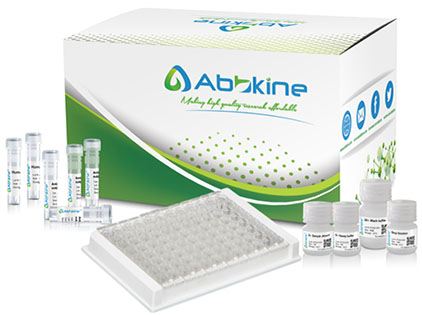
Proprotein convertase subtilisin/kexin type 9 (PCSK9) is one of the rare basic science discoveries that jumped straight from a “candidate gene in a French family” to a blockbuster monoclonal-antibody drug class (alirocumab, evolocumab) and, soon, to small-molecule/antisense/siRNA silencers (inclisiran) — all because it explained a simple, brutal rule of lipid biology: your liver doesn’t just decide how much LDL it takes up; it also regulates how much of the LDL receptor survives to do the job. PCSK9 (UniProt: Q8N113, Gene ID: 255738) is primarily synthesized in hepatocytes as a 72 kDa precursor (692 aa) whose prosegment (14 kDa) autocatalytically cleaves to generate the mature, secreted ~62 kDa catalytic domain that circulates at ng/mL–low µg/mL levels and binds the EGF-A domain of LDLR, diverting receptor–LDL complexes into lysosomal degradation instead of recycling. The clinical punchline is elegant: more PCSK9 → fewer LDLRs → higher LDL-C; PCSK9 loss-of-function (LoF) → more LDLRs → very low LDL-C + ~88% protection from ASCVD events. The Human Proprotein convertase subtilisin/kexin type 9 (PCSK9) ELISA Kit (KTE61285) from Abbkine exists to give you that measurement as a calibrated, plate-readable ng/mL, not a “band at ~62 kDa” guess — so your lipid, liver, or drug-development story rests on a number you can defend.
PCSK9 in One Paragraph: The “Receptor Killer” Your LDL-C Line Obscures
Inside the hepatocyte secretory pathway, SREBP2 (sterol regulatory element-binding protein 2) senses intracellular cholesterol and drives transcription of HMGCR (statins’ target), LDLR, and PCSK9 itself — a built-in negative feedback: when cholesterol is high, you make more LDLR (good), but you also make more PCSK9 (which then removes LDLR, damping the loop). Once secreted, PCSK9 binds LDLR at the cell surface, the complex internalizes, and instead of recycling to the membrane, the receptor goes to the lysosome and dies. Circulating PCSK9 can also act transcellularly on distant hepatocytes, and it further interacts with VLDLR, ApoER2, CD81, and even LDLR family partners, expanding its footprint beyond “just LDL clearance.”
The human genetics that made PCSK9 famous are clean:
• Gain-of-function (GoF) variants (e.g., S127R, F216L, D374Y) → higher PCSK9 activity → fewer LDLRs → autosomal dominant hypercholesterolemia (ADH) phenocopies with premature ASCVD.
• Loss-of-function variants (especially R46L, C679X, Y142X) → ~15–40% lower LDL-C and roughly half the coronary event risk in large population sequencing efforts — the original inspiration for anti-PCSK9 biologics.
Why a Sandwich ELISA for PCSK9 — And Why “LDL-C + a Western” Isn’t the Same Thing
Your lab probably cares about PCSK9 for one of three goals:
- Clinical/epidemiological linkage (does PCSK9 predict events or treatment response?),
- Pharmacology (do statins/ezetimibe/fibrates/GLP-1 agonists or liver-directed therapies shift circulating PCSK9?), or
- Mechanism in hepatocytes (SREBP2, INSIG, inflammatory cytokines → PCSK9 transcription/secretion).
A two-site sandwich ELISA wins here because:
• Two independent anti-PCSK9 epitopes (pre-coated capture + biotinylated detection) give you specificity that survives complex matrices (serum/plasma are noisy, and PCSK9 circulates at modest concentrations where cross-reaction or matrix effects can bite a single antibody).
• A recombinant human PCSK9 standard curve on every plate converts OD₄₅₀ into absolute ng/mL, so you can normalize across timepoints, donors, and conditions with CVs you can actually publish.
• Throughput: a 96-well format means you can run a dose–response, time-course, or 50-sample cohort in a single sitting instead of chaining yourself to a transfer stack.
Assay Principle: KTE61285 — Quantitative Sandwich ELISA
The kit uses the classic field-standard architecture:
- A microplate is pre-coated with a capture antibody specific for human PCSK9.
- Standards (recombinant human PCSK9) and samples — serum, plasma, tissue homogenates, cell culture supernatants/lysates, other biological fluids — are added; PCSK9 present binds.
- After washing, a biotinylated anti-PCSK9 detection antibody (different epitope) forms the sandwich.
- Streptavidin–HRP → TMB → color ∝ bound PCSK9.
- Stop solution → yellow → read Absorbance at 450 nm → interpolate unknowns from the PCSK9 standard curve.
Across distributor/technical summaries matching this kit family, you’ll typically see performance in the ballpark of:
Parameter Typical Specification
Target Human PCSK9 (UniProt Q8N113, precursor ~72 kDa; mature ~62 kDa secreted form)
Format 96-well sandwich ELISA, pre-coated capture
Detection Biotin-Ab → SA-HRP → TMB, 450 nm
Dynamic Range 0.156 – 10 ng/mL (7-point standard series)
Sensitivity / LOD ~0.05–0.10 ng/mL
Intra-Assay CV < 8% (often ≤ ~5%)
Inter-Assay CV < 10–12%
Recovery / Matrix Serum/plasma recoveries often in the 85–110% window (run your own spike in your exact tube type)
Samples Serum, plasma (EDTA preferred for PCSK9), tissue homogenates, cell culture supernatants/lysates
Assay time ~3–5 hours
(Always confirm exact range, dilutions, and lot-specific recovery/validation on the Abbkine datasheet/CoA that ships with KTE61285.)
Where Quantifying PCSK9 Protein Actually Moves the Needle
- Familial Hypercholesterolemia & PCSK9 Genetics
Sequencing finds the variant; PCSK9 ELISA shows the protein consequence — helpful when you’re comparing GoF carriers (↑ PCSK9, ↓ LDLR protein, ↑ LDL-C) vs. LoF carriers (↓ PCSK9, ↑ LDLR, ↓ LDL-C) vs. controls. In “variant of uncertain significance” cases, a serum PCSK9 concentration can be the functional tie-breaker.
- Anti-PCSK9 Therapy Monitoring (Alirocumab / Evolocumab)
Monoclonal antibodies raise total measured PCSK9 in many immunoassays — because the antibody complexes PCSK9 and can make it “visible” or alter epitope accessibility depending on capture/detection orientation — but the biologically free, active PCSK9 that binds LDLR drops, and LDL-C falls. A well-designed sandwich ELISA (with defined capture epitope not obscured by the drug) lets you at least frame the total-PCSK9 vs. lipid response, and paired with LDLR tissue expression makes a much stronger pharmacodynamics story.
- Statin Effects — The “PCSK9 Paradox”
Statins upregulate SREBP2 → both LDLR ↑ and PCSK9 ↑; net effect is usually LDL-C ↓ because LDLR rises more — but circulating PCSK9 often rises modestly, which is why LDL-C doesn’t fall infinitely on statins alone. Quantifying PCSK9 explains the ceiling and helps stratify “statins work fine” vs. “statins + PCSK9 inhibitor / ezetimibe” candidates.
- NAFLD / MASLD, Insulin Resistance & Inflammatory Lipid Stress
IL-6/STAT3 and insulin signaling modulate PCSK9 transcription; in fatty liver and insulin-resistant states, PCSK9 can rise and contribute to the apoB-LDL retention pattern that defines atherogenic dyslipidemia. Serum PCSK9 here is an excellent companion to ALT/AST, FIB-4, elastography surrogates, HOMA-IR, and apoB.
- Liver Pathways: SREBP2, INSIG, LXR, and Cholesterol Flux
If you’re doing CRISPR epistasis (SREBF2, IDOL/UBE2D, MYLIP/EGF-A mutants) or oxysterol/LXR agonists, PCSK9 secretion is the canonical secreted readout that proves your lever hit the right transcriptional node — best reported as ng PCSK9 / mg total protein (BCA) in lysates/supernatants.
- Biomarker & Epidemiological Cohorts
Because PCSK9 is liver-derived, secreted, and stable in EDTA plasma when processed cold and fast, it’s one of the few “omics-adjacent” proteins you can add to a retrospective biobank ELISA panel alongside apoB, Lp(a), hs-CRP, and NT-proBNP to see whether PCSK9 adds independent ASCVD risk beyond LDL-C/apoB.
Sample-Prep Rules That Decide Whether Your ng/mL Is Real
• EDTA plasma is the most widely recommended matrix for PCSK9 (citrate acceptable; serum can work but clotting activates platelets and introduces micro-environment changes that shift measurable PCSK9 vs. true circulating).
• Process cold (4°C), spin within 30–60 min, aliquot, store -80°C; avoid >1 freeze–thaw (PCSK9 is stable but not indestructible).
• Pre-dilute into kit buffer (many protocols land around 1:10–1:50 plasma to sit inside the 0.156–10 ng/mL calibration — follow your lot’s exact advised dilution).
• Run a spiked recovery with your own tube type/volume to confirm matrix isn’t silently suppressing signal.
• Warm reagents to RT ≥ 30 min before opening; protect TMB; stop uniformly; read 450 nm promptly; fit a 4-PL; and — critical — run the full standard curve on every plate.
The Bottom Line
PCSK9 turned a Mendelian oddity into the most targeted lipid-lowering drug class on the planet, and it did it by revealing a simple truth: LDL-C isn’t only about how much cholesterol you make or eat — it’s about whether your liver keeps the receptor alive. Measuring PCSK9 as a calibrated protein variable is what turns that truth into data you can plot, normalize, and stake a paper on. The Human Proprotein convertase subtilisin/kexin type 9 (PCSK9) ELISA Kit — KTE61285 from Abbkine gives you the right architecture to do it: pre-coated capture → biotin detection → HRP–TMB → 450 nm → ng/mL, over a 0.156–10 ng/mL working range, in a ~3–5 hour workflow that scales from a statin time-course to a 100-sample cohort.
Product Reference: KTE61285 – Human Proprotein convertase subtilisin/kexin type 9 (PCSK9) ELISA Kit
Learn more and order: https://www.abbkine.com/product/human-proprotein-convertase-subtilisin-kexin-type-9-pcsk9-elisa-kit-kte61285/
(For Research Use Only; not for diagnostic procedures in humans.)





