




The 70-Year-Old Reaction That Still Outperforms a Mass Spectrometer
Dreywood published his discovery in 1946. Working with what would later be recognized as one of the most enduring reagents in carbohydrate analytical chemistry, he demonstrated that anthrone—9,10-dihydro-9-oxoanthracene—was "almost a group-specific qualitative reagent for carbohydrates." The observation was deceptively simple: dissolve a carbohydrate in concentrated sulfuric acid, add anthrone, and watch a blue-green color develop. The intensity of that color, he realized, was proportional to the sugar present. No enzymatic amplification. No antibody recognition. No mass-to-charge ratio determination. Just a chemical condensation between furfural derivatives and an aromatic ketone that has, in the eight decades since, outlived every "next-generation" carbohydrate detection technology that was supposed to replace it.
That a reaction from the Truman administration remains a frontline analytical tool in 2025 is not nostalgia. It is a verdict rendered by thousands of plant biology laboratories that have compared the alternatives. HPLC with refractive index detection requires per-sample run times that make population-level phenotyping logistically impossible. LC-MS/MS quantifies individual sugars with exquisite precision but demands a dedicated mass spectrometry core, isotopically labeled internal standards, and per-sample costs that consume an entire reagent budget before the third biological replicate. Enzymatic kits for glucose, fructose, and sucrose are individually reliable but require three separate assays to capture what the anthrone method delivers in a single well: the total soluble sugar pool. When a drought physiologist needs to process 200 leaf samples from a recombinant inbred line population in a single afternoon, the choice was never between anthrone and LC-MS. The choice was between anthrone and nothing.
Abbkine's CheKine™ Micro Plant Soluble Sugar Assay Kit (KTB1320) takes that 1946 chemistry and packages it for a 2025 microplate reader.
The detection principle is the classical anthrone colorimetric reaction, optimized for a 96-well format and stabilized against the batch-to-batch variability that has historically made the anthrone method more of an artisanal practice than a standardized assay. Soluble sugars—reducing monosaccharides, sucrose and maltose that hydrolyze under the assay's acidic conditions, and starch that partially hydrolyzes to glucose—are dehydrated by concentrated sulfuric acid to furfural and hydroxymethylfurfural derivatives. These aldehydes condense with anthrone to form a blue-green chromophore whose absorbance at 620 nm is directly proportional to the total soluble sugar concentration in the original sample. No separate glucose, fructose, and sucrose assays. No enzyme cocktails that expire within a week of reconstitution. No HPLC column that needs replacing after 500 injections. The signal at 620 nm is the integrated total of every soluble carbohydrate species present, which is precisely what most plant physiology experiments need—not the identity of each sugar, but the magnitude of the total osmotic and metabolic sugar pool.
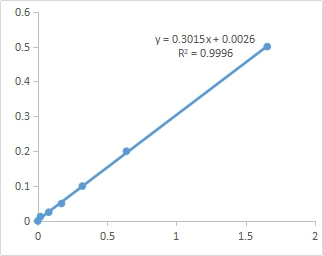
The kit's analytical range spans 0.0125 to 0.5 mg/mL, equivalent to approximately 1.25 to 50 mg/g in fresh tissue depending on the extraction ratio. That lower boundary matters. Unstressed Arabidopsis rosettes, young rice seedlings before tillering, and shade-grown fern fronds all produce soluble sugar concentrations that fall within the lowest quartile of many commercial assay kits' detection windows. KTB1320 captures them without requiring sample concentration or pooling. The upper boundary accommodates the 40-50 mg/g range typical of cold-acclimated winter cereals and drought-stressed legume leaves without mandatory dilution. For samples that exceed the ceiling, a simple dilution with extraction solvent brings them into linear range.
The component list reflects the anthrone method's economy: Anthrone, Solvent, and Glucose Standard. Three items. Storage is at 4°C, protected from light, with a six-month stability window from receipt. The kit ships on gel packs with blue ice. No -20°C freezer space required. No separate cofactor solutions to source from specialty chemical suppliers. No reagents that must be reconstituted daily. This lean component architecture is not a sign of minimalism—it is the natural consequence of a detection chemistry that achieves specificity without enzymatic amplification, and stability without lyophilization.
Sample compatibility is explicitly plant-focused: the kit is designed for plant tissues, and the protocol provides extraction and quantification guidance tailored to the peculiarities of plant biochemistry. Anyone who has transferred a mammalian tissue protocol directly to Arabidopsis knows the frustration. Plant cells contain vacuolar stores of secondary metabolites that mammalian cells simply do not produce—phenolics, alkaloids, terpenoids, and tannins that can reduce, oxidize, or precipitate chromogenic reagents. The extraction and assay conditions in KTB1320 are formulated with those interferences in mind. The protocol advises fresh samples for optimal results, with the option to store material at -80°C if immediate processing is not feasible. A brief centrifugation of reagent vials at low speed before opening prevents cap-associated reagent loss—a granular operational detail that signals a protocol written from bench experience rather than a specification sheet.
The publication record spans four citations, and the diversity of those publications is more instructive than the count. One study, published with an impact factor of 4.4, deployed KTB1320 in an integrative analysis of physiological properties and transcriptome data to reveal the mechanism of salt tolerance in oat (Avena sativa L.). Soluble sugar accumulation is a canonical osmotic adjustment response to salinity, and quantifying it across 100 oat cultivars required a method that could process hundreds of samples with consistent inter-assay precision. A second publication examined tannin-rich strawberry vines fermented with lactic acid bacteria as a feed additive to improve growth performance in Hu sheep. In that study, soluble sugar content served as a key nutritional parameter for evaluating silage quality—a reminder that plant soluble sugar measurement extends beyond plant physiology into animal nutrition, food science, and agricultural biotechnology. Two additional publications, one in Acta Biomaterialia (IF 6.5) and the others accessible through the product page's citation links, further extend the kit's validated application range.
The broader biological context makes the case for routine soluble sugar quantification more urgent than most experimental designs acknowledge. Soluble sugars are not merely metabolic intermediates. They are the primary osmoprotectants that plants accumulate under drought, salinity, and cold stress. When a plant biologist exposes Arabidopsis to progressive water deficit and measures stomatal conductance, photosynthetic rate, and ABA content without simultaneously quantifying soluble sugars, the dataset is missing the osmotic variable that explains half the observed physiological responses. A 2025 study on Poa pratensis demonstrated that drought stress induced coordinated sucrose accumulation in both leaves and roots, driving the osmotic gradient that maintained water uptake from drying soil. Transgenic Brachypodium lines overexpressing TaMAPK20-2 exhibited enhanced freezing and drought tolerance that correlated directly with elevated soluble sugar, starch, sucrose, and glucose contents. Cold acclimation in alfalfa involves a dynamic starch-to-sucrose conversion that requires temporal resolution in sugar measurements to capture. In every one of these experimental contexts, the soluble sugar measurement is not a supporting data point. It is the primary metabolic readout.
The anthrone method's enduring relevance in the face of mass spectrometry's rise reveals something about what plant biologists actually need from a sugar assay. LC-MS identifies and quantifies individual sugar species—glucose, fructose, sucrose, raffinose, stachyose—with unambiguous specificity. But a single LC-MS run per sample, when multiplied by the 100-200 samples that a typical QTL mapping population or stress time-course generates, becomes a logistical and financial barrier that forces researchers to choose between sample number and measurement precision. The anthrone method trades individual sugar identity for total pool size, and that trade-off is overwhelmingly favorable when the hypothesis concerns osmotic adjustment, carbon storage, or total carbohydrate allocation rather than the activity of a specific sugar transporter or invertase isoform. KTB1320 makes that trade-off even more favorable by providing pre-standardized reagents that eliminate the largest source of anthrone method variability: inconsistent sulfuric acid-anthrone reagent preparation.
For the drought physiologist screening a mapping population, the crop breeder evaluating cold tolerance in a winter cereal nursery, the food scientist quantifying silage carbohydrate preservation, or the plant molecular biologist characterizing a mutant with altered carbon partitioning, KTB1320 answers a question that no mass spectrometer can answer affordably at scale: how much total soluble sugar is in this tissue, and how does that number change across treatments, genotypes, and time points? The answer comes from a chemical reaction first published when Harry Truman was president, now packaged in a three-component kit that requires nothing beyond a standard visible-wavelength microplate reader and a pipette. The reaction has not changed. The accessibility has.
Explore the full specifications, download the protocol, and place your order here: https://www.abbkine.com/product/chekine-micro-plant-soluble-sugar-assay-kit-ktb1320/





