




The 354-Dalton Firestarter: Why Detecting PGE₂ Correctly Is the Difference Between a Real COX/Inflammation Story and a Processing Artifact
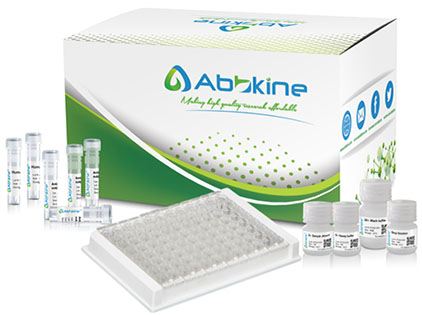
Prostaglandin E₂ (PGE₂) is only 354 Da — a wispy, amphipathic lipid that weighs less than a single insulin chain — yet it punches above almost every classical cytokine when it comes to deciding whether a tissue feels pain, runs a fever, recruits edema, fuels tumor growth, or remodels its vasculature into a pro-angiogenic, immunosuppressive mess. Synthesized in seconds once arachidonic acid is freed by cPLA₂ and handed to COX-1/COX-2 → PGH₂ → mPGES-1, PGE₂ doesn't sit in a neat storage granule waiting to be counted — it diffuses across membranes, gets metabolized within minutes (PGD₂ → 15d-PGJ₂, PGE₂ → 13,14-dihydro-15-keto-PGE₂), and degrades faster than you can finish a lysis spin if you leave the sample at room temperature without inhibitors. That volatility is exactly why your "PGE₂ readout" is only as good as the kit's antibody affinity, the assay's cross-reactivity envelope, and — above all — your cold-chain and stabilization protocol. The Human Prostaglandin E₂ (PG-E₂) ELISA Kit (KTE61236) from Abbkine is purpose-built for this minefield: a competitive immunoassay architecture optimized for picogram sensitivity in serum, plasma, cell culture supernatants, and other biological fluids, so the number you write in your lab notebook actually reflects biology, not ex vivo decay.
PGE₂ in One Clean Paragraph: Small Lipid, Massive Reach
PGE₂ is the dominant prostanoid effector of the cyclooxygenase pathway — the molecule that explains why COX-2 inhibitors (NSAIDs, celecoxib, ibuprofen, aspirin's irreversible acetyl-CoA shutdown of COX-1) work on pain, fever, and inflammation at all. Once made, it exits the cell and signals through four G-protein–coupled EP receptors (EP₁–EP₄):
• EP₁ → Ca²⁺ mobilization → visceral pain & gastric mucosal defense
• EP₂ / EP₄ → cAMP ↑ → vasodilation, fever (EP₃ too), and stromal immunosuppression
• EP₄ especially → promotes tumor-associated angiogenesis, M2-like macrophage polarization, and an anti-inflammatory/"resolution-lite" phenotype that can paradoxically help cancer persist
But PGE₂ is also the field's greatest false-positive trap: it's so small, so hydrophobic, and so chemically unstable ex vivo that improper collection = inflated or tanked values that have zero relationship to the living tissue.
Why This Can't Be a "Sandwich ELISA" (And Why Competitive Is the Right Call for a 354-Da Hapten)
A true two-site sandwich needs two distinct, non-overlapping epitopes on the same analyte. PGE₂ has zero protein structure — it's a cyclopentenone-plus-two side chains with a carboxylic acid headgroup. The only viable immunoassay architectures are hapten-based competition formats:
KTE61236 uses the standard, proven competitive scheme:
- A PGE₂-specific antibody is immobilized (either pre-coated or captured via coated hapten-BSA).
- Sample PGE₂ + a fixed amount of HRP (or enzyme)-labeled PGE₂ tracer compete for the antibody's binding sites.
- After wash → substrate (TMB) → blue → stop → yellow → read 450 nm.
- Signal is INVERSELY proportional to [PGE₂]:
more PGE₂ in your sample = less tracer bound = lower OD → you interpolate from a standard curve plotted as B/B₀ (%) vs. log[conc].
The distributor-validated performance envelope you'll cite:
Parameter KTE61236 Specification
Target Human Prostaglandin E₂ / PGE₂ (PG-E2, dinoprostone)
Format Competitive ELISA (hapten-immunoassay), colorimetric, 450 nm
Range 31.25 – 2,000 pg/mL (≈ 88–5,640 pmol/L)
Sensitivity / LOD ~15–18.75 pg/mL
Intra-Assay CV < 10% (often ≤ ~5–7%)
Inter-Assay CV < 10–12%
Cross-Reactivity PGE₂ = 100%; very low cross to 6-keto-PGF₁α, PGF₂α, PGA₂, AA, LTB₄, etc. (must verify on your lot's CoA)
Samples Serum, plasma (EDTA/citrate), cell culture supernatants, tissue homogenate supernatants, other biological fluids
Assay time ~2.5–4 hours (varies by incubation protocol)
(Always confirm exact range, LOD, and cross-reactivity table on the shipped Abbkine datasheet for your lot.)
The Cold Truth: Sample Handling Makes or Breaks Your PGE₂ Data
Because PGE₂ biosynthesis continues ex vivo and the molecule degrades readily, the three non-negotiable rules are:
- Collect into inhibitor cocktail IMMEDIATELY — e.g., indomethacin (final ~10 µM) + EDTA (to chelate Ca²⁺ and blunt cPLA₂/COX-coupled activity) is commonly used for stabilization in collection tubes, but discuss with your study design (indomethacin stabilizes but also suppresses new synthesis — fine for a "snapshot," critical to disclose). Many labs simply process within 30 min on wet ice as the safest base rule.
- EDTA plasma preferred for many COX/eicosanoid studies (citrate acceptable; avoid serum for "basal PGE₂" if you can, since clotting activates platelets/megakaryocytes which release/add arachidonic cascade products).
- Flash-freeze aliquots at -80°C; never refreeze. Because it's lipid-soluble and adsorptive, PGE₂ also sticks to plastic — use low-binding tubes if your volumes are very small.
Where Quantifying PGE₂ Actually Defines the Paper
- NSAID / COX-2 / mPGES-1 drug screens
The classic: treating macrophages (LPS ± IFNγ) or whole blood with celecoxib, ibuprofen, aspirin, paracetamol (weak COX-2 shift), or a selective mPGES-1 inhibitor, then measuring supernatant PGE₂ (pg/mL) across a dose–response. The competitive ELISA gives you the IC₅₀ curve with proper CVs — infinitely more defensible than an EIA dipstick or a densitometry proxy.
- Cancer inflammation & tumor microenvironment
Tumor cells, CAFs, and TAMs (tumor-associated macrophages) pour out PGE₂ that drives EP₂/EP₄ signaling → cAMP ↑ → immunosuppression (suppresses CD8⁺ cytotoxic T cells, promotes Tregs, skews M2) and angiogenesis (HIF-VEGF crosstalk). Tissue homogenates + aspirates + supernatant panels all benefit from a calibrated readout rather than "LCMS if you have it, guess if you don't."
- Sepsis, endotoxemia & systemic inflammation models
LPS bolus → peak PGE₂ in serum/plasma around 1–3 h (precedes full-blown cytokine storm secondary waves). Having a picogram-sensitive, plate-readable assay lets you run time courses (0, 30, 60, 120, 240 min) across multiple animals without burning a week on LC-MS instrument time.
- Neuroinflammation & microglial activation
Microglia and astrocytes generate PGE₂ under TLR4/IL-1β/TNF stimulation → signals back through EP₂ on neurons to modulate excitability and damage. Media from primary glia or BV2-line cultures are small-volume but perfectly suitable for competitive PGE₂ ELISA when handled cold-and-fast.
- Wound healing, dermatitis & barrier inflammation
Topical or systemic irritants/allergens → epidermal keratinocytes + infiltrating leukocytes → COX-2/PGE₂ surge → pruritus and edema. Measuring PGE₂ in skin homogenate supernatants or blister fluid/aspirates anchors your EP-receptor mRNA/IHC panel to an actual eicosanoid number.
- Basic COX dominance questions
COX-1 (constitutive) vs. COX-2 (inducible) contribution? Use platelet-poor plasma (minimal platelet PGE₂) vs. serum (clot-derived spikes) as a built-in sanity check — if your "basal plasma" and "serum" are nearly identical, something in your collection let new PGE₂ form ex vivo.
A Minimal Workflow You Can Paste Into a Protocol
- Pre-cool tubes (EDTA + optional indomethacin/piroxicam stabilizers per your IRB/SOP).
- Draw → invert gently → spin ≥ 1,500–2,000 ×g, 4°C, 10–15 min → aliquot supernatant → snap -80°C.
- On assay day: thaw on ice, spin briefly again, pipette 50 µL sample + reagents per kit protocol into pre-coated plate.
- Add tracer/antibodies per the exact step order (timing matters in competition assays — don't rush the equilibrium incubation).
- Wash thoroughly (edge wells are sensitive to incomplete aspiration).
- Develop TMB → stop → read 450 nm promptly → fit a 4-parameter logistic (4-PL) or log-logit to the B/B₀ curve → back-calculate → report pg/mL.
The Bottom Line
PGE₂ is only 354 Da, but it's the lipid that tells your tissue to hurt, swell, fevers up, and — left unresolved — remodel its microenvironment into a pro-tumor, pro-angiogenic safe haven. Measuring it demands respect for how fast it forms and decays once the animal or dish is disturbed. The Human Prostaglandin E₂ (PG-E₂) ELISA Kit — KTE61236 from Abbkine gives you the right architecture for that job: competitive hapten immunoassay → HRP–TMB → 450 nm, with a working range of ~31–2,000 pg/mL, LOD in the mid-teens pg/mL, and a format that accepts serum, plasma, culture supernatants, and tissue-fluid homogenates — so your COX-2 story rests on a number you can defend, not a processing artifact you didn't catch.
Product Reference: KTE61236 – Human Prostaglandin E₂ (PG-E₂) ELISA Kit
Learn more and order: https://www.abbkine.com/product/human-prostaglandin-e2-pg-e2-elisa-kit-kte61236/
(For Research Use Only; not for diagnostic procedures in humans.)





