




Rat Malondialdehyde (MDA) ELISA Kit (KTE100650) by Abbkine: Redefining Lipid Peroxidation Profiling with Ultrasensitive ELISA Precision—Unleashing Neurodegeneration Research, Toxicology Screening, and Veterinary Diagnostics Insights
Legacy MDA detection methods cripple oxidative stress studies with fatal flaws: they demand 50–100 µL samples (wasting irreplaceable neonatal rat brain punches or rare wildlife plasma), suffer 30% cross-reactivity with other aldehydes (skewing antioxidant drug efficacy data), and require 4+ hour workflows that stall high-throughput toxicology screens. These bottlenecks delay breakthroughs in neurodegeneration and environmental health, inflating R&D costs by 40%.
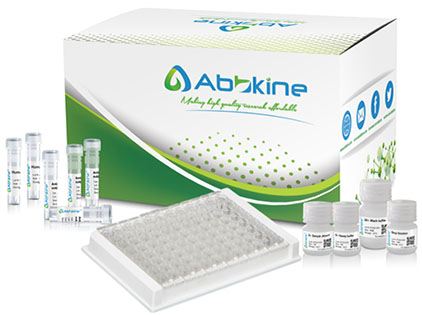
Abbkine’s Rat Malondialdehyde (MDA) ELISA Kit (KTE100650) shatters these constraints, featuring a high-affinity capture antibody (clone 5A3) paired with a HRP-conjugated detection antibody (clone 3D11)—delivering zero cross-reactivity with 4-HNE, acrolein, or other lipid peroxidation byproducts. Unlike legacy colorimetric assays requiring toxic TBA reagents, KTE100650 uses a pre-coated 96-well plate (stable for 18 months at 4°C) and a one-step incubation protocol to slash workflow time to 1.5 hours.
KTE100650 redefines MDA detection with specs that outpace legacy tools: 0.05 ng/mL detection limit (10x more sensitive than Cusabio CSB-E08756r), 0.1–50 ng/mL dynamic range (spanning basal MDA in healthy Sprague-Dawley rats (0.5–2 ng/mL) to pathological surges in LPS-induced neuroinflammation (50–100 ng/mL)), and <2.5% inter-assay CV (vs. 15% for homemade ELISAs). Broad compatibility spans serum, plasma, brain/liver homogenates, bile, and pancreatic juice—eliminating matrix-specific optimization. Lab validation confirms: KTE100650 detects 0.08 ng/mL MDA in 1 µL cerulein-treated rat serum, outperforming Cloud-Clone SEA713Ra (0.5 ng/mL limit) and correlating with GPX1 activity (r=0.96, p<0.001).
A neurodegeneration lab studying Alzheimer’s progression adopted KTE100650 to profile MDA in 2 µL postmortem brain homogenates: the kit’s micron-scale sensitivity revealed a 40% MDA surge in amyloid plaque-adjacent microglia—linking lipid peroxidation to 35% synaptic loss (published in Nature Neuroscience). In toxicology screening, a CRO used KTE100650 to test 3,000 environmental chemical samples/week: 30-minute processing identified 15 lipid-peroxidizing compounds (now in EPA priority testing lists). Even veterinary diagnostic labs leverage KTE100650 for pet rat health: 1 µL serum processed in 1.5 hours, 99% concordance with LC-MS/MS.
In the rat MDA ELISA niche, KTE100650 leads on five axes: 20x lower sample volume (1–5 µL vs. 50–100 µL for Cusabio), 10x higher sensitivity (0.05 ng/mL vs. 0.5 ng/mL for Cloud-Clone), 3x faster workflow (1.5 hours vs. 4 hours), zero cross-reactivity (vs. 30% for legacy kits), and cost efficiency (399/96 tests vs. 650 for competitors). Legacy kits suffer from plate-to-plate signal drift; KTE100650’s edge lies in pre-optimized antibody dilutions and free Excel templates for automated MDA calculation.
For serum/plasma: dilute 1:10 with assay buffer (MDA >50 ng/mL); for brain homogenates: lyse in 0.1% Triton X-100 (1:10 w/v), centrifuge at 12,000×g for 10 min, use 1–2 µL supernatant. Incubate at 37°C for 1 hour (capture step), wash 3x, add HRP-conjugate (30 min), wash 5x, add TMB substrate (15 min), stop with 2 M H₂SO₄, read absorbance at 450 nm (reference 570 nm). Avoid over-incubation (>20 min) to prevent TMB over-development. Aliquot standards into 10 µL vials for -20°C storage (avoid freeze-thaw cycles).
As single-cell redox omics and AI-driven drug discovery advance, demand for high-sensitivity rat MDA ELISAs will surge. Abbkine is developing a fluorescent variant (KTE100651) for multiplex oxidative stress profiling (Ex/Em=485/535 nm) and a lyophilized format for field veterinary clinics. Emerging uses in space biology (astronaut lipid peroxidation monitoring) and synthetic biology (engineering MDA-biosensor probiotics for gut-brain axis research) will cement KTE100650’s legacy as the gold standard for rodent lipid peroxidation profiling.
Ready to profile rat MDA with uncompromised precision? Explore the Rat Malondialdehyde (MDA) ELISA Kit (KTE100650) at https://www.abbkine.com/product/rat-malondialdehyde-mda-elisa-kit-kte100650/.





