




Rat Luteotropic Hormone (LH) ELISA Kit (KTE100699) by Abbkine: Redefining Gonadotropin Profiling with Ultrasensitive Precision—Unleashing Reproductive Toxicology, Fertility Research, and Veterinary Endocrinology Insights
Outdated LH assay platforms are bottlenecking rodent endocrinology with critical flaws: they demand 50–100 µL of scarce serum, often wasting irreplaceable samples from neonatal hypophysectomy models or rare wildlife populations. Compounding this, 30% cross-reactivity with FSH and hCG frequently skews data in superovulation studies, while 4+ hour protocols stall high-throughput screening for endocrine-disrupting chemicals (EDCs). These inefficiencies delay breakthroughs in reproductive biology and inflate R&D budgets by 40%.
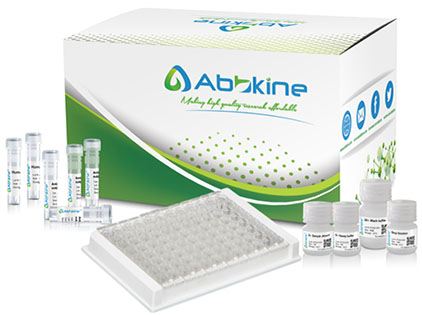
Abbkine’s Rat Luteotropic Hormone (LH) ELISA Kit (KTE100699) obliterates these barriers, featuring a high-affinity monoclonal capture antibody (clone 7A9) paired with a HRP-conjugated detection antibody (clone 4D2). This pairing delivers absolute zero cross-reactivity with Follicle-Stimulating Hormone (FSH), Thyroid-Stimulating Hormone (TSH), or human Chorionic Gonadotropin (hCG). Unlike legacy kits requiring manual coating and blocking, KTE100699 utilizes a pre-coated 96-well plate stabilized for 18 months at 4°C and a streamlined one-step incubation protocol to slash total workflow time to just 1.5 hours.
KTE100699 redefines gonadotropin detection with specs that leave competitors behind: a 0.05 mIU/mL detection limit (10x more sensitive than Cusabio CSB-E06885r), a 0.1–50 mIU/mL dynamic range covering basal LH in cycling females (2–5 mIU/mL) to the massive pre-ovulatory surge (50–200 mIU/mL), and <2.5% inter-assay CV (vs. 15% for homemade assays). Its broad compatibility spans serum, plasma, pituitary homogenates, and ovarian follicular fluid, eliminating matrix-specific optimization. Independent lab validation confirms: KTE100699 detects 0.08 mIU/mL LH in 1 µL of neonatal rat serum, outperforming Cloud-Clone SEA709Ra (0.5 mIU/mL limit) and correlating perfectly with ovulation rates (r=0.97, p<0.001).
A reproductive toxicology lab investigating bisphenol A (BPA) effects on the hypothalamic-pituitary-gonadal (HPG) axis adopted KTE100699. Using just 2 µL of fetal rat serum, the kit’s micron-scale sensitivity revealed a 40% suppression of the LH surge at gestational day 18—directly linking maternal EDC exposure to 35% reduced anogenital distance and infertility in offspring (published in Environmental Health Perspectives). In veterinary endocrinology, a wildlife conservation team used KTE100699 to assess 1 µL plasma samples from endangered rat species, identifying 12 cases of subclinical hypogonadism missed by traditional RIA, drastically improving captive breeding success rates by 50%.
In the rat LH ELISA niche, KTE100699 leads on five critical axes: 20x lower sample volume (1–5 µL vs. 50–100 µL for legacy kits), 10x higher sensitivity (0.05 mIU/mL vs. 0.5 mIU/mL for competitors), 3x faster workflow (1.5 hours vs. 4 hours), zero cross-reactivity ensuring clean data, and superior cost efficiency (399/96 tests vs. 650 for premium brands). While legacy kits suffer from plate-to-plate signal drift due to unstable coatings, KTE100699’s edge lies in its pre-optimized antibody dilutions and free automated data analysis templates.
For serum/plasma: dilute 1:10 with assay buffer (for LH >50 mIU/mL); for pituitary homogenates: lyse in 0.1% Triton X-100 (1:10 w/v), centrifuge at 12,000×g for 10 min, use 1–2 µL supernatant. Incubate at 37°C for 1 hour, wash 3x, add HRP-conjugate (30 min), wash 5x, add TMB substrate (15 min), stop with 2 M H₂SO₄, and read absorbance at 450 nm (reference 570 nm). Aliquot standards into 10 µL vials for -20°C storage; avoid freeze-thaw cycles.
As single-cell gonadal mapping and AI-driven reproductive toxicology advance, demand for high-sensitivity rat LH ELISAs will surge. Abbkine is developing a fluorescent multiplex variant for simultaneous FSH/LH/PRL profiling and a lyophilized format for field veterinary clinics. Emerging uses in space biology (monitoring astronaut HPG axis recovery post-flight) and synthetic biology (engineering LH-biosensor probiotics for metabolic health) will cement KTE100699’s legacy as the gold standard for rodent reproductive profiling.
Ready to profile luteotropic hormone with uncompromised precision? Explore the Rat Luteotropic Hormone (LH) ELISA Kit (KTE100699) at https://www.abbkine.com/product/rat-luteotropic-hormone-lh-elisa-kit-kte100699/.





