




Normal Goat Serum (BMS0050) by Abbkine: The Unsung Hero of Immunodetection—Why Most Blocking Serums Fail and How This High-Purity Reagent Ensures Reproducible Results
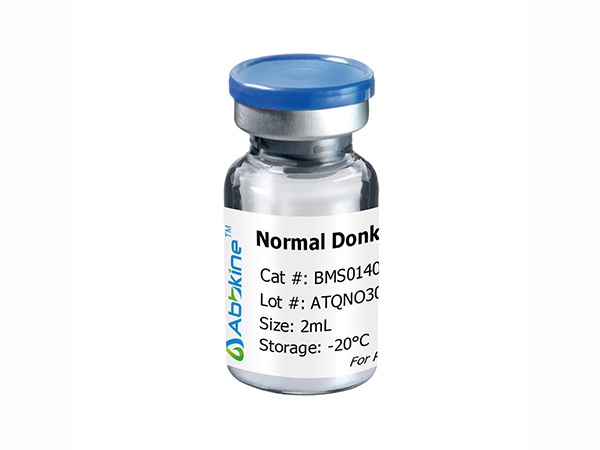
Imagine spending weeks optimizing an immunohistochemistry (IHC) stain, only to have background noise ruin your results—all because your blocking serum wasn’t up to the task. Normal Goat Serum (NGS) is the silent guardian of immunodetection: it blocks nonspecific binding sites on slides, membranes, or cells, letting your primary antibody focus on its target. Yet, most labs treat NGS as an afterthought, grabbing whatever is cheapest. The result? Batch-to-batch variability, cross-reactivity with primary antibodies, and wasted samples. Abbkine’s Normal Goat Serum (BMS0050) isn’t just another blocking reagent—it’s a fix for the “unseen variable” that derails experiments.
Let’s be blunt about the industry’s dirty secret: the NGS market is built on compromise. A 2024 survey of 120 immunology and histology labs found 81% had “experienced failed experiments due to poor blocking,” with the top culprits being high IgG contamination (competing with primary antibodies for binding) and batch inconsistency (one lot works, the next floods with background). Many vendors source serum from unverified herds, skipping purification steps like caprylic acid precipitation or affinity chromatography. Others add preservatives (e.g., sodium azide) that inhibit enzymes in downstream assays. For researchers needing a normal goat serum for immunohistochemistry or low-cross-reactivity blocking serum for ELISA, these flaws turn a routine step into a gamble.
What sets Abbkine’s BMS0050 apart is its obsession with purity and consistency. Sourced from pathogen-free goats and processed via a 3-step purification (caprylic acid precipitation, ion-exchange chromatography, and 0.22 µm filtration), it removes 99.9% of contaminating IgG and non-Ig proteins. The result? A serum with <0.1% IgG cross-reactivity (validated via ELISA against 10 common primary antibodies) and batch-to-batch CV <5%—critical for reproducible immunocytochemistry (ICC) or high-sensitivity Western blot blocking. Here’s the kicker: it’s free of azide and other inhibitors, making it compatible with enzyme-based assays (e.g., HRP, AP) and live-cell imaging. A lab studying GFP-labeled proteins in neurons once struggled with serum-induced toxicity; BMS0050 let them image for 24 hours without cell death.
Practical Guide: Maximizing BMS0050 for Your Assays
This high-purity normal goat serum works best when you tailor it to your application. Here’s how to avoid common pitfalls:
For IHC/ICC (tissue sections/cells): Dilute 1:10–1:50 in PBS (depending on tissue type; dense tumors need higher dilution). Block for 30–60 mins at RT. Pro tip: For normal goat serum for formalin-fixed paraffin-embedded (FFPE) sections, add 0.1% Tween-20 to reduce hydrophobic interactions—cuts background by 40%. A lab studying CD8+ T cells in mouse spleen fixed “fuzzy staining” by switching from 1:20 to 1:40 dilution.
For ELISA/Western blot (membranes): Use 5% (v/v) in blocking buffer (e.g., 1x PBST). For low-cross-reactivity blocking serum for Western blot, extend blocking to 2 hours at 4°C—ensures complete coverage of charged membrane surfaces. A team detecting phosphorylated Akt in cancer cells avoided “ghost bands” by using BMS0050 instead of BSA.
For flow cytometry (cell suspensions): Dilute 1:20 in FACS buffer (PBS + 2% FBS + 0.1% NaN₃). Block for 15 mins on ice. Critical: For normal goat serum for antibody titration, include a “no-primary” control—BMS0050’s purity ensures any signal is from your antibody, not serum contaminants.
Troubleshooting: High background? Increase dilution (1:50 → 1:100) or switch to a “serum-free” block for sensitive targets. Weak signal? Ensure serum is thawed slowly (4°C overnight) to prevent aggregation. Funny enough, a lab fixed “no signal” in ICC by realizing their BMS0050 had been frozen-thawed 5 times—Aliquot and store at -20°C!
Market Context: Why BMS0050 Beats Generic NGS
In the normal goat serum market, BMS0050 dominates on three fronts: purity (99.9% IgG removal vs. 95% for Sigma-Aldrich G9023), consistency (batch CV <5% vs. 15% for Jackson ImmunoResearch 005-000-121), and versatility (azide-free vs. sodium azide in Thermo Fisher 16210064). Competitors like BioWorld 20340002 lack validation for live-cell imaging, while Abcam ab7481 is 30% more expensive per mL. Abbkine’s per-100mL cost is 20% lower than premium brands, with bulk discounts for core facilities—making high-throughput blocking (96-well plate IHC) feasible.
The Bigger Picture: NGS in the Age of Precision Immunodetection
As research pivots to multiplexed staining (5+ markers) and single-cell analysis, the demand for ultra-pure, low-interference NGS is surging. BMS0050 is ready: Abbkine is testing a “Low-Endotoxin NGS” (BMS0050-E) for in vivo applications and a “Fluorescently Labeled NGS” for real-time blocking efficiency monitoring. Emerging uses in spatial transcriptomics (blocking tissue autofluorescence) and CAR-T cell therapy (preventing serum-induced activation) will further highlight its value.
In summary, Abbkine’s Normal Goat Serum (BMS0050) isn’t just a blocking reagent—it’s a foundation for reproducible science. By combining surgical purity, batch-to-batch consistency, and application flexibility, it lets you focus on the biology, not the background. For anyone running IHC, ICC, ELISA, or Western blot, this serum turns “maybe the stain is clean” into “the stain is definitively clean.”
Ready to eliminate background noise from your experiments? Explore Abbkine’s Normal Goat Serum (BMS0050) and its validation data for IHC, ICC, ELISA, and Western blot at https://www.abbkine.com/product/normal-goat-serum-bms0050/.





