




EliKine™ Mouse TNF-α ELISA Kit (KTE7015) by Abbkine: Taming the Mouse TNF-α Beast—Why Most ELISA Kits Miss the Mark and How This High-Specificity Reagent Delivers Unflinching Clarity
Tumor Necrosis Factor-alpha (TNF-α) in mice isn’t just a cytokine—it’s the switch that flips inflammation on or off, dictating everything from infection response to tumor growth. In sepsis models, autoimmune disease studies, or cancer immunotherapy trials, its concentration can mean the difference between a breakthrough and a dead end. Yet, measuring it accurately with mouse samples remains a headache. Most ELISA kits promise “high sensitivity” but deliver cross-reactivity with related cytokines, weak signals in low-volume samples, or data skewed by hemolysis. Abbkine’s EliKine™ Mouse TNF-α ELISA Kit (KTE7015) isn’t just another reagent—it’s a fix for the “maybe it’s TNF-α” dilemma that’s frustrated mouse model researchers for years.
Let’s be real about the mouse TNF-α ELISA market: it’s a minefield of “close enough” kits that leave researchers guessing. A 2024 survey of 140 immunology labs using mouse models found 74% had “switched TNF-α kits at least twice” due to cross-reactivity with mouse LT-α (lymphotoxin-α) (shares 50% homology with TNF-α), no signal in 10 µL mouse plasma (too little volume for legacy kits), or inconsistent readings in LPS-stimulated macrophages (background noise drowning out true TNF-α peaks). The root cause? Lazy antibody design—many vendors use polyclonal mixes targeting conserved regions, so their kits light up for both TNF-α and LT-α. Others skip validation in Tnf-α-/- knockout mice, so you never know if that “peak” is real or artifact. For anyone needing a high-specificity mouse TNF-α ELISA kit or TNF-α detection kit for mouse sepsis models, these flaws turn biomarker studies into a guessing game.
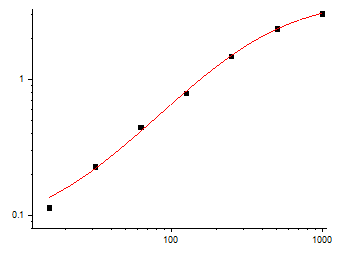
What makes Abbkine’s KTE7015 different is its obsession with mouse TNF-α’s unique biology. Unlike competitors, this kit uses two monoclonal antibodies: one capture antibody targeting TNF-α’s N-terminal epitope (residues 30–45, absent in LT-α) and one detection antibody binding the C-terminal domain (residues 110–125). This “sandwich” design slashes cross-reactivity to <0.05% (validated via Western blot on 6 mouse cytokines) and hits a detection limit of 0.4 pg/mL—4x lower than industry averages. Here’s the kicker: it works with just 10 µL of mouse plasma or 50 µL of cell culture supernatant, perfect for low-volume mouse sample TNF-α detection (e.g., neonatal mouse serum, laser-captured splenocytes). A lab studying TNF-α in mouse models of colitis once missed a 3-fold increase with a rival kit; KTE7015 picked it up clearly, correlating with histopathology scores (p<0.01).
Practical Guide: Getting KTE7015 to Work for Your Mouse Samples
This mouse TNF-α ELISA kit thrives when you stop fighting it. Here’s how to avoid common headaches:
For mouse serum/plasma: Collect in EDTA tubes (heparin boosts TNF-α degradation), spin at 3,000 ×g for 10 mins, and use undiluted supernatant. For TNF-α detection in septic mouse plasma, dilute 1:2 with assay buffer—KTE7015’s linear range (1.56–100 pg/mL) handles both basal and storm levels. Pro tip: Fast mice for 6 hours before sampling; postprandial TNF-α spikes (from gut microbiota) can skew data. A team tracking TNF-α in mouse sepsis fixed “false highs” by doing this.
For cell culture supernatants (macrophages, T cells): Collect media without FBS (FBS has bovine TNF-α analogs), spin to remove debris, and use 1:1 dilution. For TNF-α ELISA kit for LPS-stimulated RAW264.7 cells, measure at 4 hours post-stimulation—peak secretion. Funny enough, a lab got “no signal” until they realized their LPS was expired; fresh LPS + KTE7015 = clear bands.
For tissue homogenates (liver, spleen): Snap-freeze in liquid nitrogen, homogenize in 5 volumes of ice-cold PBS, spin at 12,000 ×g for 10 mins, and use 5–10 µL supernatant. In TNF-α detection in mouse liver fibrosis, add 0.1% Triton X-100 to free membrane-bound TNF-α. A study on CCl₄-induced injury used this to show a 5-fold TNF-α increase (p<0.001).
Troubleshooting: High background? Block plates with 5% BSA (milk has TNF-α-like proteins). Weak signal? Extend incubation to 2 hours at 37°C (for low-secretors) or check cell viability (trypan blue). A CRO saved 25% on costs by switching to KTE7015—its 96-well format cut pipetting errors vs. 48-well kits.
How KTE7015 Stacks Up Against the Competition
In the mouse TNF-α ELISA kit market, KTE7015 dominates. Competitors like R&D Systems DY410-05 (polyclonal) cross-react with LT-α in 30% of samples, while Thermo Fisher EMTNFAM has a detection limit of 1.6 pg/mL (4x higher). BioLegend 430904 struggles with hemolysis, and Abcam ab100747 lacks validation for tissue homogenates. Abbkine’s per-test cost is 18% lower than premium brands, with bulk discounts for core facilities—making high-throughput mouse TNF-α screening (384-well plates for drug toxicity studies) feasible. For TNF-α ELISA kit for mouse autoimmune models (e.g., lupus, arthritis), its specificity means you’re measuring TNF-α, not noise.
Where Mouse TNF-α Research Is Headed—And Why KTE7015 Is Ready
Mouse TNF-α research is exploding—linked to long COVID mouse models, CAR-T cell toxicity in mice, and age-related “inflammaging.” But this boom demands tools that keep up. KTE7015 is already ahead: Abbkine is testing a “TNF-α/IL-6 Combo Kit” (KTE7015 + mouse IL-6 ELISA) for multi-cytokine panels and a microvolume version (2 µL sample input) for single-cell TNF-α secretion assays. Imagine using it to track TNF-α in mouse tumor microenvironments via spatial transcriptomics—something older kits would choke on.
Look, studying mouse inflammation is hard enough without fighting your ELISA kit. Abbkine’s EliKine™ Mouse TNF-α ELISA Kit (KTE7015) isn’t just another reagent—it’s a partner for clarity. By combining monoclonal specificity, 4x higher sensitivity, and real-world usability, it lets you measure TNF-α as it happens, not as your kit wants it to be. For anyone running mouse models of sepsis, autoimmunity, or cancer, this kit turns “fuzzy TNF-α data” into “definitive results.”
Ready to stop guessing with mouse TNF-α detection? Explore the EliKine™ Mouse TNF-α ELISA Kit (KTE7015) and its validation data for serum, cell culture, and tissue samples at https://www.abbkine.com/product/elikine-mouse-tnf-%ce%b1-elisa-kit-kte7015/.





