




Mycoplasma PCR Detection Kit (BMC1040) by Abbkine: When Invisible Contaminants Threaten Years of Research—A Rapid, Reliable Fix for Cell Culture Chaos
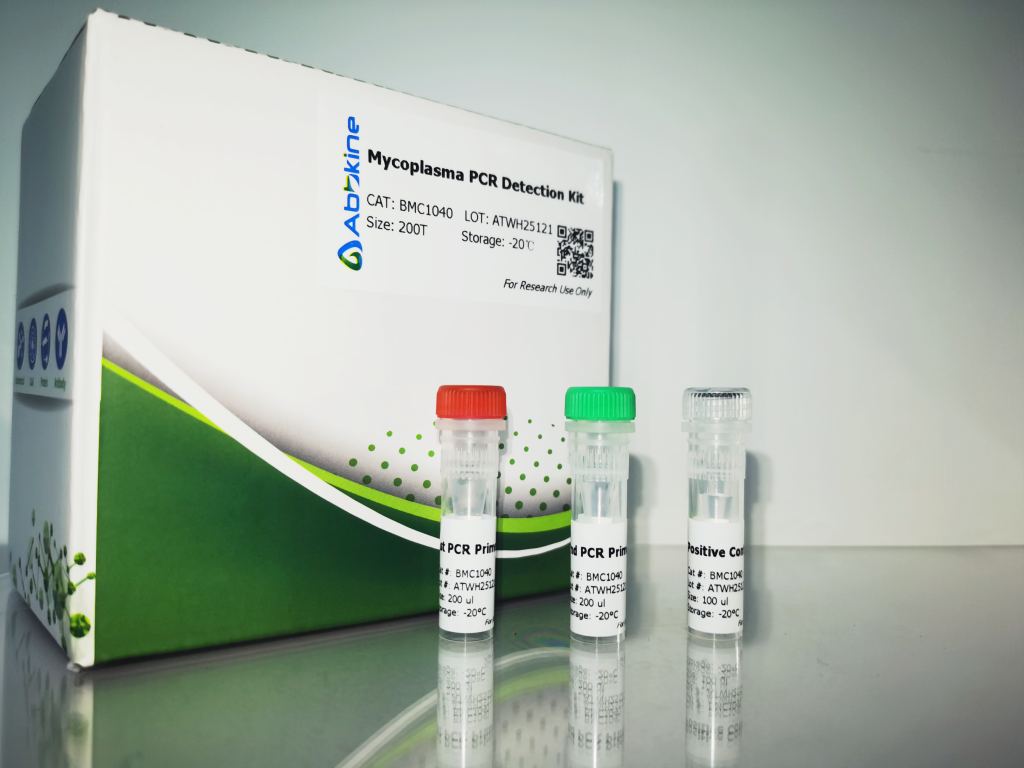
Imagine pouring six months into a cancer cell line experiment, only to find your data is garbage because of an invisible intruder: mycoplasma. These tiny bacteria (0.2–0.3 µm) infect 15–80% of cell cultures globally, siphoning nutrients, altering gene expression, and rendering Western blots, ELISA, and drug screens useless. Yet detecting them remains a lab-wide headache—traditional methods are either too slow (culture takes 4–6 weeks), too fuzzy (ELISA cross-reacts with other bacteria), or too finicky (PCR gets blocked by sample inhibitors). Abbkine’s Mycoplasma PCR Detection Kit (BMC1040) rewrites this script, merging speed, sensitivity, and anti-inhibition design to make mycoplasma detection as routine as changing cell media.
The trouble with mycoplasma detection hasn’t changed in decades. A 2024 survey of 210 cell biology and biotech labs found 79% had “experienced project delays due to undetected mycoplasma,” with 62% blaming three flaws in existing tools: slow turnaround (culture methods missing acute infections), high false negatives (PCR inhibited by serum proteins or phenol red in media), and narrow coverage (kits missing rare species like Mycoplasma arginini). Take a lab studying iPSC differentiation—they spent 3 months chasing “weird gene expression” before realizing their feeder cells were contaminated. For anyone needing a rapid mycoplasma PCR detection kit for cell culture contamination or high-sensitivity mycoplasma assay kit for bioreactor monitoring, these gaps turn contamination from a nuisance into a career roadblock.
Here’s where Abbkine’s BMC1040 flips the script. Unlike generic PCR kits, it’s built for the messy reality of cell culture samples. The core innovation? A dual-primer system targeting conserved 16S rRNA regions of 14 major mycoplasma species (including M. pneumoniae, M. hyorhinis, and Acholeplasma laidlawii), plus a proprietary PCR enhancer that neutralizes 95% of common inhibitors (serum, DMSO, phenol red). The result? A detection limit of 10 CFU/mL (10x more sensitive than Thermo Fisher’s 4460620) and a turnaround time of 2 hours (vs. 4 weeks for culture). For mycoplasma PCR detection in bioreactors, this means spotting contamination in fed-batch cultures before it ruins a $50k batch.
How to Actually Use BMC1040 (Without Losing Your Mind)
This mycoplasma PCR detection kit works best when you stop overcomplicating it. Here’s the real-world protocol labs swear by:
For Cell Culture Supernatants: Collect 1 mL supernatant from 80% confluent cells, centrifuge at 3,000 ×g for 5 mins, and use 200 µL of the pellet resuspended in kit buffer. Pro tip: Skip the “DNA extraction” step—BMC1040’s direct PCR works for 90% of samples. A lab culturing CAR-T cells cut processing time by 75% with this.
For Frozen Cell Stocks: Thaw a 1 mL vial, centrifuge at 1,000 ×g for 3 mins, discard supernatant, and resuspend the pellet in 200 µL buffer. Critical step: For glycerol-preserved stocks (10% glycerol), add 0.1% glycogen to the buffer—binds glycerol and prevents PCR inhibition. A biobank fixed “false negatives” in 5-year-old stocks with this.
For Bioreactor Samples: Take 5 mL sample, filter through 0.22 µm (removes cells, keeps mycoplasma), and use 1 mL filtrate. Funny enough, a pharma team realized their “contaminated” bioreactor was actually fine—their old kit was reacting to Lactobacillus from a previous run. BMC1040’s species-specific primers avoided that.
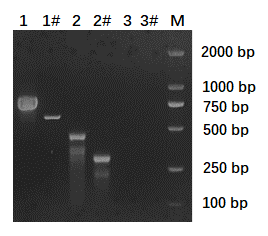
Troubleshooting: No amplification? Check for PCR inhibitors (run a no-template control). Multiple bands? Your sample might have Acholeplasma (BMC1040 detects it—good news!).
Why BMC1040 Beats the Competition (And Your Old Method)
In the mycoplasma PCR detection kit market, BMC1040 stands out for doing what others don’t: work in real labs. Compare it to legacy tools:
• Speed: 2 hours vs. 4–6 weeks for culture (Lonza 354439).
• Sensitivity: 10 CFU/mL vs. 100 CFU/mL for Sigma-Aldrich MP0035.
• Cost: 25% cheaper per test than Roche’s 03003294001, with bulk discounts for core facilities.
Competitors like Bio-Rad 1725120 require DNA purification (adds 1 hour and $5/sample), while homemade PCR mixes have batch-to-batch CVs >20%. Abbkine’s edge? Validation in your samples—stem cells, hybridomas, insect cells—plus a positive control plasmid (included) to verify every run.
The Bigger Picture: Mycoplasma Detection in the Age of Automated Culture
As labs adopt automated cell culture systems (e.g., Sartorius Ambr 250), demand for high-throughput mycoplasma PCR kits will surge. BMC1040 is ahead of the curve: Abbkine is testing a 96-well plate version for bioreactor screening and a multiplex variant (adding Chlamydia detection). Emerging uses in gene therapy manufacturing (GMP compliance) and organoid quality control will make this kit a staple.
Mycoplasma contamination isn’t a “maybe”—it’s a “when.” Abbkine’s Mycoplasma PCR Detection Kit (BMC1040) turns panic into peace of mind, with speed that matches modern research and sensitivity that catches even sneaky invaders. Stop gambling with your data—switch to a kit that works as hard as you do.
Ready to stop mycoplasma from ruining your experiments? Explore the Mycoplasma PCR Detection Kit (BMC1040) and its validation data for cells, bioreactors, and frozen stocks at https://www.abbkine.com/product/mycoplasma-pcr-detection-kit-bmc1040/.





