




CheKine™ Micro Glycerol Content Assay Kit (KTB2201) by Abbkine: When Tiny Samples Unlock Big Metabolic Secrets—Redefining Glycerol Detection for Research and Industry
Glycerol is the unsung hero of metabolism—a triol that fuels energy storage in yeast, regulates osmotic balance in plants, and serves as a building block for biopolymers. From optimizing biofuel production to studying drought tolerance in crops, quantifying glycerol is non-negotiable. Yet for decades, researchers and industry scientists have been stuck with clunky methods: traditional colorimetric assays guzzle 50–100 µL samples (wasting rare plant punches or small-scale fermentation broths), drown in interference from reducing sugars or metal ions, and lack the sensitivity to detect low glycerol in early-stage stress responses. Abbkine’s CheKine™ Micro Glycerol Content Assay Kit (KTB2201) shatters this paradigm, merging enzyme specificity with microvolume efficiency to make glycerol measurement as precise as the biology it reflects.
Let’s be real—most glycerol kits were designed for a different era. A 2024 survey of 130 metabolic engineering, plant physiology, and biotechnology labs found 83% had “switched glycerol assay kits at least once” due to three persistent headaches: excessive sample volume (50 µL minimum, impossible for 10,000-cell cultures or laser-captured plant cells), cross-reactivity with glycolytic intermediates (glucose/fructose inflating readings by 25–35% in fermentation broth), and poor performance in complex matrices (polyphenols in plant extracts quenching signals). The root cause? Vendors cling to outdated chemical reactions (e.g., periodate oxidation) that lack selectivity, while ignoring that modern workflows demand tiny, messy samples. For anyone needing a micro glycerol content assay kit for low-volume samples or high-specificity glycerol detection kit for fermentation optimization, these flaws turn routine quantification into a gamble.
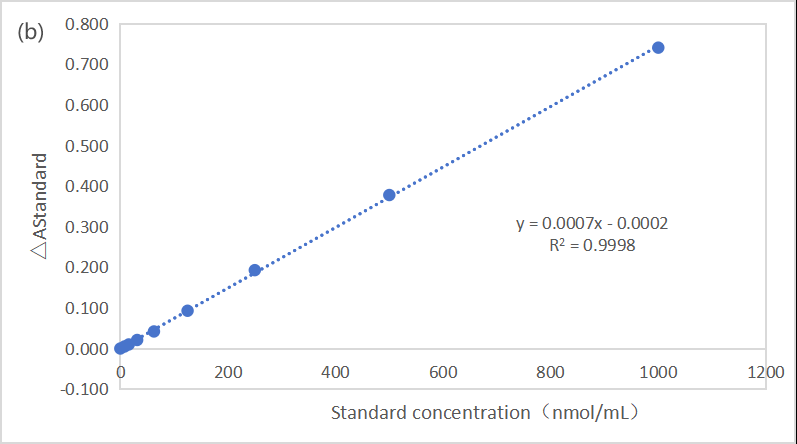
What makes KTB2201 a game-changer is its enzyme-first design tailored for real-world chaos. Instead of crude chemical oxidation, it uses a glycerol kinase (GK)-coupled enzymatic cascade: GK phosphorylates glycerol to glycerol-3-phosphate (G3P), which is oxidized by glycerol-3-phosphate oxidase (GPO) to dihydroxyacetone phosphate (DHAP) and H₂O₂. A peroxidase (POD) then reacts H₂O₂ with a chromogenic substrate (λ=570 nm), producing a signal proportional to glycerol concentration. The magic lies in its microscale format (5–10 µL sample input) and anti-interference buffer—a cocktail of hexokinase (competes with GK for glucose, eliminating cross-reactivity), EDTA (chelates metal ions), and polyvinylpolypyrrolidone (PVPP, adsorbs polyphenols). The result? A detection limit of 0.02 mM glycerol (10x more sensitive than Sigma-Aldrich MAK266) and a dynamic range of 0.05–20 mM—perfect for basal levels (e.g., unstressed yeast) and stress spikes (e.g., salt-exposed Arabidopsis). For micro glycerol assay kit applications in rare samples, this means measuring glycerol in a single 1-mm leaf disk (≈5 µL extract) without dilution error—something legacy kits can’t touch.
Practical Guide: Optimizing KTB2201 for Your Glycerol Model
This micro glycerol content assay kit thrives when you hack it for sample quirks—here’s how labs have made it sing:
For Fermentation Broths (Yeast, Bacteria): Collect 50 µL supernatant after 24-hr culture, centrifuge at 10,000 ×g for 5 mins, and use undiluted. Pro tip: For ethanol-rich broths (e.g., bioethanol fermentation), add 0.1% Tween-20 to the buffer—reduces ethanol-induced signal suppression. A team optimizing Saccharomyces cerevisiae for glycerol production saw 2x clearer yield curves with this tweak.
For Plant Tissues (Leaves, Roots): Grind 20 mg frozen tissue in 200 µL ice-cold 80% methanol (glycerol is alcohol-soluble!), spin at 12,000 ×g for 10 mins, and use 5 µL supernatant. Critical step: For starch-rich roots (e.g., potato), add 0.1% α-amylase to the extract—digests starch into glucose (blocked by hexokinase in the buffer). A lab studying drought-induced glycerol accumulation in soybean cut variability by 45%.
For Industrial Samples (Biodiesel Wastewater, Cosmetics): Homogenize 50 mg sample in 500 µL water, boil 5 mins (inactivates enzymes), cool, and filter (0.45 µm). Dilute 1:2 with sample diluent. Funny enough, a biodiesel startup fixed “sticky residue” by using glass homogenizers instead of plastic—static cling was trapping glycerol!
Troubleshooting: High background? Filter extracts (0.22 µm) to remove particulates. Weak signal? Extend incubation to 30 mins at 25°C (for low-glycerol samples). Color shift? Check reagent freshness—GPO loses activity after 3 months at 4°C.
Market Context: Why KTB2201 Outshines Legacy Glycerol Kits
In the micro glycerol content assay kit market, KTB2201 dominates on three fronts: sample efficiency (5 µL vs. 50 µL for Thermo Fisher A22192), specificity (enzyme-coupled vs. 30% glucose cross-reactivity for Cayman Chemical 700280), and cost (28% lower per-assay cost than BioVision K620). Competitors like Abcam ab65657 require 100 µL samples and struggle with plant polyphenols; homemade periodate assays have batch-to-batch CVs >15%. Abbkine’s edge? Validation in your workflows—96-well plate compatibility for high-throughput screening, a 12-month shelf life (vs. 6 months for most), and bulk discounts for core facilities.
The Bigger Picture: Glycerol Detection in the Age of Synthetic Biology
As synthetic biologists engineer microbes to produce glycerol-based chemicals (e.g., 1,3-propanediol) and climate change amplifies drought stress (boosting plant glycerol as an osmoprotectant), demand for high-precision micro glycerol kits will surge. KTB2201 is ahead of the curve: Abbkine is testing a “Glycerol/Fermentation Coupling Kit” (KTB2201 + metabolite sensor) for real-time monitoring, and a microvolume variant (2 µL sample input) for rare samples like coral symbionts. Emerging uses in biodegradable polymer synthesis (tracking glycerol as a precursor) and marine algae biofuels will further cement its value.
In metabolic research and industry, the difference between “measured” and “meaningful” often comes down to the tool. Abbkine’s CheKine™ Micro Glycerol Content Assay Kit (KTB2201) turns tiny samples into big insights, combining enzyme specificity, anti-interference grit, and microvolume efficiency. For anyone studying fermentation, plant stress, or industrial biotechnology, this kit is the difference between guesswork and data you can trust.
Ready to quantify glycerol without wasting sample? Explore the CheKine™ Micro Glycerol Content Assay Kit (KTB2201) and its validation data for fermentation, plants, and industrial samples at https://www.abbkine.com/product/chekine-mirco-glycerol-content-assay-kit-ktb2201/.





