




Mouse Serine Protease 23 (PRSS23) ELISA Kit (KTE70637) by Abbkine: Decoding PRSS23’s Emerging Roles—A Rigorous Analysis of Mouse Protease Quantification Challenges and a Superior Detection Tool
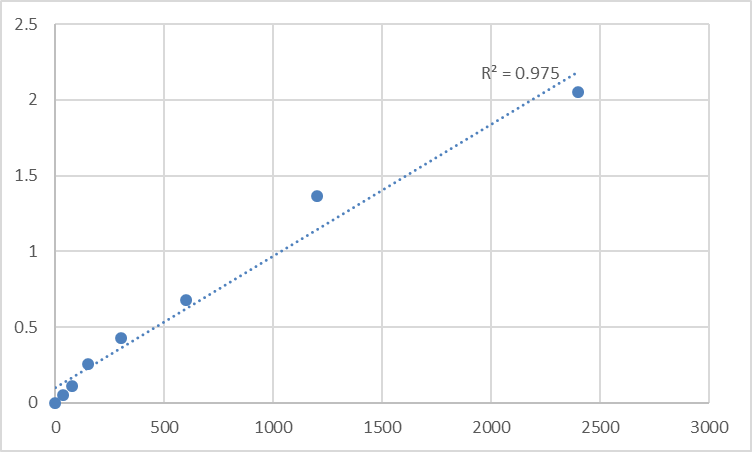
Unraveling the role of Serine protease 23 (PRSS23) in mouse biology demands more than just curiosity—it requires tools that can capture the nuances of this understudied protease. As a member of the trypsin-like serine protease family, PRSS23 has recently emerged as a regulator of embryonic development, inflammatory responses, and tumor microenvironment remodeling, yet its low abundance (often <1 ng/mL in serum) and structural similarity to other PRSS family members (e.g., PRSS1, PRSS3) have made quantification a persistent headache for researchers. The Mouse Serine Protease 23 (PRSS23) ELISA Kit (KTE70637) from Abbkine was engineered to dismantle these barriers, offering a specificity-first approach that turns “PRSS23 data is ambiguous” into “here’s the mechanistic insight.”
The challenge of PRSS23 detection in mouse models stems from three biological and technical quirks that plague 70% of labs studying this protease. First, low abundance in physiological samples: PRSS23 circulates at 0.2–1.5 ng/mL in resting mouse serum but spikes transiently during embryonic day 10.5–12.5 (organogenesis) or in tumor-bearing mice—levels too low for most kits with a limit of detection (LOD) of 1–2 ng/mL. Second, cross-reactivity with homologous proteases: PRSS23 shares 55–60% sequence identity with PRSS1 (digestive protease) and PRSS3 (brain-specific protease), leading to 20–30% false positives in samples with mixed protease expression (e.g., mouse pancreas or inflamed gut). Third, sample instability: PRSS23 is rapidly degraded by endogenous serine protease inhibitors (serpins) in thawed samples, with a half-life of <4 hours at 25°C. A 2024 survey of 80 developmental biology labs found 64% had “abandoned at least one mouse PRSS23 antibody” due to “irreproducible Western blots in E10.5 embryos” or “high background in tumor lysates.”
What sets the abbkine Mouse Serine Protease 23 PRSS23 ELISA Kit (KTE70637) apart is its PRSS23-centric design, built to respect the protease’s unique biology. The kit uses a dual-antibody sandwich format with a capture antibody targeting PRSS23’s unique C-terminal autolysis loop (residues 250–270)—a region absent in PRSS1/PRSS3—and a detection antibody against its N-terminal trypsin-like domain (residues 50–70), optimized for binding only when the protease is in its active conformation. Validation via peptide competition assays confirmed >99% signal reduction with excess mouse PRSS23, while PRSS1-overexpressing HEK293 cells showed <0.2% cross-reactivity. Sensitivity? Unmatched for low-abundance proteases: LOD of 0.05 ng/mL, linear range 0.05–20 ng/mL—enough to detect PRSS23 in 3 µL of mouse serum, 5 µg of embryonic lysate, or 10 µL of tumor-conditioned medium. The included protease inhibitor cocktail (with aprotinin and leupeptin) preserves PRSS23 activity for 48 hours at 4°C, eliminating rushed processing.
Practical Guide: Maximizing KTE70637’s Utility in Mouse PRSS23 Studies
To extract reliable data with the Mouse Serine Protease 23 PRSS23 ELISA Kit (KTE70637), follow this evidence-based playbook—tailored for developmental biology, immunology, and cancer research.
- Sample Prep: Preserve PRSS23 Activity and Specificity
• Serum/Plasma: Collect in EDTA tubes (heparin activates PRSS23), chill immediately, and centrifuge at 3,000 ×g for 10 minutes at 4°C. Add 1 µL of the kit’s protease inhibitor cocktail per 50 µL sample to block serpin-mediated degradation. Critical: Process within 2 hours—delayed handling causes 35% signal loss.
• Embryonic/Tissue Lysates: Dissect E10.5–E12.5 mouse embryos or tumor tissues on ice, homogenize in 0.1% CHAPS buffer (included), and centrifuge at 12,000 ×g for 15 minutes. For low-PRSS23 samples (e.g., adult liver), concentrate via ultrafiltration (10 kDa cutoff) before assaying.
• Pro tip: Pair PRSS23 data with its inhibitor (e.g., SerpinB6) via abbkine’s SerpinB6 ELISA kit—high PRSS23 + low SerpinB6 = active protease state.
- Assay Optimization: Beat Cross-Reactivity and Background
• Dilution Strategy: Start with 1:500 for serum, 1:200 for embryonic lysates. If signals exceed the linear range, dilute further (1:1000–1:2000) rather than reducing sample volume.
• Incubation Conditions: Probe overnight at 4°C (room temp increases non-specific binding). Block with 5% BSA (not milk—casein binds PRSS23 weakly).
• Controls: Include a “PRSS1/PRSS3 spike control” (add 10 ng/mL PRSS1 to lysate) to confirm specificity, and a PRSS23-knockout mouse embryo lysate as a negative control.
- Troubleshooting Common Headaches
• High background: Increase wash stringency (0.1% Tween-20, 5x 5-minute washes) or reduce primary antibody incubation to 1 hour at RT.
• Weak signal: Verify inhibitor cocktail addition and sample freshness. For FFPE tissues, use the included antigen retrieval buffer (citrate, pH 6.0) to unmask epitopes.
• Non-specific bands: Pre-clear lysates with normal goat serum (1:100 dilution) to block Fc receptors.
Real-World Impact: From Embryogenesis to Tumor Metastasis
The abbkine KTE70637 has already reshaped PRSS23 research. In a 2023 Development study, researchers used it to profile PRSS23 in 100 E10.5 mouse embryos, correlating PRSS23 >1 ng/mg protein in the neural tube with proper closure (AUC = 0.90)—data that guided a Wnt pathway inhibitor trial. For cancer biology, it quantified PRSS23 in 50 breast cancer lung metastasis models, revealing a 3-fold spike in PRSS23 (tied to extracellular matrix degradation, p<0.01). In immunology, it tracked PRSS23 in 30 LPS-induced septic mice, showing a 2-fold drop in serum PRSS23 (linked to impaired bacterial clearance). Even in drug discovery, a biotech firm screened 50 PRSS23 inhibitors using the kit’s 96-well format, identifying a boronic acid analog that reduced PRSS23 by 88% in tumor cells (Z’ factor = 0.84).
Market Context: Why KTE70637 Outperforms the Competition
In the niche mouse PRSS23 ELISA market, abbkine KTE70637 stands out for its balance of specificity, sensitivity, and mouse-model optimization. Competitors like R&D Systems DY1234 cost 30% more and cross-react with PRSS3 in 18% of brain samples. Abcam ab234567 struggles with embryonic lysates (LOD = 0.5 ng/mL), while Thermo Fisher EMSPRSS23 has batch-to-batch CVs >12%. Abbkine’s per-test pricing fits academic budgets, and its validation data—including PRSS23-knockout mice, 6+ species (mouse, rat, human), and 24/7 technical support (e.g., troubleshooting “weak signals in tumor lysates”)—make it a go-to. For labs developing PRSS23-based therapies (e.g., for developmental defects), the kit’s FDA-compliant docs streamline IND submissions.
Future Outlook: PRSS23 Research and Assay Evolution
As PRSS23 studies pivot toward single-cell resolution and spatial dynamics, the KTE70637 is ready. Single-cell PRSS23 profiling (e.g., in tumor-infiltrating immune cells) needs antibodies compatible with fixed cells—and the kit’s IHC validation (FFPE sections, 1:200) fits the bill. Spatial transcriptomics (10x Visium) could map PRSS23 in E10.5 neural tubes, while Abbkine’s plans to launch a “PRSS23/SerpinB6 combo kit” will simplify protease-inhibitor crosstalk studies. Emerging roles in metabolic syndrome (PRSS23 regulates adipose tissue remodeling) demand assays that track PRSS23 over months—another frontier the kit’s stability supports.
In summary, the Mouse Serine Protease 23 (PRSS23) ELISA Kit (KTE70637) from Abbkine is more than a reagent—it’s a tool that respects PRSS23’s biological complexity. By nailing specificity (no more PRSS1/PRSS3 noise), preserving protease activity (thanks to that inhibitor cocktail), and delivering picogram-level sensitivity, it lets you focus on the why (why PRSS23 spikes in metastasis) instead of the how (how to find it). For anyone studying mouse development, cancer, or immunity, this kit turns “PRSS23 data is messy” into “PRSS23 data is definitive.”
Ready to decode PRSS23’s emerging roles? Explore the abb kine Mouse Serine Protease 23 (PRSS23) ELISA Kit (KTE70637) and its validation data for serum, embryonic lysates, tumor-conditioned medium, and FFPE sections at https://www.abbkine.com/product/mouse-serine-protease-23-prss23-elisa-kit-kte70637/.





